

AB 1572 and Commercial Irrigation Plumbing: What Santa Cruz Businesses and HOAs Should Prepare For
California is phasing in restrictions on using potable water to irrigate nonfunctional turf, which means Santa Cruz businesses, industrial and institutional properties, HOAs, and common-interest developments should begin reviewing how their irrigation systems are set up.
Under AB 1572 California, the restrictions are scheduled to apply to commercial and industrial properties beginning January 1, 2028, and to HOA and common-interest-development common areas beginning January 1, 2029.
That does not mean every commercial irrigation system must be removed. Instead, property owners can start preparing by identifying irrigation zones, locating shutoff valves, reviewing backflow devices, checking for leaks, and considering water-efficient plumbing changes. Early planning can make future Santa Cruz commercial irrigation updates easier to manage.
What AB 1572 Means for Nonfunctional Turf Irrigation
AB 1572 California focuses on the use of potable water to irrigate nonfunctional turf, not on eliminating all landscaping or shutting down every irrigation system.
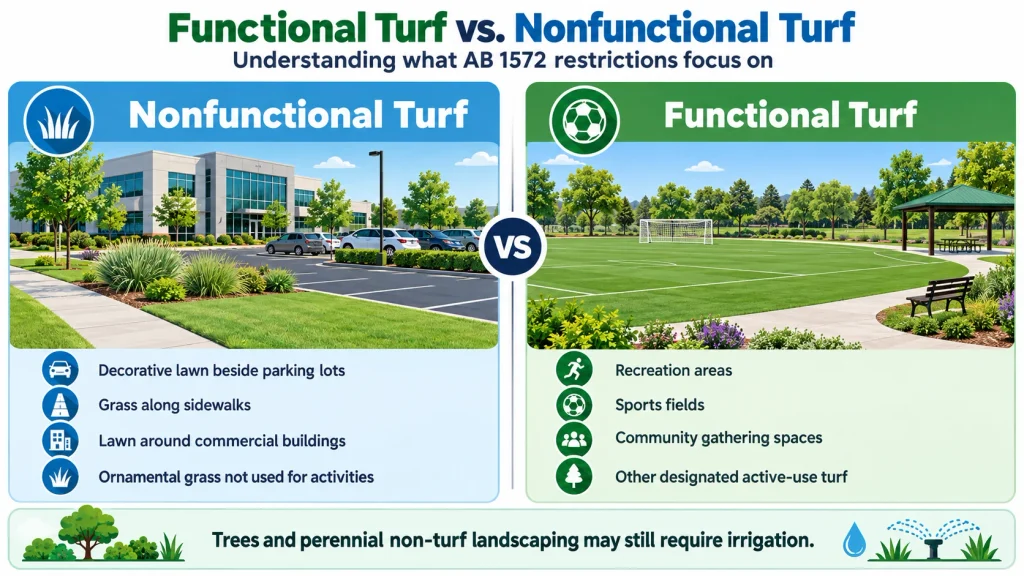
Nonfunctional turf generally refers to decorative grass that is not used for an active purpose. Examples can include mowed grass along parking lots, turf bordering buildings or sidewalks, and ornamental lawn areas that are not used for recreation or community activities.
By contrast, functional turf may include areas used for:
- Recreation.
- Sports.
- Community gatherings.
- Other designated active uses.
The law also allows certain exceptions, including irrigation needed to maintain trees and other perennial non-turf plantings. That means some potable water irrigation may still be appropriate depending on the landscape and system design.
For Santa Cruz property owners, the key is to identify which areas are affected and how the existing irrigation system serves them.
Start by Reviewing Your Commercial Irrigation System
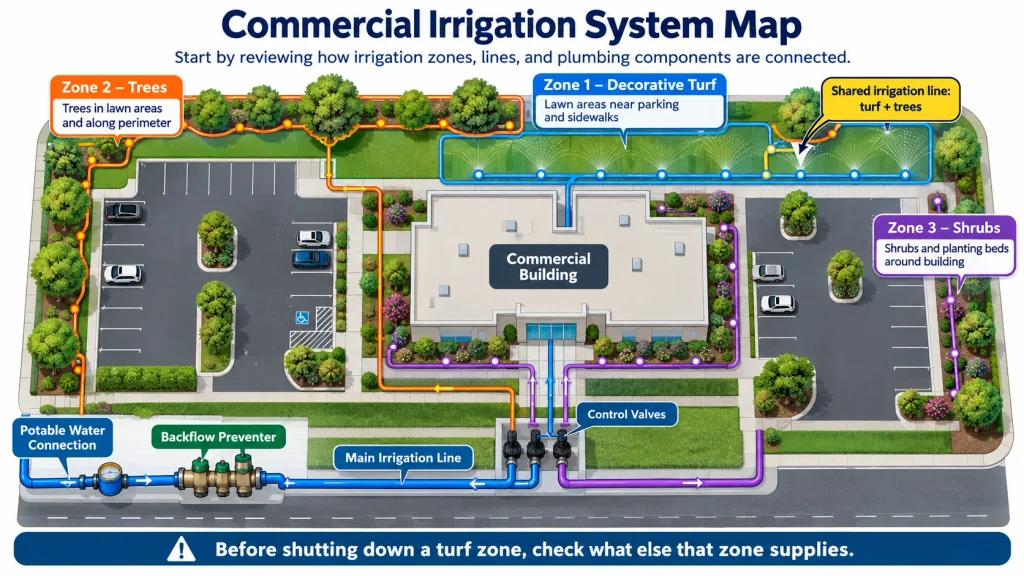
Before making changes, property managers should document how the existing commercial irrigation system is laid out. A simple system map can make it easier to see which areas may need adjustment under AB 1572.
Review:
- Which zones serve turf.
- Which zones serve trees or planted beds.
- Whether turf and shrubs share the same zone.
- Where irrigation supply lines run.
- Where control valves are located.
- Which areas are connected to potable water.
This matters because nonfunctional turf may share commercial irrigation plumbing with trees, shrubs, or other plantings that still need water. In that situation, simply closing an irrigation system shut off valve could affect more than the turf area.
Creating a basic map of zones, valves, and supply lines helps property managers understand the current setup before deciding whether plumbing changes, zone separation, or other adjustments are needed.
Make Sure Irrigation Shut-Off Valves Are Accessible
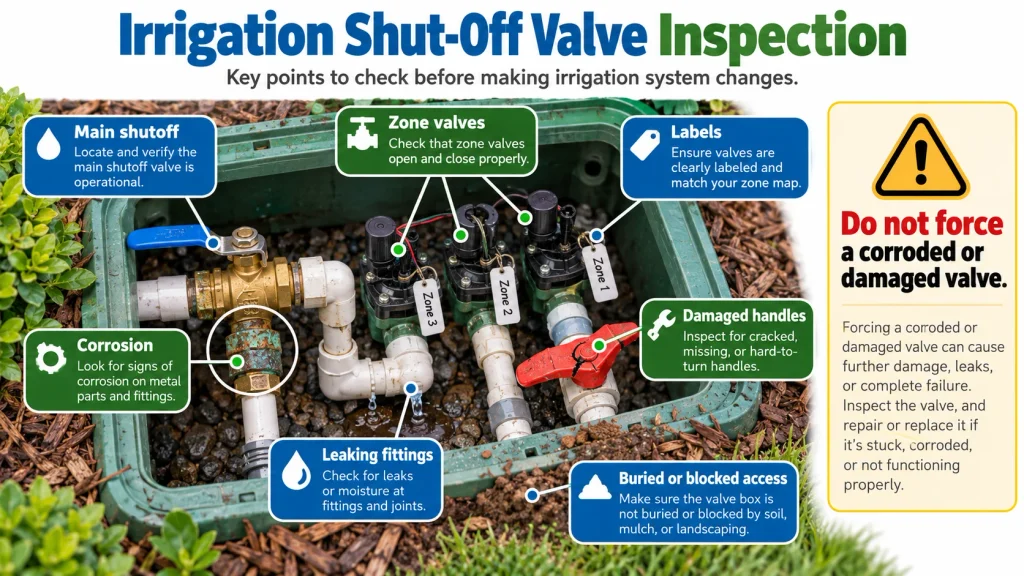
Before changing irrigation zones, property managers should know exactly where water can be isolated within the system. Locate the irrigation main shut off valve, individual zone valves, and any branch shutoffs that serve specific landscape areas.
During the walkthrough, check for:
- Visible corrosion.
- Leaking around valves or fittings.
- Missing or unclear labels.
- Valves buried under soil.
- Landscaping blocking access.
- Damaged handles or valves that are difficult to identify.
A clearly marked and accessible irrigation shut off valve makes future repairs, zone changes, and maintenance easier to manage. It also helps avoid shutting down more of the system than necessary.
If an older irrigation system shut off valve appears corroded, damaged, or difficult to operate, avoid forcing it. A plumber can inspect the valve and recommend the appropriate next step.
Check the Irrigation Backflow Preventer Before System Changes
Commercial irrigation systems can create an irrigation cross connection between the potable water supply and landscape piping. An irrigation backflow preventer helps reduce the risk of water flowing backward from the irrigation system into the potable supply.
Before making irrigation changes, property managers should check whether the irrigation backflow device is:
- Easy to access.
- Free from visible leaks.
- Showing signs of corrosion.
- Protected by an intact cover or enclosure.
- Surrounded by standing water.
- Blocked by landscaping or stored items.
- Affected by recent irrigation work.
Any changes made in response to AB 1572 should not bypass or compromise required backflow protection. If the irrigation system backflow preventer has not been checked recently, or if visible issues are present, a professional inspection or testing may be appropriate before additional system modifications are made.
Fix Irrigation Plumbing Problems Before Making Larger Changes
Before redesigning irrigation zones or making changes for AB 1572, property managers should first check the existing commercial irrigation system for problems that may already be wasting water.
Look for:
- Leaking valves.
- Broken or damaged irrigation lines.
- Areas that remain constantly wet.
- Cracked or loose fittings.
- Overspray onto pavement or buildings.
- Runoff from landscaped areas.
- Zones operating when they are no longer needed.
Improving irrigation water efficiency starts with correcting existing leaks and unnecessary water use. Fixing these problems first gives property owners a clearer picture of how the system is performing before larger zone changes are planned.
For properties considering water saving irrigation systems, a plumbing inspection can also help identify damaged lines, failing valves, or other system issues that should be addressed before new irrigation configurations or water-efficient upgrades are introduced.
Review Whether Turf and Trees Share the Same Irrigation Zone
One of the most important planning questions is whether nonfunctional turf shares an irrigation zone with trees, shrubs, perennial plantings, or landscaped beds. If several types of landscaping are connected to the same zone, simply shutting that zone off could also stop water from reaching plants that still need irrigation.
Property managers should review whether it makes sense to:
- Isolate turf-only zones.
- Preserve irrigation for trees and perennial plantings.
- Convert selected zones for different landscape uses.
- Redesign branch lines where separation is necessary.
A water efficient irrigation system depends on matching water delivery to the areas that actually need it. Improving irrigation water efficiency may therefore require more than reducing turf watering alone. Because every property is configured differently, any changes to valves, branch lines, or zone layouts should be based on an onsite evaluation rather than a one-size-fits-all approach.
Plan Water-Efficient Irrigation Upgrades for Remaining Landscaping
Once nonfunctional turf irrigation is reduced or reconfigured, property managers can use the opportunity to review how efficiently the remaining system delivers water. A water efficient irrigation system should direct water only where it is needed and avoid unnecessary loss through leaks or poorly configured plumbing.
Areas worth evaluating include:
- Leaking irrigation lines.
- Outdated or damaged valves.
- Zones that are no longer necessary.
- Poor water distribution.
- Watering areas that are broader than needed.
- Inefficient plumbing layouts.
Improving irrigation water efficiency is not only about meeting AB 1572 requirements. It can also give businesses and HOAs better control over potable water use across the property.
When reviewing water saving irrigation systems, keep the focus on plumbing performance, valves, lines, and zone configuration rather than landscape design alone.
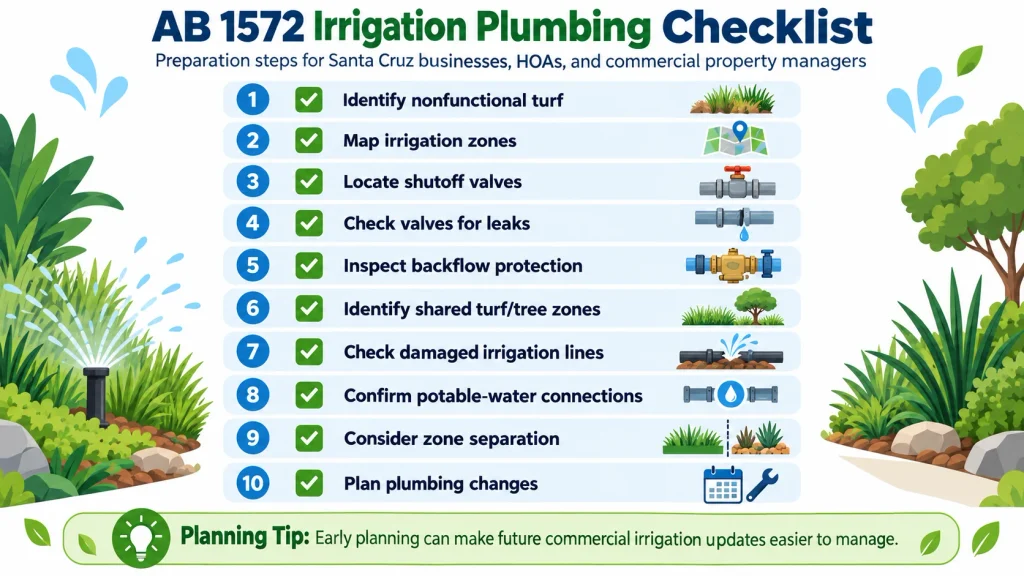
AB 1572 Irrigation Plumbing Checklist
Santa Cruz businesses, HOAs, and commercial property managers can use this quick checklist when preparing irrigation systems for AB 1572:
- Identify nonfunctional turf areas.
- Map existing irrigation zones.
- Locate main and zone shutoff valves.
- Check valves for leaks or corrosion.
- Inspect irrigation backflow devices.
- Note zones shared by turf and trees.
- Look for broken or leaking irrigation lines.
- Confirm which areas use potable water.
- Review opportunities for zone separation.
- Schedule needed plumbing changes before applicable compliance deadlines.
Prepare Your Santa Cruz Irrigation Plumbing for AB 1572
Santa Cruz businesses, HOA boards, commercial property managers, and multi-use properties can contact Anytime Plumbing for help reviewing commercial irrigation plumbing before planned system changes. Our team can assess irrigation supply lines, irrigation shut off valves, backflow devices, leaks, zone-related plumbing concerns, and water-saving upgrades. To discuss your property’s irrigation plumbing needs, call 831-431-6593.
Frequently Asked Questions
No. AB 1572 focuses on the use of potable water to irrigate nonfunctional turf. It does not require every business to remove all grass or stop watering all landscaped areas.
The restrictions are scheduled to apply to commercial and industrial properties on January 1, 2028. For HOA and common-interest-development common areas, the phase-in date is January 1, 2029.
Not necessarily. The changes needed depend on how the existing system is configured. Some properties may only need zone separation, shutoff adjustments, leak repairs, valve changes, or other plumbing modifications rather than a complete irrigation system replacement.