

First-Rain Plumbing Prep for Santa Cruz Homes: Floor Drains, Crawlspaces, and Cleanouts
After months of dry weather, the first sustained rain in Santa Cruz can quickly reveal plumbing and drainage issues that were easy to miss during summer. Homeowners may suddenly notice water collecting near the house, slow or blocked outdoor drains, moisture entering crawlspaces, debris covering drain openings, or low areas in the yard beginning to hold puddles.
Plumbing cleanouts can also become harder to access when leaves, soil, or landscaping build up around them. Checking these areas before heavier rain arrives can make it easier to spot potential problems early rather than dealing with backups or standing water during a storm. Santa Cruz County also recommends keeping drains clear and making sure water can move away from structures before periods of heavy rainfall.
Check Floor and Outdoor Drains Before the Rain Starts
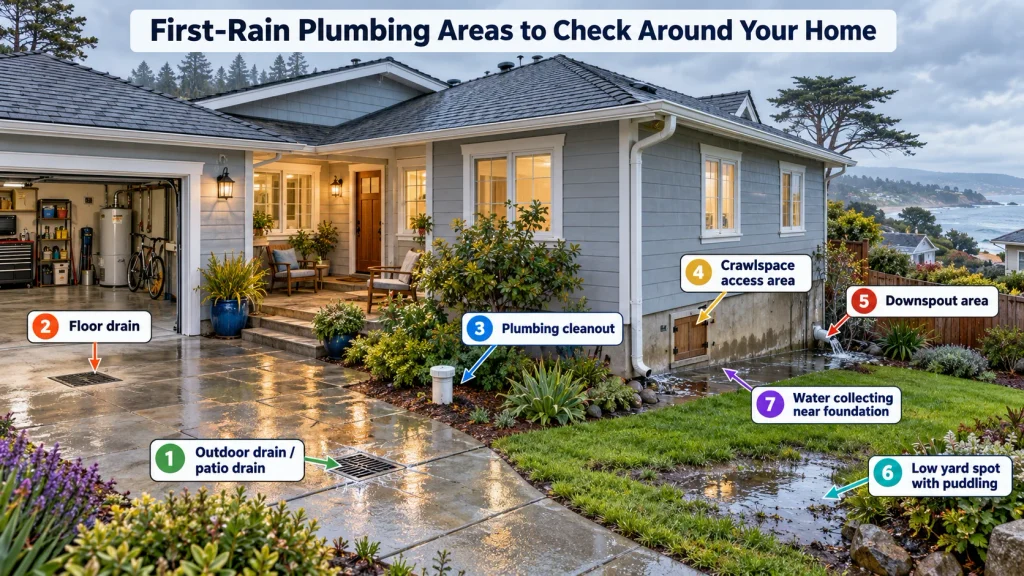
Outdoor drains around patios, garages, utility areas, and other low points can collect debris during Santa Cruz’s long dry season. Leaves, dirt, sediment, small stones, and landscaping material may build up around drain openings without causing an obvious problem until the first steady rain arrives.
Before wet weather sets in, homeowners can do a simple visual check around these areas. Remove loose surface debris, make sure the drain opening is clearly visible, and check whether nearby water has an unobstructed path toward the drain. It is also worth looking for mud packed around grates or signs that water is draining more slowly than expected.
An outside drain blocked with mud may only become noticeable once rain starts falling and water begins to collect. Basic outdoor drain cleaning can help keep surface debris from creating an immediate obstruction, but a recurring clogged outdoor drain or a blocked drain that cannot be reached safely should be inspected professionally. Water backing up through a drain can also point to a deeper problem that should not be ignored.
Look for Water Under the House After Heavy Rain
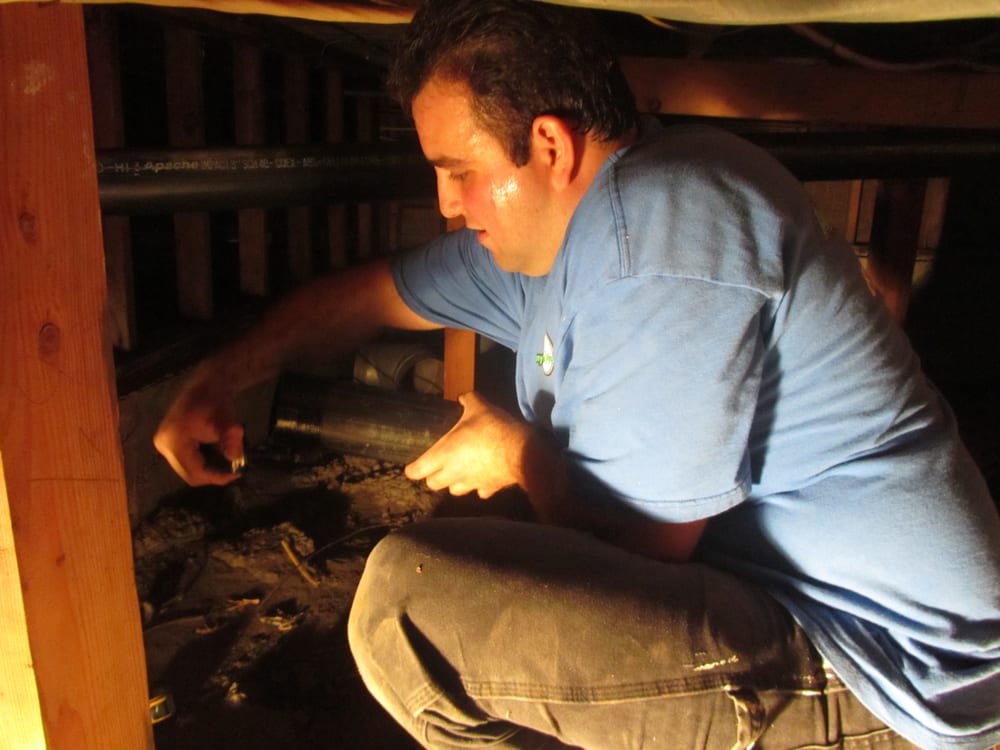
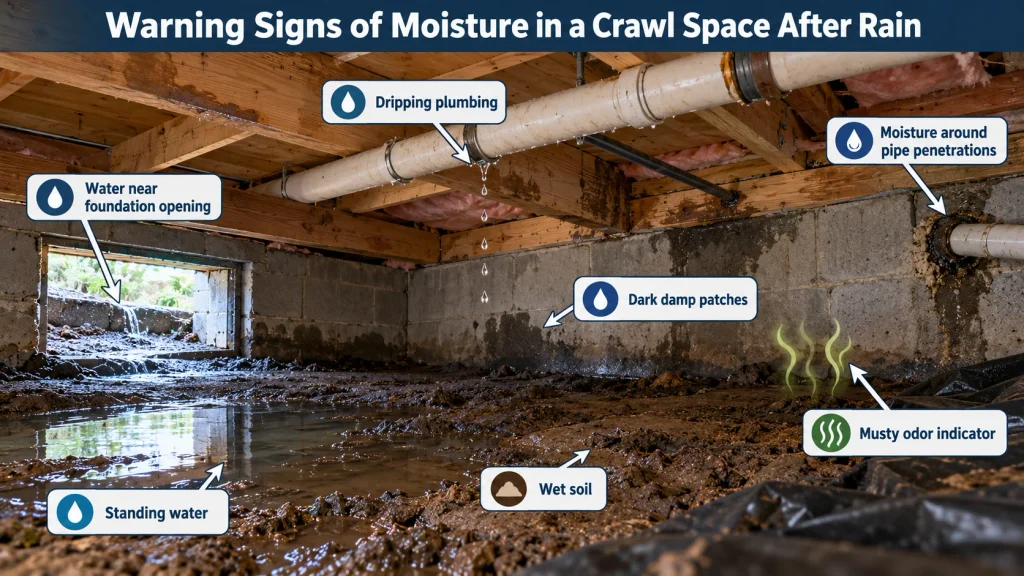
Crawlspaces are worth checking after the first significant rain, especially if your home has been through months of dry weather. New moisture can reveal issues that were not noticeable before. Look for damp patches, standing water, wet soil, dripping pipes, unusual odors, or water appearing near plumbing penetrations and foundation openings.
Finding water under the house after heavy rain does not automatically mean a pipe has failed. Moisture can also enter because of surface runoff, poor water drainage around the house, groundwater, or openings around the foundation. At the same time, a visible water leak in a crawl space may be connected to household plumbing and should be investigated.
If the source is unclear, a plumber can help determine whether the moisture is coming from a supply line, drain line, or another plumbing component. If the problem is related to grading, foundation drainage, or groundwater instead, the homeowner may need a drainage or foundation specialist rather than a plumbing repair.
Make Sure Your Plumbing Cleanouts Are Accessible
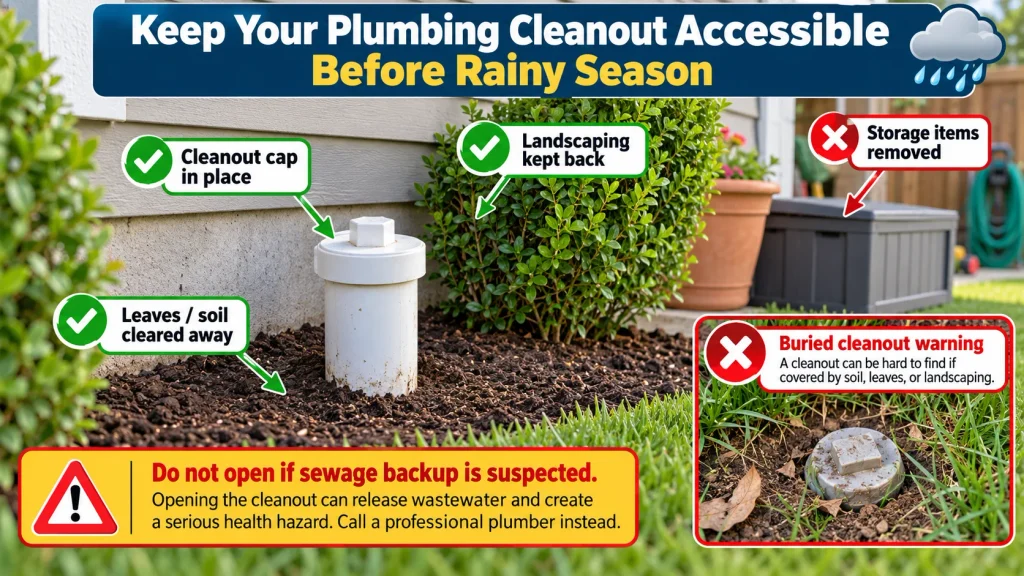
A plumbing cleanout, sometimes called a sewer cleanout, provides access to the home’s drain or sewer line when a plumber needs to inspect or clear a blockage. Before the rainy season, make sure you know where yours is located and that it can be reached easily.
Homeowners should:
- Keep landscaping, storage items, and other obstacles away from the cleanout.
- Remove leaves, soil, or debris that may have built up around it.
- Check that the cleanout cap appears to be securely in place.
- Make sure the cleanout has not become buried or difficult to locate.
- Avoid opening it yourself if there are signs of a sewage backup.
Keeping the cleanout accessible can make Santa Cruz plumbing maintenance and emergency diagnosis easier if a drain or sewer problem develops during wet weather.
Check Where Water Collects Around Your Santa Cruz Home
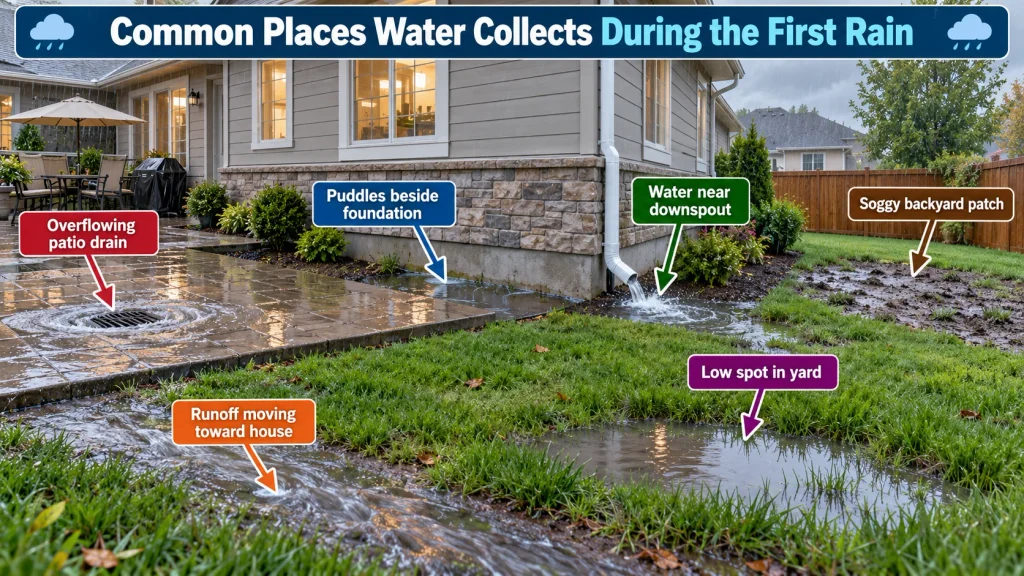
During or shortly after the first steady rain, walk around your property and look for places where water is collecting instead of draining away. Common signs of yard drainage problems include recurring puddles, wet low spots, runoff moving toward the house, patio drains surrounded by water, and overflowing drainage points.
Pay particular attention to areas beside the foundation and around downspouts. If water repeatedly pools near the house, it may contribute to moisture around crawlspaces, foundations, or nearby plumbing areas. Backyard drainage problems can also show up as soggy patches that remain wet long after the rain has stopped.
If a low spot in the yard collects water every time it rains, note how long the water remains after the storm and whether the same area floods repeatedly.
Persistent puddling in the yard does not always mean there is a plumbing problem. The location and pattern of the water can help indicate whether the issue involves household drains or broader site drainage. Santa Cruz County also recommends keeping water moving away from structures during heavy rainfall.
Household Plumbing vs. Santa Cruz Storm Drains
Homeowners sometimes use the term “storm drain” for any exterior drain, but household plumbing and municipal stormwater systems serve different purposes.
| System | What It Does |
| Household sanitary plumbing | Carries wastewater from sinks, toilets, showers, and other fixtures toward the sewer system. |
| Storm drains | Carry rainwater and surface runoff away from streets and other outdoor areas, often toward local waterways. |
For Santa Cruz plumbing concerns involving household drains, sewer lines, cleanouts, or related drainage problems, Anytime Plumbing can help assess the issue.
Problems involving public street drains or municipal stormwater infrastructure generally fall outside household plumbing and may need to be reported to the appropriate local authority.
When a Rain-Related Drainage Problem Needs a Plumber
Some rain-related problems are worth having checked before the next storm arrives. Contact a Santa Cruz plumber if you notice:
- Drains that repeatedly back up during or after rain.
- Wastewater appearing where it should not.
- Several household drains becoming slow at the same time.
- Water coming through a plumbing-connected floor drain.
- A suspected water leak in a crawl space.
- Unusual sewer odors around drains or cleanouts.
- A damaged, loose, or inaccessible cleanout.
- A clogged outdoor drain that remains blocked after loose surface debris is removed.
- Water or drainage problems that return every time it rains.
The purpose of an inspection is to identify whether the problem is caused by a drain blockage, sewer issue, plumbing leak, or something outside the household plumbing system. A blocked drain outside may be plumbing-related, but recurring surface water can also point to broader drainage conditions around the property.
First-Rain Plumbing Checklist for Santa Cruz Homeowners
Before the first heavy rain, take a few minutes to check the most common problem areas around your home:
- Clear visible debris from outdoor drains.
- Check floor and patio drains for slow flow.
- Locate your plumbing cleanout and keep it accessible.
- Look under the house for unexpected moisture.
- Check for standing water near the foundation.
- Note low areas where puddles repeatedly form.
- Watch how quickly outdoor drains clear.
- Call a plumber if you notice backups, leaks, sewer odors, or other recurring drainage problems.
Prepare Your Santa Cruz Plumbing Before the Next Heavy Rain
If you notice blocked drains, crawlspace plumbing leaks, sewer or cleanout issues, or recurring drainage backups, Anytime Plumbing can help evaluate the plumbing side of the problem. For reliable Santa Cruz plumbing maintenance before or after heavy rain, contact a local Santa Cruz plumber at 831-431-6593 to schedule an inspection.
Frequently Asked Questions
Check outdoor and patio drains, make sure plumbing cleanouts are accessible, look for moisture in crawlspaces, and note any standing water near the foundation. Clearing visible debris before the rain can help you spot developing drainage problems earlier.
Water under the house after heavy rain can come from several sources, including surface runoff, groundwater, foundation drainage issues, or a plumbing leak. If the source is unclear, a plumber can help determine whether household plumbing is involved.
Contact a plumber if drains repeatedly back up, several fixtures become slow at once, you notice sewer odors, a cleanout appears damaged, or there is a suspected crawlspace leak. Recurring problems after rain may need professional inspection.