

Old Shut-Off Valves and Supply Lines: What Santa Cruz Homeowners Should Replace
Small plumbing parts often get overlooked because they sit out of sight behind toilets, under sinks, or behind appliances. But old shut off valves and worn plumbing supply lines can become weak over time, increasing the risk of leaks and unexpected water damage.
For homeowners with older properties, regular plumbing maintenance in Santa Cruz can include checking these smaller components along with the more obvious pipes and fixtures. Shut off valve replacement, worn connector replacement, and other simple updates can play an important role in plumbing leak prevention.
Knowing which small plumbing components deserve attention can help homeowners deal with aging parts before a minor weakness becomes an unexpected water leak.
Why Shut-Off Valves and Supply Lines Wear Out
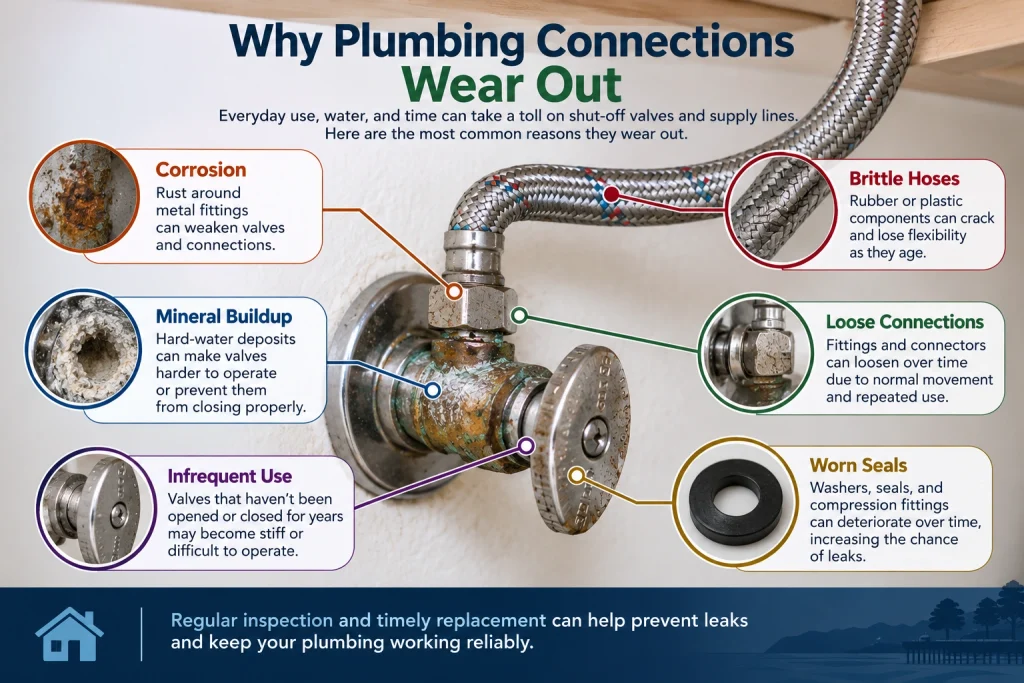
Shut-off valves and supply lines are designed to provide reliable water connections, but they do not last forever. As plumbing components age, everyday exposure to water, pressure, moisture, and repeated use can gradually affect their condition. Aging plumbing fixtures and connections may eventually become harder to operate or more likely to develop small leaks.
Several factors can contribute to wear:
- Corrosion: Older metal valves and fittings can develop rust or corrosion, particularly around connection points.
- Mineral buildup: Hard-water deposits can make old shut off valves difficult to turn or prevent them from closing properly.
- Brittle supply hoses: Rubber or plastic components can become less flexible and develop cracks as they age.
- Loose connections: Fittings and connectors can loosen gradually because of normal movement and repeated use.
- Infrequent operation: A valve that has not been opened or closed for years may become stiff or difficult to operate.
- Worn seals: Washers, seals, and compression fittings can deteriorate over time, increasing the chance of a leaking shut off valve or leaking supply line.
Regular inspection and timely replacement can be a simple part of plumbing leak prevention.
Angle Stops and Shut-Off Valves: Check Them Before You Need Them
Shut-off valves control the flow of water to individual fixtures, making it possible to stop the supply when a toilet, faucet, or other plumbing component needs attention. Over time, an older plumbing shut off valve can become stiff, corroded, or less reliable. Shut off valve replacement may be worth considering when a valve becomes difficult to operate, develops corrosion, or no longer shuts the water off completely.
Angle stops are a common type of shut-off valve found beneath sinks and behind toilets. If an angle stop valve has been left untouched for years, its condition may not become obvious until a repair is needed. Checking these valves during routine maintenance can help homeowners identify problems before an emergency requires the water to be shut off quickly.
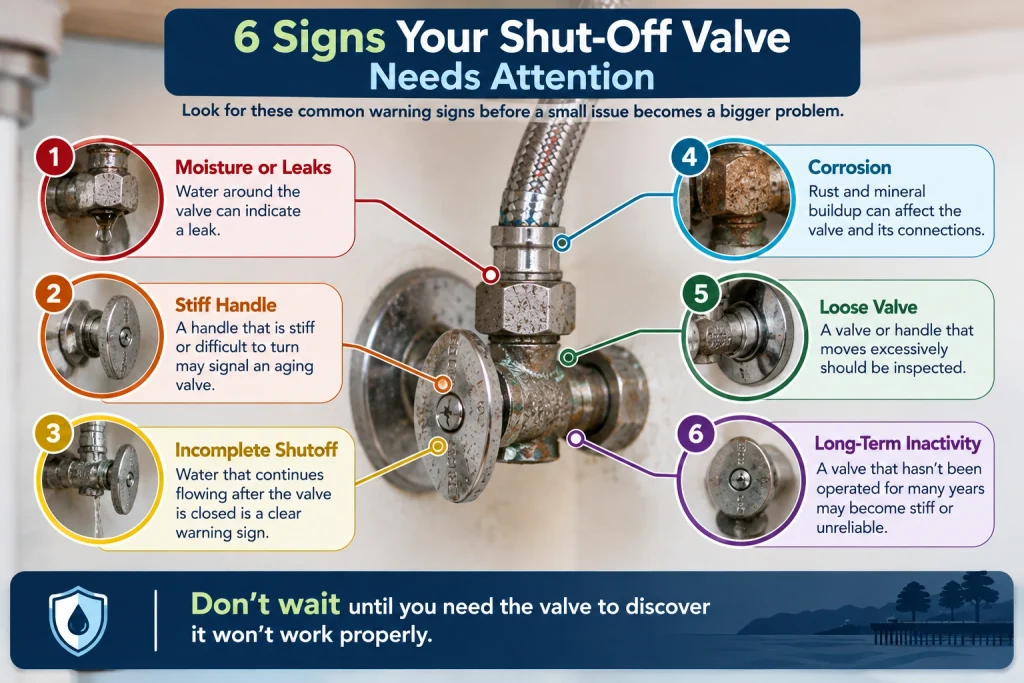
Signs an Older Shut-Off Valve May Need Attention
- Water around the valve: Moisture near the valve stem or connection can indicate a leak.
- Difficult handle: A handle that is stiff or impossible to turn may signal an aging valve.
- Incomplete shutoff: Water that continues flowing after the valve is closed is a warning sign.
- Corrosion or buildup: Rust and mineral deposits can affect the valve and its connections.
- Loose valve: A valve or handle that moves excessively should be inspected.
- Long-term inactivity: A valve that has remained untouched for many years deserves a closer look.
When these issues appear, water shut off valve replacement or angle stop valve replacement can restore dependable fixture-level water control.
Toilet and Faucet Supply Lines
Toilet and faucet supply lines are small components, but they remain under water pressure whenever the fixture is connected to the home’s water system. Over time, these flexible connectors can deteriorate, develop corrosion, or become damaged at the fittings. A small issue can eventually turn into a toilet supply line leak or faucet connector leak.
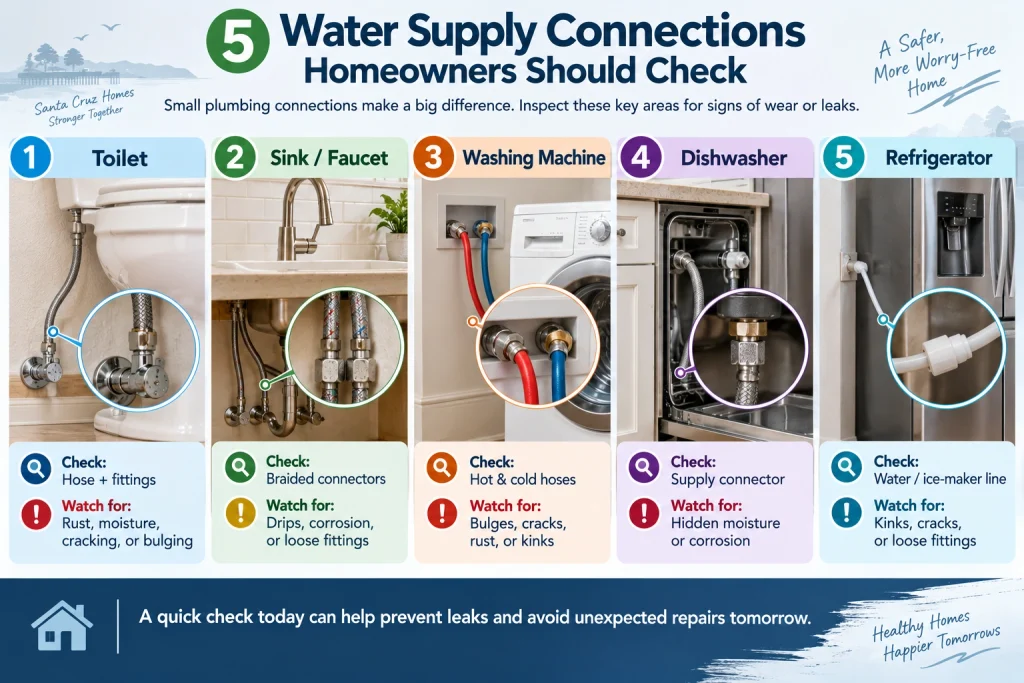
| Component | What to Check | Possible Warning Signs |
|---|---|---|
| Toilet supply line | Hose, fittings, and connections | Rust, moisture, cracking, or bulging |
| Faucet connector | Braided hose and connection points | Drips, corrosion, or loose fittings |
| Shut-off connection | Valve-to-hose connection | Mineral buildup or moisture |
During routine plumbing maintenance, check these connections for visible wear or moisture. If a supply line shows signs of deterioration, toilet supply line replacement or faucet supply line replacement can help reduce the risk of an unexpected leak.
There is no need to replace every supply line simply because it is older. However, when to replace toilet supply lines or other connectors becomes more important when they show visible damage, corrosion, leaking, or worn fittings. Water supply line replacement can also be considered when replacing an older toilet or faucet.
Washing Machine, Dishwasher and Refrigerator Connections
Appliances that use water have their own supply connections, and many of them remain hidden behind or underneath the appliance. Because these lines can stay under pressure for long periods, a worn hose, loose fitting, or damaged connector may eventually cause a leak. Regular inspection can be a simple way to prevent plumbing leaks before they reach flooring, cabinets, or nearby walls.
| Appliance | Plumbing Part to Inspect | What to Look For |
|---|---|---|
| Washing machine | Hot and cold supply hoses | Bulges, cracking, rust, kinks, or damaged fittings |
| Dishwasher | Water supply connector | Moisture beneath the appliance or corroded connections |
| Refrigerator | Ice-maker or water supply line | Kinks, loose fittings, cracks, or hidden moisture |
A washing machine hose replacement may be appropriate when hoses show visible deterioration or damaged fittings. The same principle applies to a dishwasher supply line or refrigerator water line that shows signs of wear.
When replacing an appliance or moving it for cleaning, take the opportunity to inspect the connections. Water supply line replacement can be easier to address during routine maintenance than after a hidden leak has already caused damage.
Simple washing machine hose leak prevention and regular checks of appliance connections can help homeowners catch small problems early.
Which Plumbing Parts Should Be Checked First?
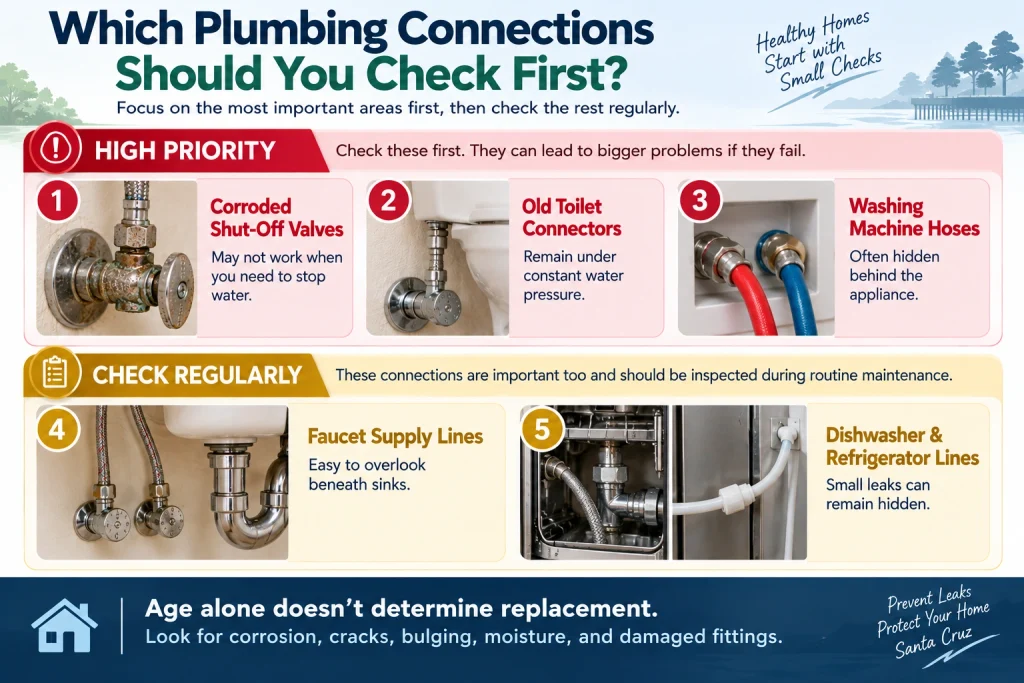
Not every plumbing component needs to be replaced simply because it is old. However, some plumbing parts should be checked before they fail, especially those that remain under constant water pressure or are difficult to notice. Prioritizing these components can support old home plumbing maintenance and help with plumbing leak prevention.
| Priority | Component | Reason to Check |
|---|---|---|
| High | Corroded shut-off valves | May not operate properly when water needs to be stopped |
| High | Old toilet connectors | Remain under water pressure and can deteriorate over time |
| High | Washing machine hoses | Can be hidden behind the appliance and difficult to monitor |
| Medium | Faucet supply lines | Often overlooked beneath sinks and inside cabinets |
| Medium | Dishwasher and refrigerator lines | Leaks may remain hidden until moisture becomes noticeable |
Homeowners can replace plumbing supply lines before they leak when inspection reveals cracking, corrosion, bulging, or damaged connections. Water supply line replacement is also worth considering when an older connector is already showing signs of deterioration or when a fixture or appliance is being replaced.
When Replacement Makes More Sense Than Waiting
Older plumbing components do not automatically need to be replaced. However, preventive plumbing maintenance becomes more useful when a valve or supply line shows visible wear, has a history of leaking, or can no longer be operated reliably. A plumbing inspection for older homes can help determine whether a component should be repaired, monitored, or replaced.
Replacement may make sense when:
- The valve shows corrosion or leakage: Visible damage can indicate that the shut-off valve is no longer in good condition.
- The supply hose is damaged: Cracks, kinks, rust, bulges, or worn fittings are common signs a water supply line needs replacement.
- A fixture or appliance is being replaced: It can be practical to replace an accessible supply line at the same time.
- The water will not shut off completely: A faulty valve can make future repairs more difficult.
- The plumbing history is unknown: Older components with an uncertain maintenance history may deserve closer inspection.
For homeowners planning plumbing maintenance in Santa Cruz, addressing worn components during routine service can be more convenient than waiting for a leak to force an emergency repair.
Why Fall Is a Good Time for a Plumbing Check
Fall can be a practical time to include smaller plumbing components in your regular maintenance routine. Before the colder months bring more time spent indoors, inspect toilets, bathroom and kitchen sinks, and other fixtures for signs of moisture, corrosion, or worn connections. This type of preventive plumbing maintenance can support plumbing leak prevention and help identify minor issues early.
Also check laundry connections, dishwasher connections, and refrigerator water lines, particularly where hoses and fittings are hidden from view. For older properties, these checks can be a useful part of old home plumbing maintenance. Taking care of worn components during seasonal service may help reduce the chance of an unexpected plumbing problem later in the year.
Small plumbing components can be easy to overlook, but worn shut-off valves, supply lines, and appliance connections can create problems when they are no longer in good condition. Including these parts in routine maintenance gives homeowners an opportunity to address corrosion, leaks, and damaged connections before they become more serious.
For homeowners who are unsure about the condition of older plumbing components, a professional inspection can help identify parts that may need attention. Shut off valve replacement, supply line updates, and other preventive work can support plumbing leak prevention and reduce the chance of unexpected repairs.
For reliable plumbing maintenance in Santa Cruz or help with Santa Cruz plumbing repair, have your home’s plumbing connections checked before a small issue becomes a bigger problem.