

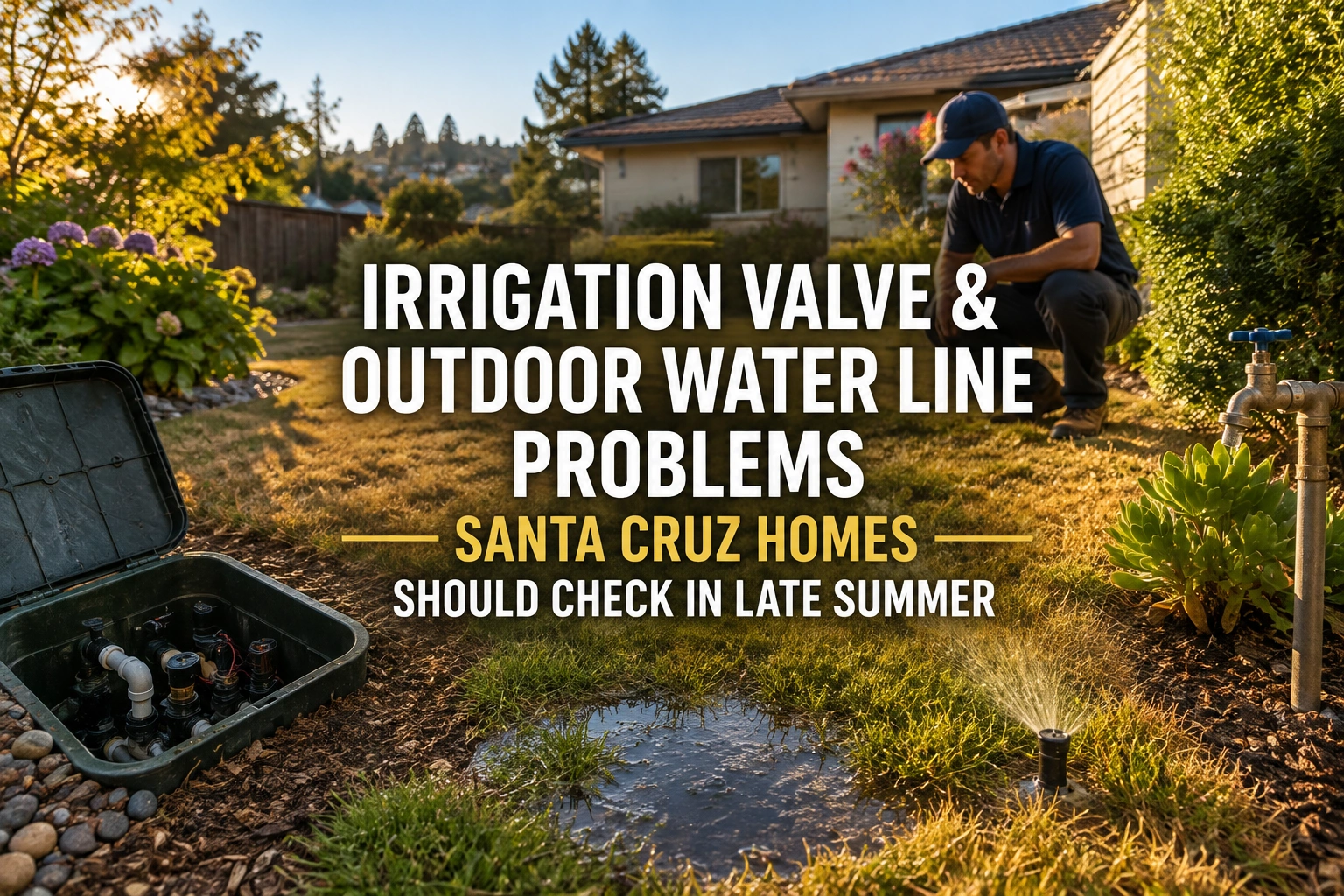
Irrigation Valve and Outdoor Water Line Problems Santa Cruz Homes Should Check in Late Summer
Outdoor plumbing leaks can be difficult to spot during late summer, especially when dry weather and frequent irrigation make damp soil, a wet valve box or a higher water bill seem like normal landscaping issues. In many cases, however, these signs may point to an irrigation system leak that needs attention.
Santa Cruz County homeowners should check sprinkler control valves, outdoor shutoff valves, irrigation pipes and buried outdoor water lines for signs of leakage. Finding an irrigation valve leak or outdoor water line leak early can help reduce water waste and prevent avoidable damage to landscaping, soil and surrounding property.
Why Outdoor Plumbing Problems Become More Noticeable in Late Summer
Late summer often brings heavier irrigation use, drier soil and more pressure on outdoor plumbing components. These conditions may not create every leak, but they can make an existing irrigation system leak or other outdoor water line problems easier to detect.
- Sprinkler systems may run more frequently to support dry lawns and landscaping.
- Dry or shifting soil can place pressure on a buried irrigation pipe.
- Aging outdoor plumbing fittings, seals and connections may weaken over time.
- Repeated valve opening and closing can increase wear on internal components.
- Tree roots or recent landscaping work may disturb underground water lines.
- Small leaks may become more visible as irrigation use and water demand increase.
Because valves control water flow to individual sprinkler zones, irrigation valves are often one of the first areas homeowners should inspect when dry weather plumbing problems appear.
Signs of a Leaking or Failing Irrigation Valve
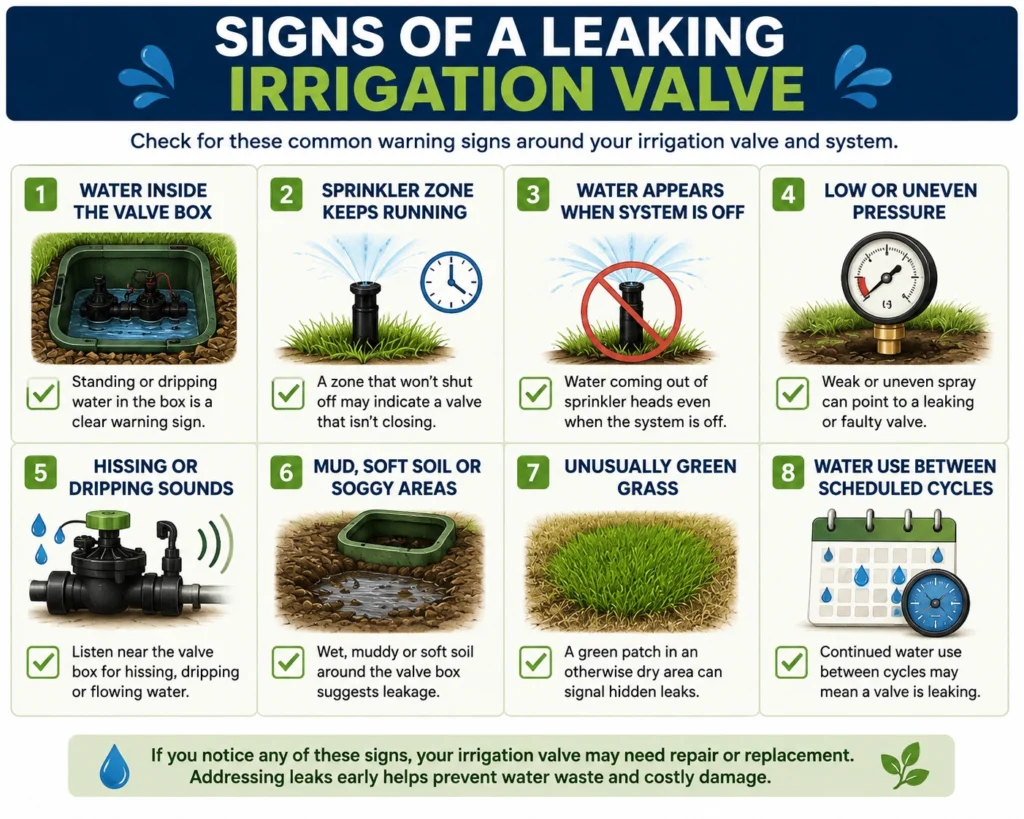
A leaking sprinkler valve may not always produce an obvious spray of water. In many cases, the first signs appear around the valve box, within one sprinkler zone or between scheduled watering cycles.
- Water collecting inside the sprinkler valve box
- A sprinkler zone that continues running after it should stop
- Water appearing even when the irrigation system is turned off
- Low or uneven pressure in one section of the yard
- Hissing, dripping or flowing-water sounds near the valve
- Mud, soft soil or unusually green grass around the valve box
- A valve that works correctly only some of the time
- Water usage continuing between scheduled irrigation cycles
These irrigation valve problems may involve a worn diaphragm, faulty solenoid, damaged seal, loose fitting or nearby pipe connection. When an irrigation valve is leaking when off, or a sprinkler zone will not shut off, the system should be inspected before the problem leads to greater water waste or damage.
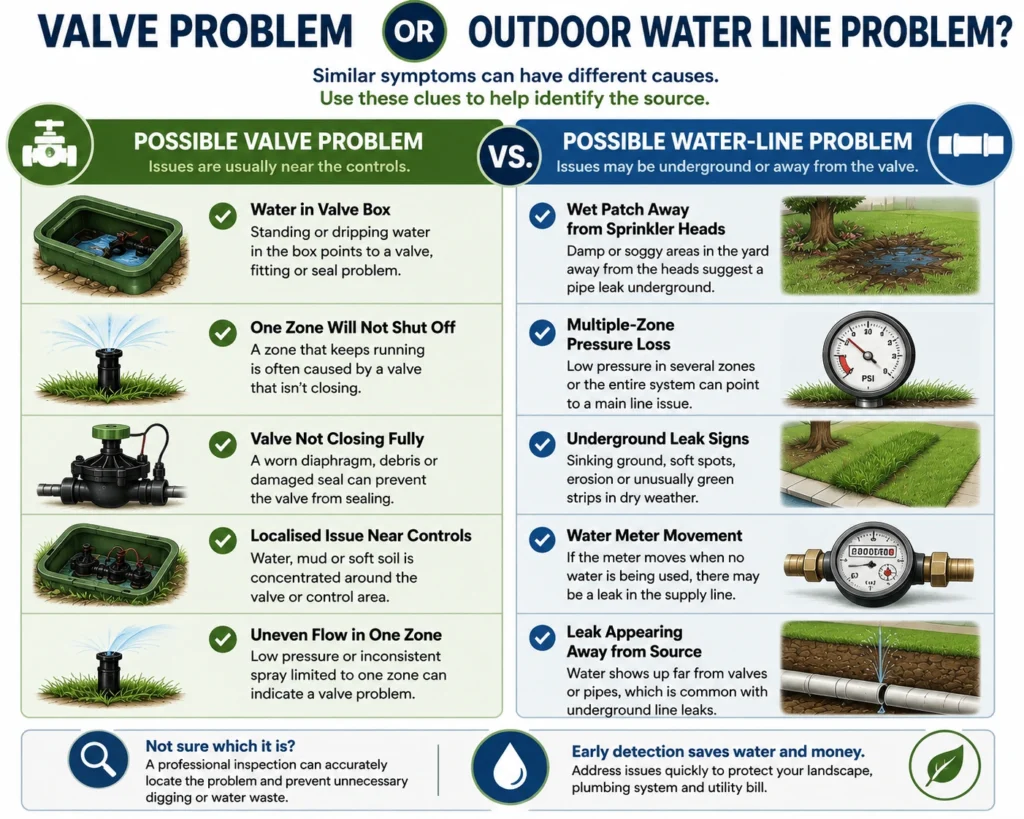
Is the Problem in the Valve or the Outdoor Water Line?
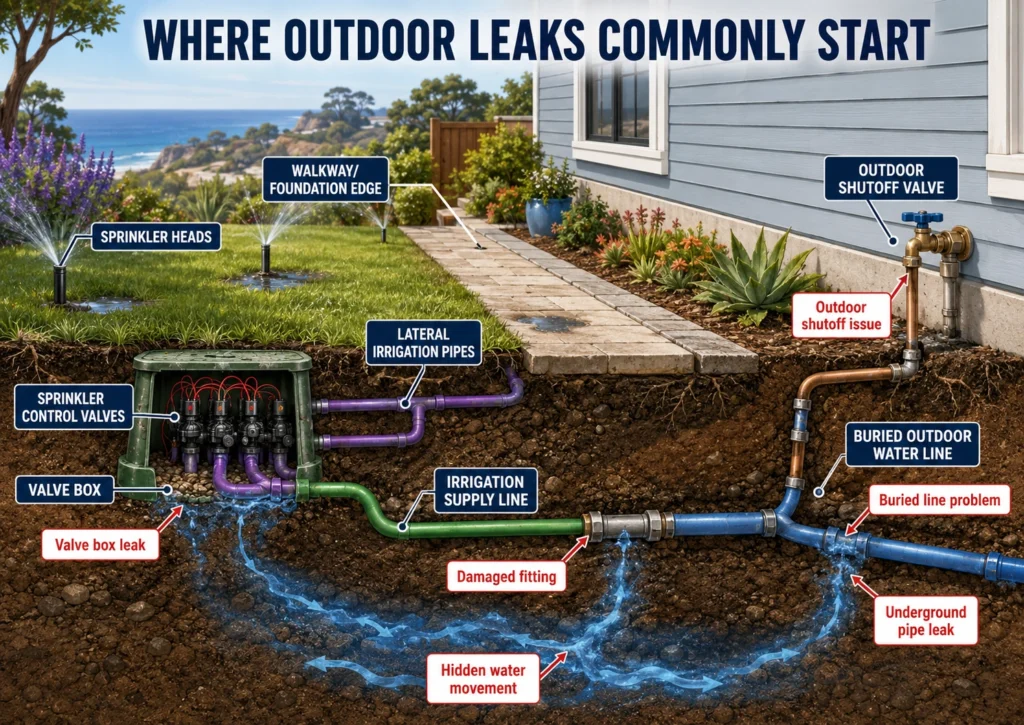
Similar symptoms can come from different parts of an irrigation system. A wet valve box may indicate an irrigation valve problem, but water can also move through the soil from an irrigation pipe leak or underground supply line leak nearby.
| Warning sign | Possible valve problem | Possible water-line problem |
| Water inside the valve box | Damaged seal, diaphragm or fitting | Nearby underground pipe leak |
| One zone will not stop running | Valve is not closing correctly | Less commonly caused by the supply line |
| Wet area away from sprinkler heads | Possible lateral-line connection leak | Possible buried outdoor line leak |
| Low pressure across several zones | Valve or manifold restriction | Main irrigation supply-line damage |
| Water meter moves when fixtures are off | Valve may be allowing water through | Underground supply line may be leaking |
Because outdoor water line problems can appear away from the damaged area, professional yard water leak detection may be needed to confirm the source.
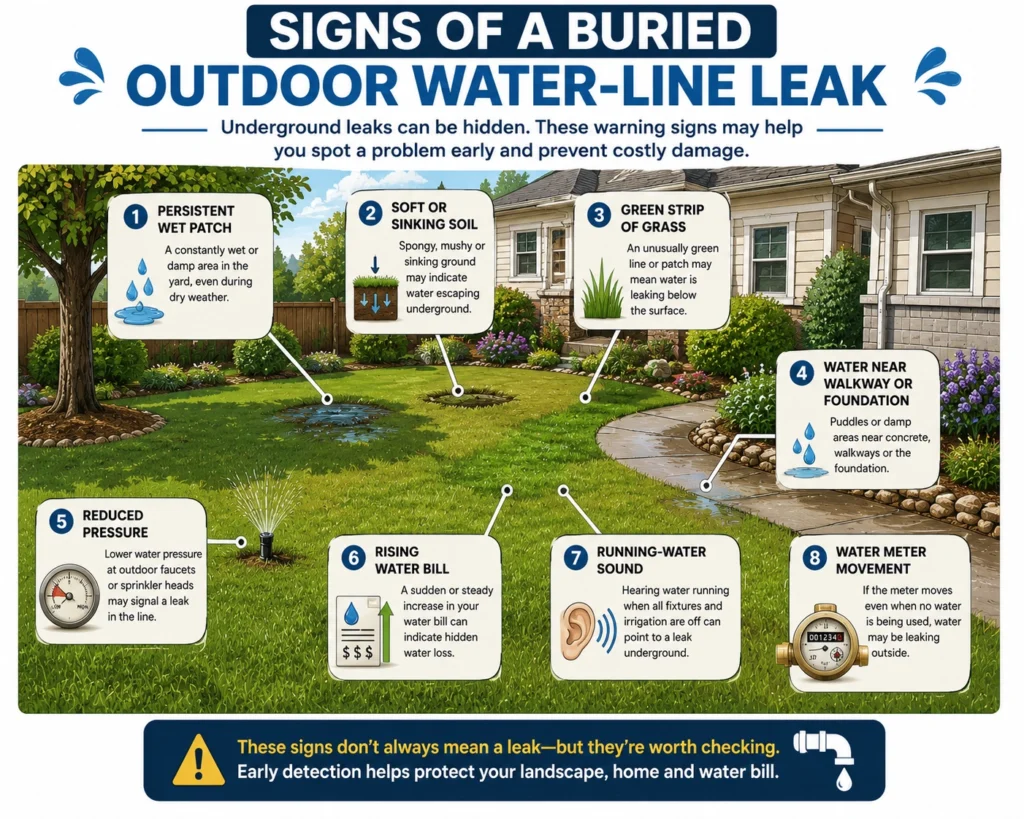
Signs of a Buried Outdoor Water-Line Leak
A buried water line leak may not create an obvious spray or visible puddle. Water can spread through the soil and appear several feet away from the damaged pipe, making the source difficult to identify without careful inspection.
- A persistent wet or soft patch in the yard
- Soil erosion, sinking ground or newly formed depressions
- An unusually green strip of grass during dry weather
- Water appearing near a walkway, driveway or foundation
- Reduced pressure at outdoor faucets or sprinkler heads
- A sudden or unexplained increase in the water bill
- The sound of running water when fixtures are turned off
- Water meter movement when no known water is being used
These signs may result from a leaking irrigation pipe, underground supply line or another outdoor plumbing source. Accurate yard water leak detection is important because unnecessary digging may damage landscaping without finding the problem. A professional inspection can help locate the buried water line leak and determine which section requires repair.

Simple and Safe Checks Homeowners Can Perform
Homeowners can perform several basic checks for an irrigation leak without digging or dismantling valves.
- Turn off indoor faucets, appliances and other known water-using fixtures.
- Check whether the water meter continues recording usage when everything is off.
- Look inside irrigation valve boxes for standing, dripping or flowing water.
- Run each sprinkler zone separately and watch for low or uneven pressure.
- Inspect outdoor shutoff valves, exposed fittings and pipe connections for moisture.
- Walk around the yard and look for soft soil, erosion, pooling water or isolated green patches.
- Turn the irrigation controller off and check whether sprinkler heads or valves continue releasing water.
These steps can help homeowners check a sprinkler system for leaks and narrow down where an outdoor water leak may be located. Do not force a damaged shutoff valve or excavate near unknown utility lines. If water continues flowing, arrange a professional irrigation valve inspection.
Outdoor Water Problems in Santa Cruz County Communities
Property age, landscaping, soil conditions and access can affect where an outdoor plumbing leak appears and how easily its source can be identified across Santa Cruz County.
- Santa Cruz and Soquel: Older properties may have aging outdoor pipes, valves, fittings or connections that are more vulnerable to leakage.
- Aptos: Sloped and heavily landscaped properties may allow water from an outdoor line leak to travel away from the damaged section.
- Scotts Valley: Dry soil, tree roots and mature landscaping can conceal or redirect water from a buried irrigation leak.
- Watsonville: Larger yards and frequently used irrigation systems may include more sprinkler valves, zones and underground pipe connections.
A Santa Cruz County plumber can inspect the system and determine whether irrigation valve repair or outdoor water-line repair is required.
When an Outdoor Leak Requires a Plumber
Basic observation may help identify warning signs, but professional help is recommended when the source of an outdoor leak remains unclear or difficult to access.
- The water meter continues moving when fixtures are off.
- The valve box repeatedly fills with water.
- A sprinkler zone will not shut off.
- The ground stays wet during dry weather.
- Outdoor water pressure suddenly falls.
- The leak appears beneath soil, paving or concrete.
- An outdoor shutoff is damaged or difficult to operate.
- The water bill rises without an obvious reason.
A plumber can determine whether the problem involves an irrigation valve, outdoor shutoff, pipe connection or buried supply line. Learn more about Anytime Plumbing’s professional leak detection and outdoor water line repair services.
Request Outdoor Leak Inspection in Santa Cruz
Contact Anytime Plumbing for irrigation valve repair or outdoor water line repair in Santa Cruz when you notice standing water, unexplained meter activity or signs of a buried leak.
Frequently Asked Questions
A sprinkler valve box full of water may indicate a leaking valve, loose fitting, damaged pipe connection or water travelling through the soil from another underground leak nearby.
Yes. An irrigation valve leaking when off may not be closing completely, allowing water to continue passing through even after the controller has been switched off.
Yes. An irrigation leak can increase a high water bill through continuous or intermittent water loss, especially when the system is used more frequently during late summer.