

Dishwasher Air Gap Leaking Water? Causes and Fixes for Santa Cruz Kitchens
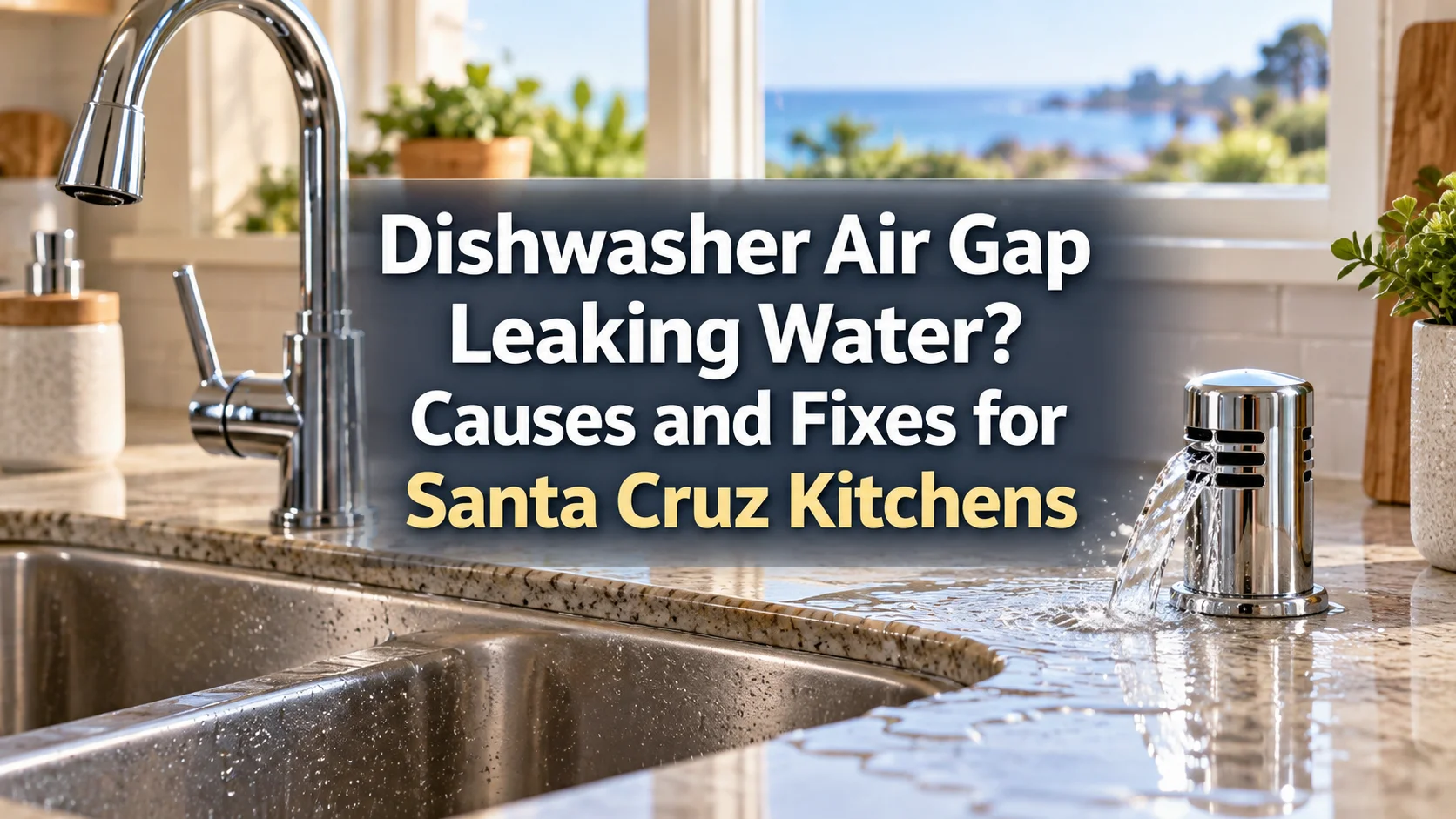
You start your dishwasher as usual, but when it begins draining, water suddenly spills from the small capped fitting beside your kitchen faucet. The water may spread across the countertop or collect behind the sink. For homeowners in Santa Cruz County, a leaking dishwasher air gap often points to a drainage problem rather than a faulty dishwasher. Food debris, grease buildup, or a blocked drain hose can prevent wastewater from flowing properly. Understanding what causes these leaks can help you identify the problem, prevent repeated overflows, and determine when plumbing repairs are necessary.
What Is a Dishwasher Air Gap, and Why Does It Matter?
A dishwasher air gap is a small plumbing fitting installed on the kitchen sink deck or countertop, usually covered by a chrome, stainless steel, or plastic cap. Its purpose is to prevent contaminated water from the sink or garbage disposal from flowing backward into the dishwasher.
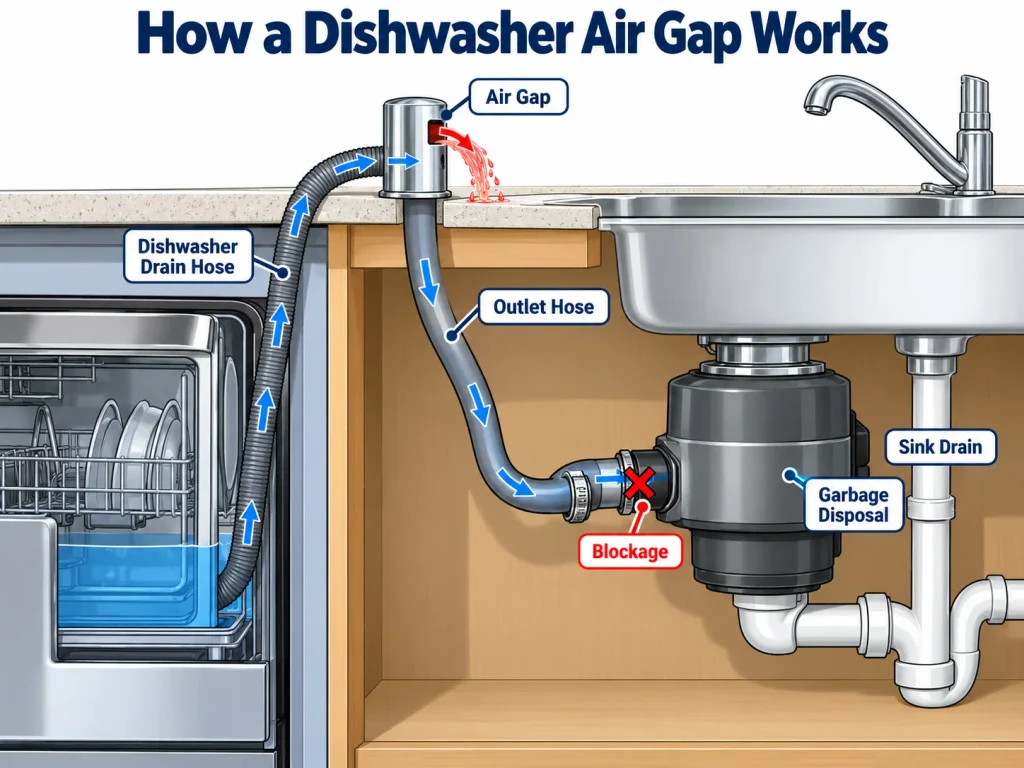
The air gap works by creating a physical separation in the dishwasher’s drainage system. Here’s how the process works:
- Wastewater leaves the dishwasher through a drain hose during the draining cycle.
- Water passes through the air gap assembly, which provides protection against backflow.
- A larger outlet hose carries the wastewater to the garbage disposal or kitchen sink drain connection.
- If the outlet becomes blocked, wastewater may overflow through the air gap opening onto the countertop.
Although overflowing water indicates a drainage problem, the air gap still serves its protective purpose by maintaining separation between the dishwasher and potentially contaminated wastewater.
Why Is Water Leaking From the Dishwasher Air Gap?
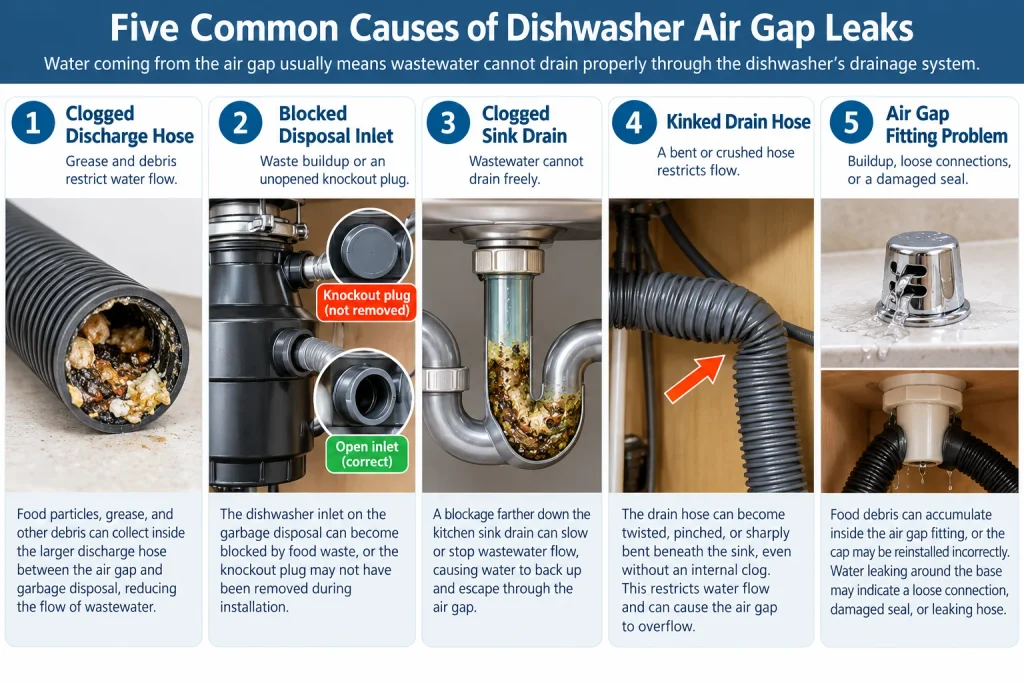
Water leaking from a dishwasher air gap usually indicates that wastewater cannot flow freely through the drainage system. The problem may involve a clogged hose, blocked garbage disposal connection, restricted sink drain, or an issue with the air gap assembly itself. Here are five common causes.
1. A Clogged Hose Between the Air Gap and Garbage Disposal
The larger discharge hose connecting the air gap to the garbage disposal can gradually collect food particles, grease, and other debris. As buildup narrows the passage, wastewater struggles to reach the drain.
When the dishwasher pumps out water, the restricted flow can force water upward and out through the air gap opening. This hose is one of the first places to inspect if the air gap leaks during the dishwasher’s draining cycle.
2. A Blocked Garbage Disposal Connection
Many dishwasher drainage systems connect to the kitchen garbage disposal. Food waste or debris near this connection can restrict wastewater flow, causing the air gap to overflow.
Another possible cause is an unopened dishwasher inlet knockout plug. New garbage disposals typically have a removable plug that must be knocked out when connecting a dishwasher.
If the leaking started shortly after a garbage disposal replacement, an unopened knockout plug or improperly connected drain hose may be responsible.
3. A Clogged Kitchen Sink Drain
A blockage farther down the kitchen sink drain can also interfere with dishwasher drainage. Grease, food scraps, and other materials may accumulate inside the drainpipe, slowing the flow of wastewater.
Common warning signs include:
- Water draining slowly from the kitchen sink.
- Standing water remaining in the sink.
- Dishwasher air gap overflow occurring alongside sink drainage problems.
Cleaning the air gap alone will not resolve a blockage farther down the drain.
4. A Kinked or Improperly Positioned Drain Hose
Drain hoses beneath the kitchen sink can become twisted, pinched, or sharply bent. Even without an internal clog, these restrictions can prevent wastewater from flowing efficiently.
This problem sometimes develops after kitchen renovations, dishwasher replacements, or rearranging items inside the sink cabinet. Incorrect hose routing during installation can also contribute to drainage problems.
5. A Blocked or Improperly Installed Air Gap Assembly
Food debris or residue can accumulate inside the air gap fitting itself. An incorrectly reassembled cap or improperly installed component may also interfere with drainage.
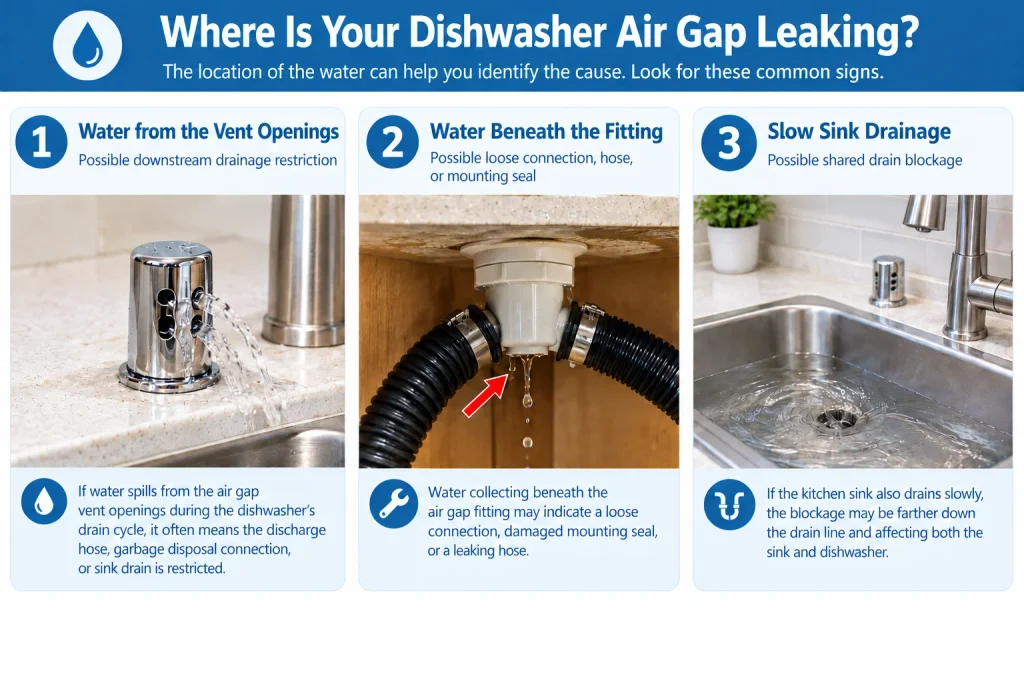
The location of the leak provides an important clue. Water spilling from the air gap’s vent openings typically suggests restricted drainage, while water leaking around the fitting’s base may indicate a loose mounting connection or damaged seal.
Identifying the source is important because a leaking dishwasher air gap does not always need replacement. In many cases, correcting the underlying drainage restriction resolves the problem.
How to Tell Where the Dishwasher Air Gap Leak Is Coming From
Identifying when and where the water appears can help you narrow down the cause of a dishwasher air gap leak. For example, water overflowing during the dishwasher’s drain cycle often indicates a restriction in the drainage system, while moisture collecting beneath the fitting may point to a loose or damaged connection.
Before attempting repairs, look for these common warning signs:
| What You Notice | Possible Explanation |
| Water spills from the air gap during draining | Restricted discharge hose or downstream drain |
| Kitchen sink also drains slowly | Blockage in the sink or shared drainpipe |
| Leak begins after garbage disposal replacement | Unopened knockout plug or incorrect drain connection |
| Water collects beneath the air gap fitting | Loose connection, damaged mounting seal, or leaking hose |
| Dishwasher retains wastewater | Drainage blockage or possible dishwasher pump problem |
These symptoms provide useful clues but do not confirm the exact cause. Different plumbing problems can produce similar signs.
Pay attention to whether the leak occurs every time the dishwasher drains, only occasionally, or alongside slow sink drainage. Sharing these observations with a plumber can help them identify the source more efficiently and recommend the appropriate repair.
How to Fix a Leaking Dishwasher Air Gap Safely
If your dishwasher air gap is leaking, a few simple checks may help identify the problem. Start with basic cleaning and visual inspections before attempting more complicated plumbing repairs.
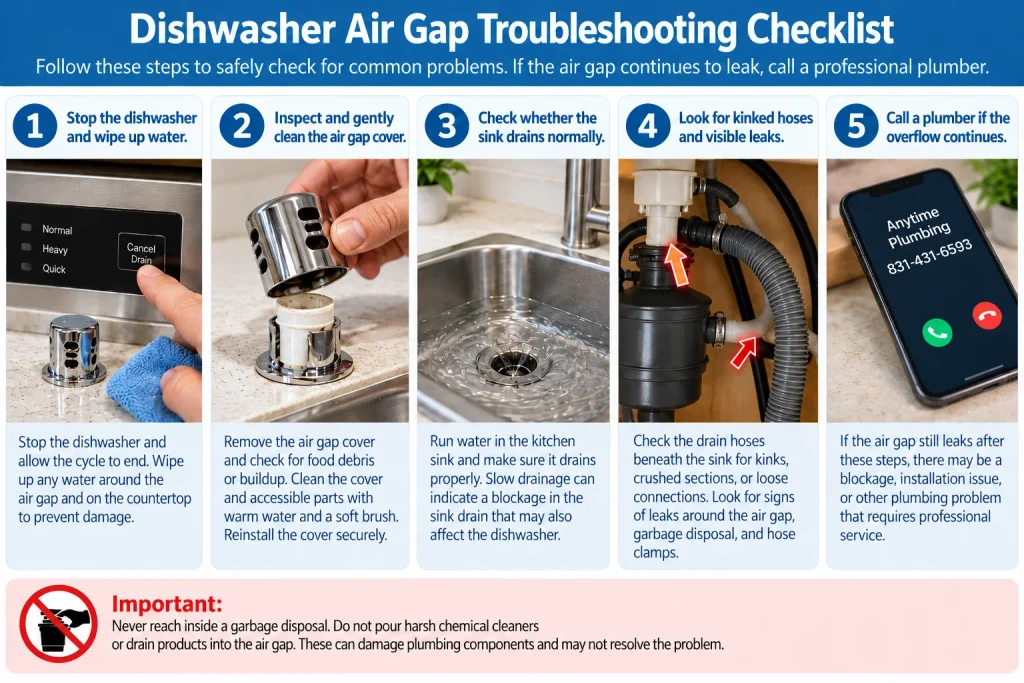
Step 1: Stop the Dishwasher and Clean Up the Water
Pause or stop the dishwasher before inspecting the air gap. Wipe up standing water from the countertop and surrounding surfaces to prevent moisture from reaching cabinets or electrical outlets.
If water has reached electrical components, avoid touching affected equipment and seek professional assistance.
Step 2: Remove and Inspect the Air Gap Cover
Most dishwasher air gaps have a removable decorative cap. If yours is designed for removal, carefully lift it off following the manufacturer’s instructions.
Check accessible openings for food particles, grease, or other debris. Gently remove visible buildup using a soft brush or cloth. Avoid forcing sharp tools into the fitting, as this could damage internal components.
Step 3: Check the Kitchen Sink and Garbage Disposal
Run a small amount of water into the kitchen sink to check whether it drains normally. Slow drainage may indicate a blockage farther down the drainpipe.
If you have a garbage disposal, follow the manufacturer’s safety instructions when checking it. Never put your hand inside the disposal. If the leak started after a disposal replacement, the dishwasher drain connection may need inspection.
Step 4: Look for Visible Drain Hose Problems
Inspect the hoses beneath the kitchen sink for obvious kinks, sharp bends, crushed sections, or loose connections.
Check for water collecting inside the cabinet, which may indicate a leaking hose or fitting. Avoid disconnecting plumbing connections without the appropriate tools and experience.
Step 5: Arrange Plumbing Repairs If Water Continues to Leak
If the air gap continues overflowing, the problem may require professional drain cleaning, hose repositioning, connection repairs, or replacement of a damaged fitting.
Avoid pouring harsh chemical drain cleaners into the air gap or dishwasher drainage system, as they may damage components and create safety risks.
Need Help With a Leaking Dishwasher Air Gap? Contact Anytime Plumbing at 831-431-6593 for professional kitchen plumbing and drainage repairs in Santa Cruz County.
Are Dishwasher Air Gaps Required in Santa Cruz, California?
Yes. Dishwasher air gaps are required for residential dishwasher drainage connections under California plumbing regulations, including those applicable in Santa Cruz County. The 2025 California Plumbing Code, effective January 1, 2026, addresses this requirement in Section 807.3.
An approved dishwasher air gap creates a physical separation between the dishwasher and the kitchen drainage system, preventing contaminated wastewater from flowing back into the appliance. The fitting must be installed with its flood-level marking at or above the flood level of the sink or drainboard, whichever is higher.
Some dishwasher installations use a high-loop drain hose, which routes the hose upward beneath the countertop. However, a high loop alone does not replace the approved air gap required under California plumbing regulations.
If you’re remodeling your kitchen or replacing a dishwasher, confirm the applicable installation requirements. Removing or bypassing a leaking air gap is not a proper solution because it eliminates an important backflow protection measure without addressing the underlying drainage problem.
When Should You Call a Plumber for a Leaking Dishwasher Air Gap?
While minor air gap clogs may be resolved through basic cleaning, recurring leaks often indicate a drainage problem that requires professional attention.
Consider contacting a plumber if:
- Water continues overflowing after removing accessible debris.
- The kitchen sink drains slowly or repeatedly backs up.
- Water leaks from hoses or plumbing connections beneath the sink.
- The problem started after replacing a garbage disposal or completing kitchen plumbing work.
- Moisture is accumulating inside cabinets or damaging surrounding materials.
- Identifying the blockage requires disconnecting hoses or opening plumbing connections.
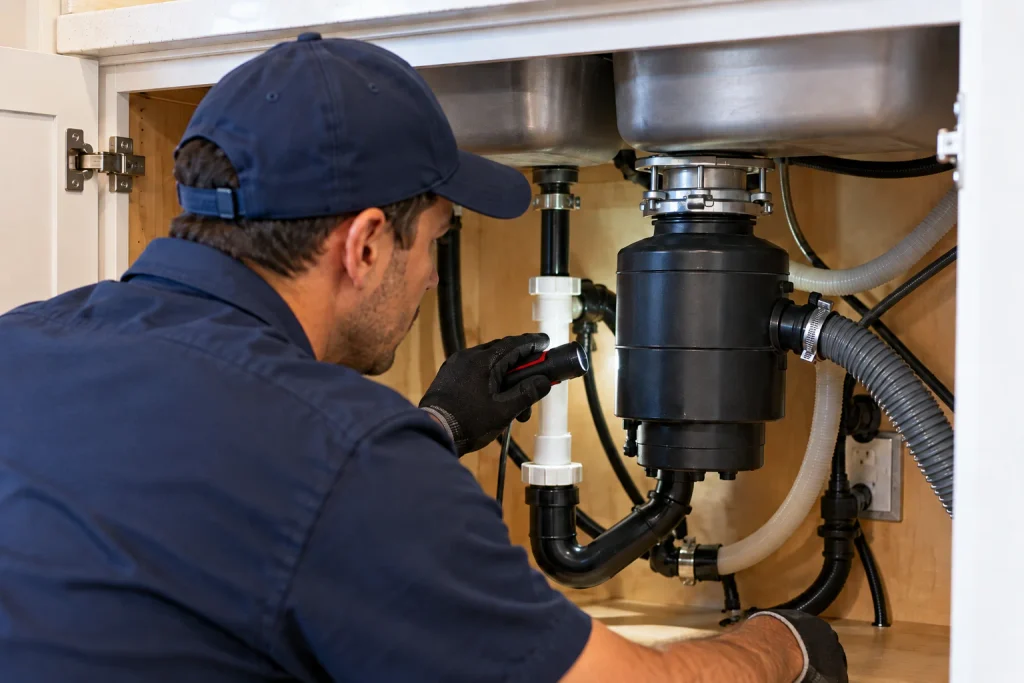
A professional plumber can inspect the dishwasher drainage connections, clear blockages, correct improperly positioned hoses, and repair or replace damaged plumbing components.
Anytime Plumbing provides drain cleaning, garbage disposal repair and replacement, and leaking pipe repairs throughout Santa Cruz County.
However, if the dishwasher has an internal pump failure, electronic control problem, or another appliance-related malfunction, a qualified appliance repair technician may be more appropriate.
How to Prevent Dishwasher Air Gap Leaks in Your Kitchen
Regular maintenance can help reduce the risk of dishwasher air gap leaks by keeping wastewater flowing freely through your kitchen drainage system.
Here are some practical preventive measures:
- Remove excess food scraps from dishes before loading the dishwasher to reduce debris entering the drainage system.
- Clean the dishwasher filter regularly according to the manufacturer’s instructions.
- Maintain your kitchen sink drain and garbage disposal to prevent grease, food waste, and debris buildup.
- Inspect the air gap cover periodically for visible residue or blockages around accessible openings.
- Keep drain hoses unobstructed by avoiding heavy cleaning supplies or other items that could pinch hoses beneath the sink.
- Watch for slow drainage after kitchen renovations, appliance replacements, or plumbing modifications.
- Address recurring minor leaks promptly before moisture damages cabinets or surrounding materials.
Kitchen plumbing configurations vary across older homes, remodeled kitchens, apartments, and newer residences throughout Santa Cruz, Watsonville, Aptos, Scotts Valley, Capitola, and Soquel. Regular inspections can help homeowners identify potential drainage problems early.
Stop Dishwasher Air Gap Leaks Before They Damage Your Kitchen
Water leaking from a dishwasher air gap often indicates a blockage or restriction in the discharge hose, garbage disposal connection, or kitchen sink drain. While removing accessible debris may resolve minor clogs, persistent leaks require further investigation to identify and correct the underlying problem.
Maintaining a properly installed dishwasher air gap is also essential for preventing contaminated wastewater from flowing back into your dishwasher. Addressing drainage problems early can help protect your kitchen cabinets and surrounding surfaces from water damage.
Dealing with a leaking dishwasher air gap or slow kitchen drain? Anytime Plumbing provides professional drain cleaning and kitchen plumbing repairs throughout Santa Cruz County. Call 831-431-6593 to schedule service.
Frequently Asked Questions
Water usually comes out of the dishwasher air gap when wastewater cannot drain properly. A clogged discharge hose, blocked garbage disposal connection, or restricted kitchen sink drain can force water back toward the air gap, causing it to overflow onto the countertop.
No. Although the air gap is designed to prevent contaminated wastewater from flowing back into the dishwasher, water should not regularly spill onto the countertop. Repeated overflow typically indicates a drainage restriction, blockage, or installation problem that needs attention.
Yes. Many dishwashers drain through a connection to the garbage disposal. If food debris or grease blocks the disposal's dishwasher inlet or restricts downstream drainage, wastewater may back up through the discharge hose and escape from the air gap opening.
A common cause is an unopened dishwasher inlet knockout plug inside the new garbage disposal. If this plug was not removed during installation, wastewater cannot enter the disposal. An incorrectly connected or kinked discharge hose may also cause the air gap to overflow.
Removing or bypassing the air gap is not recommended. California plumbing regulations require an approved air gap for residential dishwasher drainage connections. Instead of removing this protective component, identify and correct the underlying blockage, damaged connection, or installation issue causing the leak.
A plumber is generally the right professional for problems involving the air gap, drain hoses, garbage disposal connections, or kitchen sink drainage. However, if the issue involves an internal dishwasher pump, electronic controls, or other appliance components, a qualified appliance repair technician may be needed.