

Sump Pump and Crawl Space Drainage Checks for Santa Cruz Mountain Homes
As wetter winter weather approaches the Santa Cruz Mountains, homeowners in hillside and wooded communities such as Felton, Boulder Creek, and Ben Lomond should take time to review drainage conditions around and beneath the home. Sloped lots, heavy tree cover, and uneven terrain can create different water-flow patterns than flatter properties.
Heavier rain may reveal a sump pump that has not been tested recently, a blocked or damaged discharge line, standing water beneath the house, wet crawlspace soil, or drainage paths that are no longer moving water effectively.
Not every mountain home has or needs a sump pump, but homes with existing crawl space drainage or pump systems should be checked before major storms arrive. Basic sump pump maintenance and early inspection can help identify problems before water in the crawl space after rain becomes more difficult to manage.
Check That Your Sump Pump Is Ready for Winter Storms
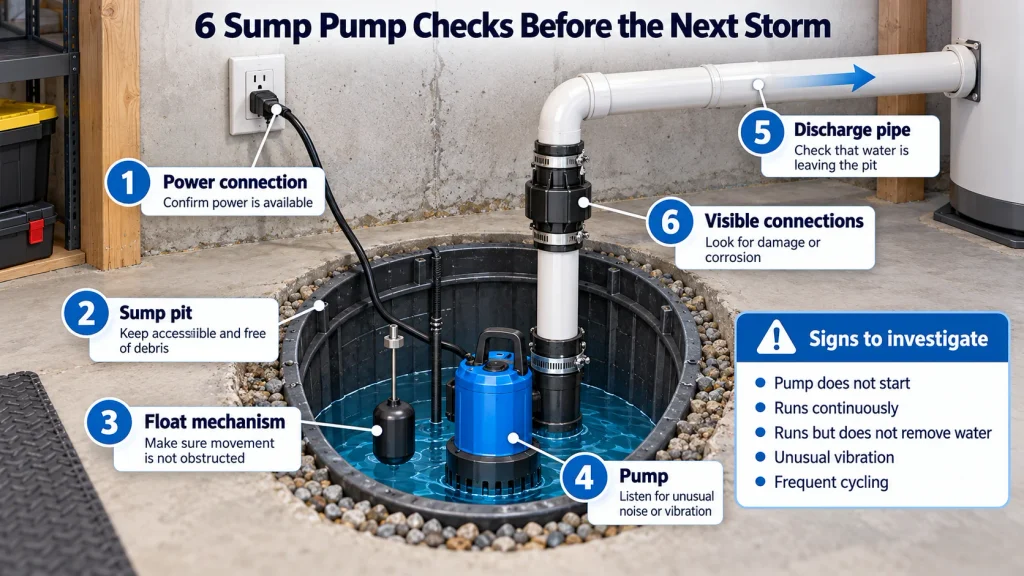
A sump pump may sit unused for long periods, so homeowners should not assume it will automatically work when the next heavy rain arrives. Basic sump pump testing before winter storms can help reveal problems while there is still time to address them.
Start with a simple visual and operational check:
- Confirm the pump has power.
- Make sure the sump pit is accessible.
- Remove visible debris around the pit.
- Inspect cords and visible connections for obvious damage.
- Listen for unusual sounds when the pump activates.
- Check that water is actually being removed.
Warning signs can include a sump pump not running, repeated cycling, unusual vibration, visible corrosion, or a sump pump on but not pumping effectively.
If the sump pump is not working, avoid attempting electrical repairs yourself. Professional sump pump maintenance can help determine whether the issue involves the pump, float mechanism, discharge system, or another component before the next major storm arrives.
Make Sure the Sump Pump Discharge Line Is Clear
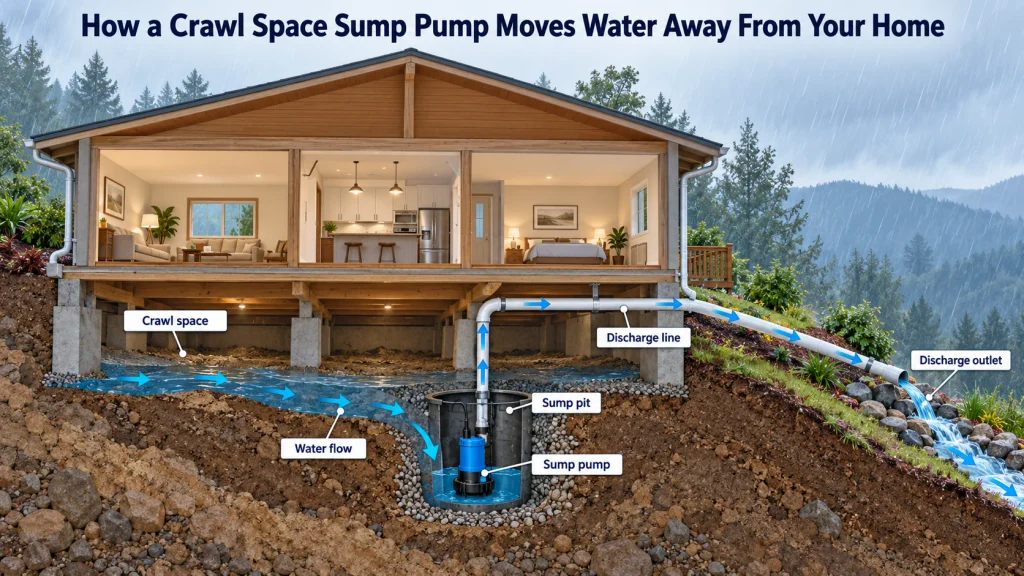
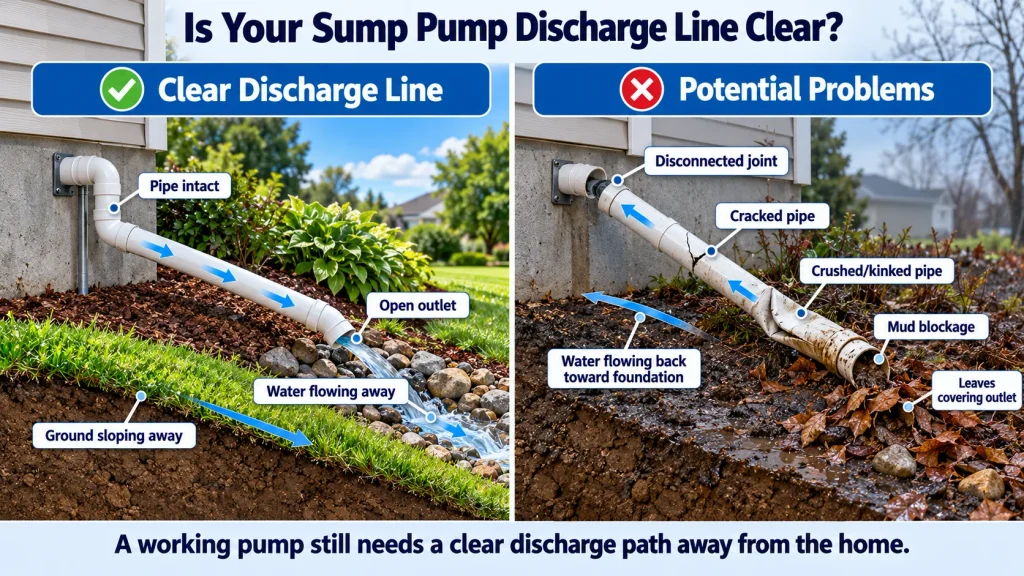
A sump pump can only remove water effectively when its discharge line provides a clear path away from the home. Even if the pump is working properly, a clogged sump pump discharge line can restrict water flow and cause water to collect in the sump pit or return toward the foundation.
Before winter storms arrive, homeowners should visually inspect the sump pump discharge line for these common problems:
- Visible blockages: Check for leaves, mud, or debris around the discharge outlet.
- Damaged pipes: Look for crushed sections, cracks, or disconnected joints.
- Kinks or bends: Check for visible restrictions that could interfere with water flow.
- Blocked outlets: Make sure soil, fallen leaves, or vegetation are not covering the discharge point.
- Poor discharge direction: Watch for water flowing back toward the house instead of moving away.
In wooded areas of the Santa Cruz Mountains, fallen leaves and soil can conceal discharge outlets. If the sump pump discharge line is clogged repeatedly or water continues collecting despite pump operation, contact a plumber for a professional inspection.
Check for Water in the Crawl Space After Rain
After the first few significant storms, it is worth checking the crawlspace for new signs of moisture. Look for standing water, damp soil, dark wet patches, dripping plumbing, moisture around pipe penetrations, water entering near foundation openings, or musty odors.
Finding water in the crawl space after rain does not always mean there is a plumbing failure. Standing water under the house after rain does not always mean a plumbing pipe has failed. The source may be a leaking pipe, surface runoff, groundwater, existing crawlspace drainage conditions, or water moving downhill toward the structure.
Pay attention to where the moisture first appears and whether it is concentrated near plumbing lines or coming from the surrounding soil or foundation area. This can help narrow down the cause.
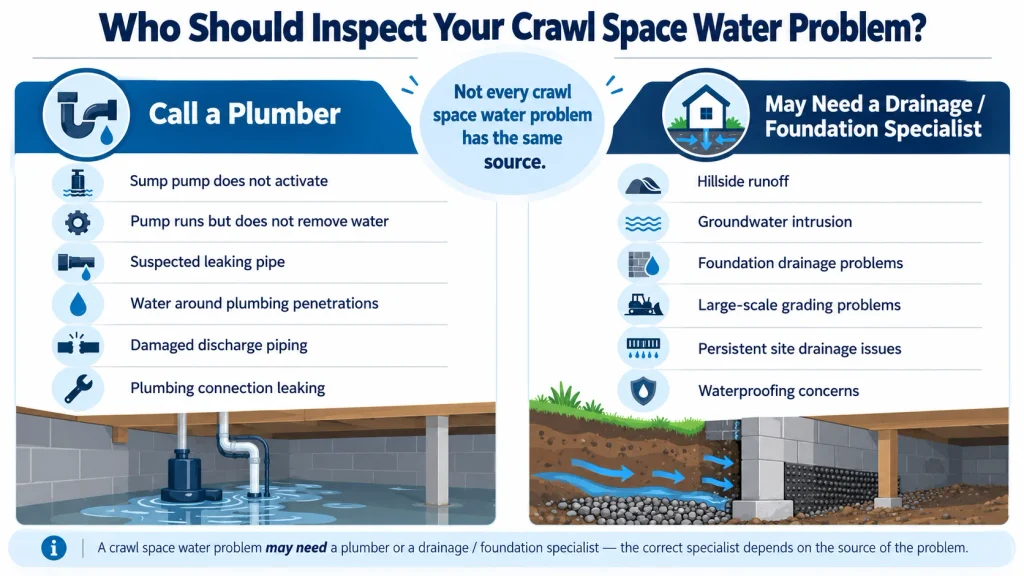
If the source of the water in the crawl space is unclear, a plumber can inspect accessible plumbing components and help determine whether the problem is plumbing-related or whether another type of drainage specialist may be needed.
Review Crawl Space Drainage Before the Next Storm
Before the next major storm, take a look at the visible crawl space drainage conditions beneath the home. The goal is to spot areas where water may collect or fail to move toward an existing sump or drainage point.
Check for:
- A clear water path toward the sump area.
- Low spots where water repeatedly collects.
- Soil that stays wet long after rain has stopped.
- Blocked or obstructed drainage channels.
- Leaves, soil, or debris around drainage openings.
- Moisture concentrated near plumbing lines or penetrations.
Repeated crawl space moisture should not be ignored because the source needs to be identified. A crawl space drainage system may be functioning poorly, but the moisture could also come from a plumbing leak, groundwater, surface runoff, or foundation-related conditions.
Not every case of moisture under a house crawl space is a plumbing repair. A plumber can help rule out plumbing-related causes, while drainage, foundation, or waterproofing specialists may be needed for broader site or structural issues.
Why Santa Cruz Mountain Homes Need Extra Drainage Attention
Homes in Felton, Boulder Creek, Ben Lomond, and other Santa Cruz Mountain communities often sit on sloped or uneven terrain. During sustained rain, water may naturally move toward lower parts of a property, making it important to watch how runoff behaves around the home.
Homeowners should pay attention to:
- Runoff collecting beside the house.
- Saturated soil near crawlspace openings.
- Drainage outlets covered by leaves, mud, or soil.
- Water flowing back toward the foundation.
- Moisture repeatedly appearing in the same crawlspace area.
These conditions do not mean every hillside or mountain home has a drainage problem. However, property-specific checks before major storms can help identify areas that deserve closer attention. For homes with existing crawl space drainage or sump pump systems, keeping drainage paths and outlets visible and accessible can make it easier to spot developing issues before heavier rain arrives.
When to Call a Plumber for a Sump Pump or Crawl Space Problem
Some sump pump and crawlspace issues should be checked before the next storm. Contact a Santa Cruz plumber if you notice:
- A sump pump not working or failing to activate.
- A pump that runs but does not remove water.
- A discharge line that repeatedly backs up.
- Water appearing around plumbing lines or pipe penetrations.
- Water in the crawl space returning after each storm.
- Standing water remaining near plumbing components.
- A sump pump cycling much more often than usual.
- Visible pipe leaks or dripping connections.
Professional sump pump maintenance can help identify whether the problem involves the pump itself, the discharge line, household plumbing, or a broader drainage condition around the property. This helps homeowners understand which type of repair or specialist is actually needed.
Santa Cruz Mountain Pre-Storm Plumbing Checklist
Before heavier winter storms arrive, homeowners can use this quick checklist:
- Test the sump pump.
- Confirm the pump has power.
- Check the discharge outlet for visible blockages.
- Remove leaves and debris near drainage points.
- Look for standing water under the house.
- Check crawlspace soil for new damp areas.
- Note moisture that returns in the same location.
- Keep sump and drainage areas accessible.
- Call a plumber if the pump fails or a plumbing leak is suspected.
Get Your Sump Pump and Crawl Space Plumbing Checked Before the Next Storm
If you notice sump pump problems, a blocked discharge line, a suspected crawlspace plumbing leak, or recurring water around household drainage areas, Anytime Plumbing can help assess the plumbing side of the issue. Homeowners in Felton, Boulder Creek, Ben Lomond, and nearby Santa Cruz Mountain communities can call 831-431-6593 to schedule sump pump maintenance or a plumbing inspection.
Frequently Asked Questions
It is a good idea to test your sump pump before the rainy season and again before major storms, especially if the system has been inactive for several months.
Water in a crawl space after rain may come from a plumbing leak, surface runoff, groundwater, or broader site drainage conditions. The source should be identified before assuming a pipe has failed.
Check for obvious visible issues, such as a blocked discharge outlet or debris around the sump area. If the pump continues running without removing water, contact a plumber for an inspection.