

Laundry Room Plumbing Problems in Santa Cruz Homes: Washer Hoses, Drains, and Hidden Leaks
Summer in Santa Cruz often means more laundry from beach towels, visiting guests, children, outdoor activities and vacation-rental turnover. As washing machines run more frequently, existing weaknesses in hoses, supply valves and drainage pipes may become easier to notice. These laundry room plumbing problems in Santa Cruz homes can develop gradually rather than appearing as a sudden major leak.
Early washing machine plumbing problems may show up as a slow drain, damp flooring, moisture behind the washer or a small laundry room leak near a hose connection. Addressing these warning signs early can help prevent water from spreading beneath floors, cabinets or walls.
Why Summer Laundry Loads Can Reveal Plumbing Problems
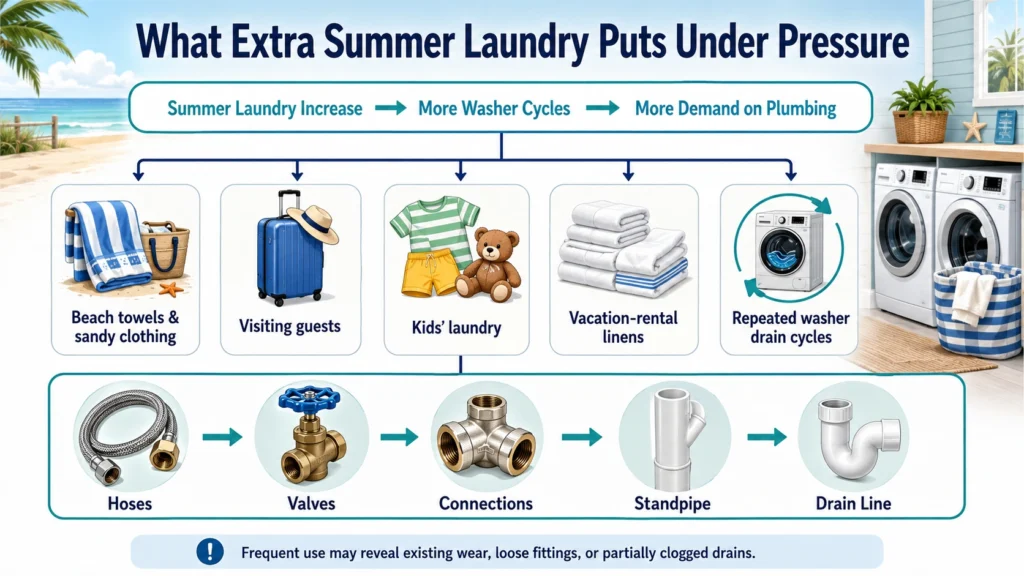
Summer activities can increase washing machine use in Santa Cruz homes, placing more demand on laundry room plumbing and revealing problems that were previously difficult to notice.
- More beach towels and sandy clothing
- Extra laundry from visiting guests
- Increased washing by families with children
- Frequent vacation-rental linen turnover
- Repeated washer filling and drain cycles
Frequent use does not directly cause every summer plumbing problem. However, it can expose existing washing machine plumbing problems, including worn supply hoses, loose connections and partially clogged drains. Small weaknesses may become more noticeable when the washer runs several times each day.
Washer Hoses and Connections That Begin to Leak
Hot and cold washer supply hoses remain connected to pressurised household water lines, even when the washing machine is not running. Over time, age, appliance movement, loose fittings, damaged internal washers or deteriorated hose material may allow water to escape around the connections.
A washing machine hose leak may begin as a small drip and gradually spread behind or beneath the appliance. Signs of a washer supply hose leaking can include:
- Moisture around hose fittings
- Rust or corrosion near connections
- Bulging or cracked hose material
- Water marks behind the appliance
- Dampness that returns after each load
Water leaking behind a washing machine may also indicate a washing machine water line leak or another nearby plumbing issue. Because the exact source may be difficult to see, recurring moisture should be inspected promptly.
Safety note: Do not pull a heavy washer forward when water may be close to electrical outlets, plugs or appliance wiring.
Leaking Washer Shut-Off Valves and Supply Fittings
A leak near the washing machine may come from the plumbing valve or fitting rather than the appliance itself. A washing machine shut-off valve leaking can result from worn seals, loose fittings, corrosion or a valve that no longer closes completely.
The timing and location of the moisture may help identify a washer valve leak or leaking washing machine connection:
- Water appears only while the washer is filling
- Slow dripping continues while the washer is off
- Moisture forms directly around the laundry room supply valve
A valve that cannot shut off fully may make hose replacement more difficult and limit a homeowner’s ability to control water during an emergency. A plumber can inspect the valve, fittings and nearby supply line to confirm the source.
Laundry Drain Backups, Slow Drains and Standpipe Overflows
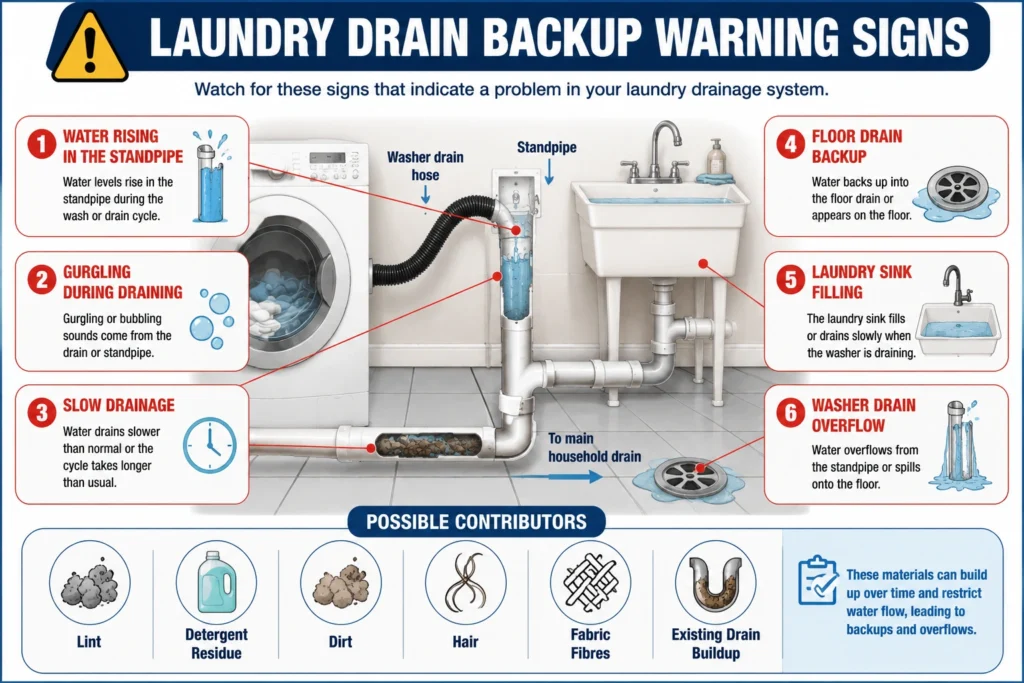
Repeated washer discharge can expose restrictions in laundry room drainage. When a washing machine drain is clogged or partially blocked, water may drain slowly, rise in the standpipe or back up into another nearby fixture.
| Warning sign | Possible plumbing cause | What may happen |
| Water rises in the standpipe | Partial drain blockage | Water may overflow during discharge |
| Gurgling during a wash cycle | Restricted airflow or drainage | Water may drain slowly |
| Water appears near a floor drain | Downstream drain backup | Wastewater may spread across the floor |
| Laundry sink fills during draining | Shared drain restriction | Water may back up into another fixture |
Lint, detergent residue, dirt, hair and fibres from heavily used towels may contribute to drainage restrictions over time. These materials can make an existing blockage worse, although they are not always the only cause.
A washing machine drain backing up or a washer drain overflowing should not be ignored. Professional drain cleaning in Santa Cruz can help identify whether the problem involves the standpipe, a shared drain or a blockage farther along the plumbing line.
Where Hidden Laundry Room Leaks Can Develop
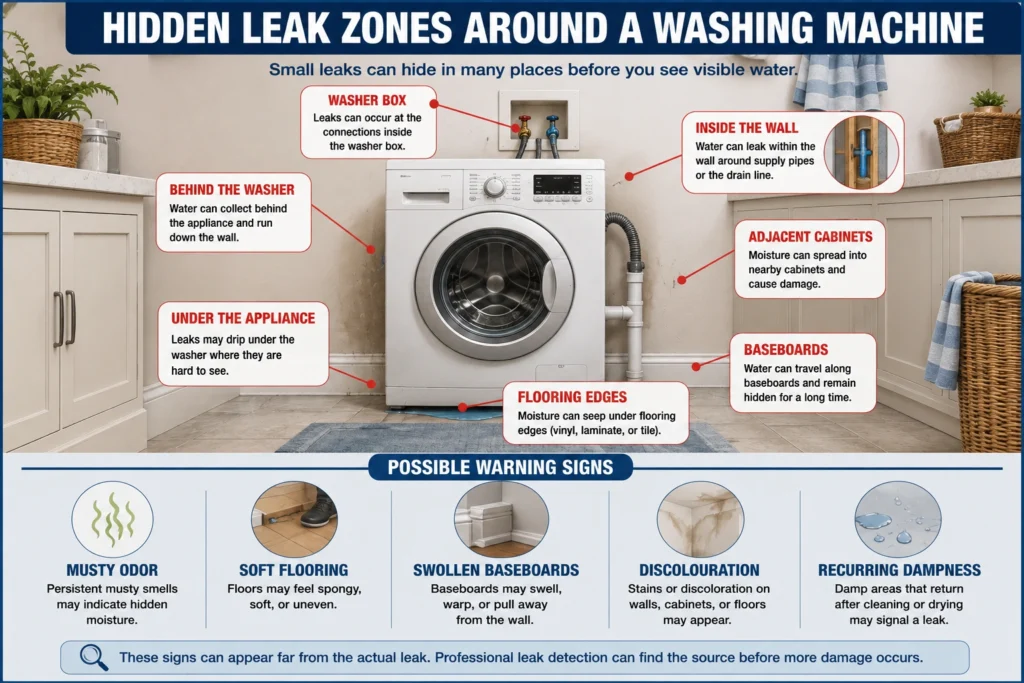
Washers often sit close to walls, cabinets or built-in shelving, making a small laundry room hidden leak difficult to notice. Water leaking behind a washing machine may spread beneath the appliance, travel along the wall or seep under nearby flooring before it becomes visible.
Common hidden areas include:
- Behind the washer
- Under the appliance
- Beneath vinyl, laminate or tile edges
- Around the washer box
- Inside the wall near supply pipes
- Along baseboards or adjacent cabinets
A hidden leak behind a washing machine may cause musty odours, soft flooring, swollen baseboards or discolouration. However, these signs do not confirm the exact source, because water can travel away from the original leak. Professional leak detection in Santa Cruz can help locate the problem before laundry room water damage spreads into flooring, walls or cabinetry.
Warning Signs and What They May Indicate
| What the homeowner notices | Possible source |
| Water after the washer fills | Supply hose or inlet connection |
| Water during draining | Drain hose, standpipe or drain blockage |
| Constant dampness | Valve, fitting or hidden pipe leak |
| Musty smell near flooring | Trapped moisture |
| Gurgling or slow drainage | Partial laundry-drain restriction |
These laundry room leak signs can help narrow down when and where a problem may be developing. Water during filling may suggest a washer hose leak, while gurgling can indicate a washing machine drain problem. However, water may travel beneath flooring or behind walls, so professional inspection may be needed to confirm the source and prevent further laundry room water damage.
Ways to Reduce the Risk of Laundry Room Water Damage
Regular observation and simple laundry room plumbing maintenance can help homeowners spot small problems before they lead to larger leaks or costly damage.
- Look for moisture around washer hoses and supply valves
- Check visible hoses for cracks, bulges, rust or corrosion
- Avoid overloading the washing machine with heavy items
- Remove excessive sand, dirt and debris from towels before washing
- Pay attention to slow drainage, gurgling or unusual water movement
- Keep the area around the washer visible and accessible where possible
- Investigate recurring dampness or musty odours promptly
A routine washer hose inspection can help prevent washing machine leaks, while early attention to drainage or moisture problems may help prevent laundry room water damage from spreading beneath floors, walls or nearby cabinets.
When a Laundry Room Problem Requires a Plumber
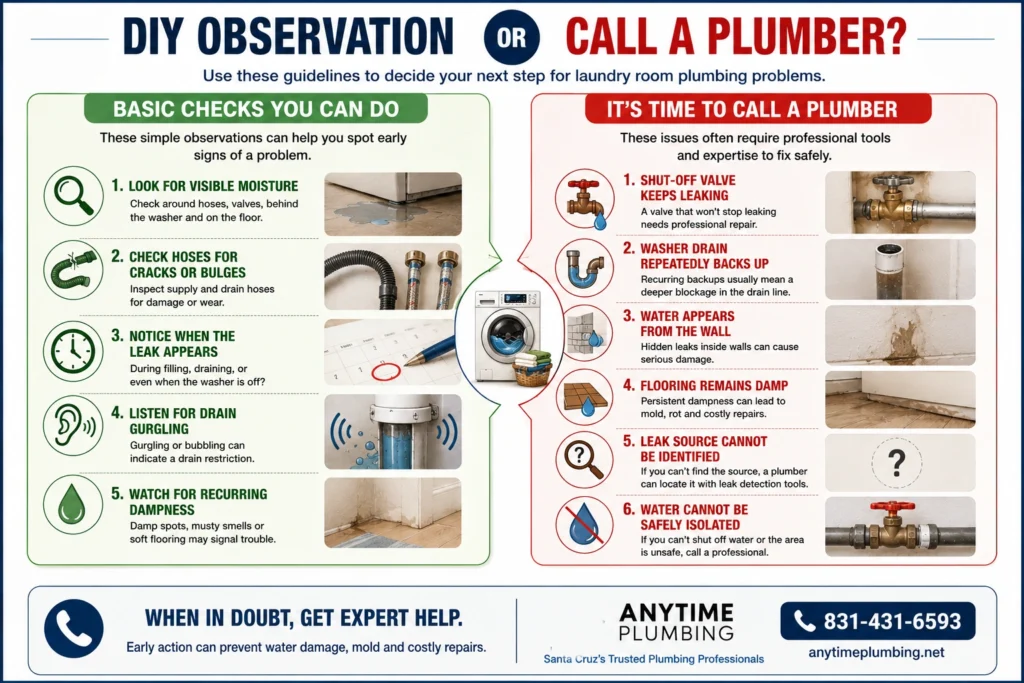
A plumber in Santa Cruz should inspect problems involving supply valves, water lines, standpipes or household drains. Appliance technicians generally handle faults inside the washing machine itself.
- The shut-off valve continues leaking
- The washer drain repeatedly backs up
- Water appears from inside the wall
- Flooring stays damp, or the leak cannot be safely isolated
Professional laundry room plumbing in Santa Cruz may be needed to locate the source, complete washing machine drain repair and prevent further water damage. Prompt plumbing repair in Santa Cruz can also help protect nearby walls, flooring and cabinets.
Request Laundry Room Plumbing Service in Santa Cruz
Leaking washer valves, drain backups, standing water, damp flooring or unexplained moisture behind the washer require prompt attention. Contact Anytime Plumbing, a trusted plumber in Santa Cruz, at 831-431-6593 for professional drain cleaning and leak detection throughout Santa Cruz.
Frequently Asked Questions
Water leaking behind a washing machine may come from a damaged supply hose, loose connection, leaking shut-off valve, displaced drain hose or another nearby plumbing leak. The exact source should be confirmed before further water damage develops.
Yes. A washing machine hose leaking when off may occur because supply hoses and their connections remain under water pressure even when the appliance is not operating. Worn fittings, seals or hose material can allow slow dripping.
A washing machine drain backing up may be caused by a partial blockage, a restricted standpipe or a problem farther along the household drain line. Lint, detergent residue and debris can sometimes contribute to the restriction.