

Mountain Home Plumbing Checks in Santa Cruz County
Mountain and rural homes can have plumbing concerns that are less common in typical suburban properties. Homes in the Santa Cruz Mountains may have longer water lines, crawlspaces, older pipes, and plumbing that is harder to access or inspect. In areas such as Felton, Ben Lomond, Boulder Creek, and Bonny Doon, surrounding trees and roots can also contribute to drainage and sewer problems. Heavy rain can create additional concerns around drainage, leaks, and water intrusion. Regular mountain home plumbing checks can help homeowners spot small issues early. A practical rural home plumbing maintenance routine can reduce the chance of unexpected leaks, water damage, and costly emergency repairs.
Why Mountain and Rural Homes Need Different Plumbing Checks
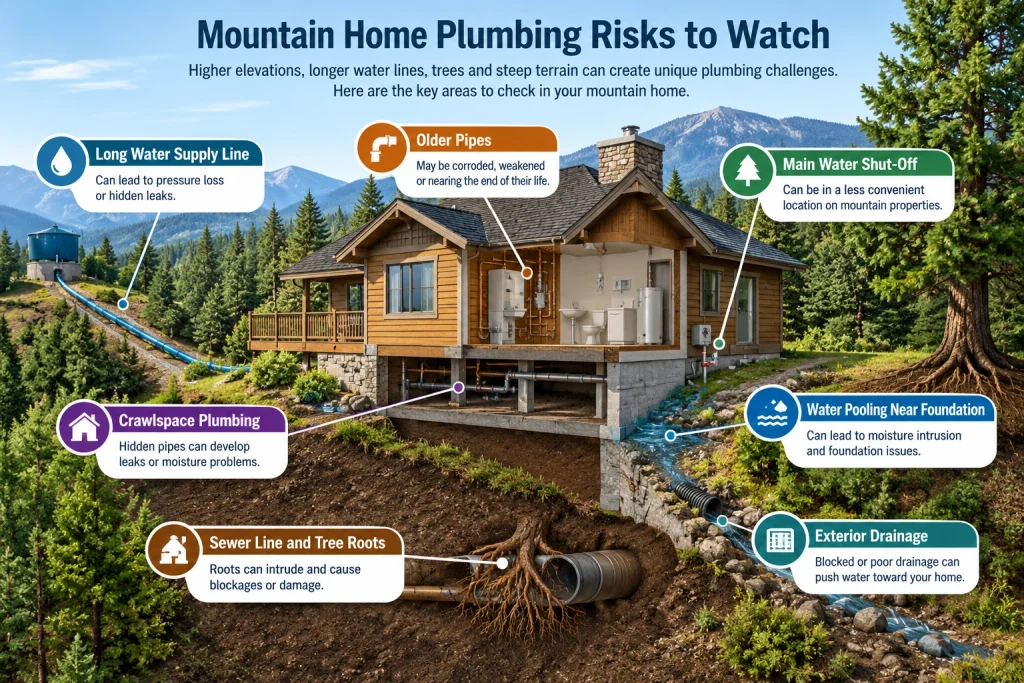
Mountain and rural properties can place different demands on a plumbing system. Steep or uneven terrain, long water supply lines, crawlspaces, and concealed pipes can make leaks or other problems harder to identify. These conditions make regular mountain home plumbing maintenance particularly useful for catching small issues before they become major repairs.
Older homes may also have aging pipes, while large trees around the property can allow roots to reach sewer and drain lines. Water pressure can vary depending on the property and its plumbing layout, and shut-off valves may be located in areas that are difficult to reach quickly. For homeowners in the Santa Cruz Mountains, including the San Lorenzo Valley, routine rural home plumbing maintenance should also account for heavy rainfall and drainage concerns.
| Mountain/Rural Condition | Potential Plumbing Concern |
|---|---|
| Long water lines | Pressure loss or hidden leaks |
| Crawlspaces | Difficult-to-spot leaks |
| Older plumbing | Corrosion and pipe deterioration |
| Large trees | Root intrusion into sewer lines |
| Steep terrain | Drainage and access challenges |
| Heavy rainfall | Water intrusion and drainage problems |
Check Water Pressure and Long Supply Lines
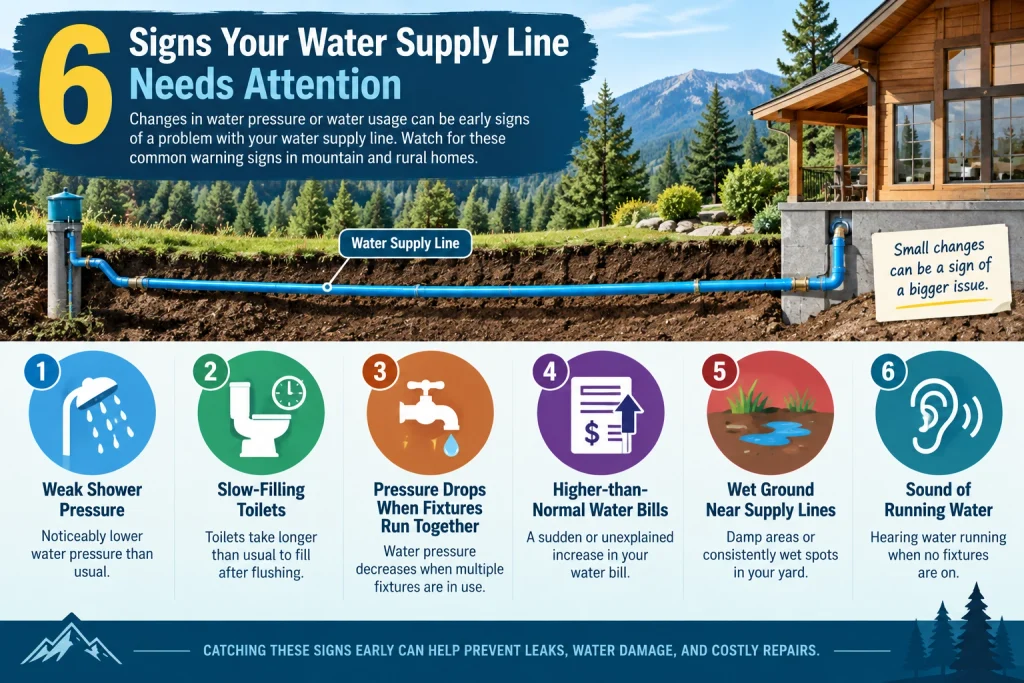
Water pressure can be an early sign that something is changing within a home’s plumbing system. Low water pressure in mountain homes may be related to the property’s layout, long water supply lines, a developing leak, or an issue with the plumbing itself. Notice whether pressure has gradually decreased or changes when several fixtures are running at the same time.
Homeowners should also pay attention to changes in water usage. An unexplained increase in the water bill, damp ground, or consistently wet areas near a water supply line may point to a hidden water line leak. Visible sections of the rural home water line should be checked periodically for damage, corrosion, or moisture.
Signs worth checking:
- Weak shower pressure
- Slow-filling toilets
- Pressure dropping when another fixture runs
- Unexpectedly high water bills
- Wet spots near supply lines
- Persistent sounds of running water
If water pressure problems continue or several warning signs appear together, a professional main water line inspection can help identify the underlying issue.
Inspect Crawlspaces and Hard-to-Reach Plumbing
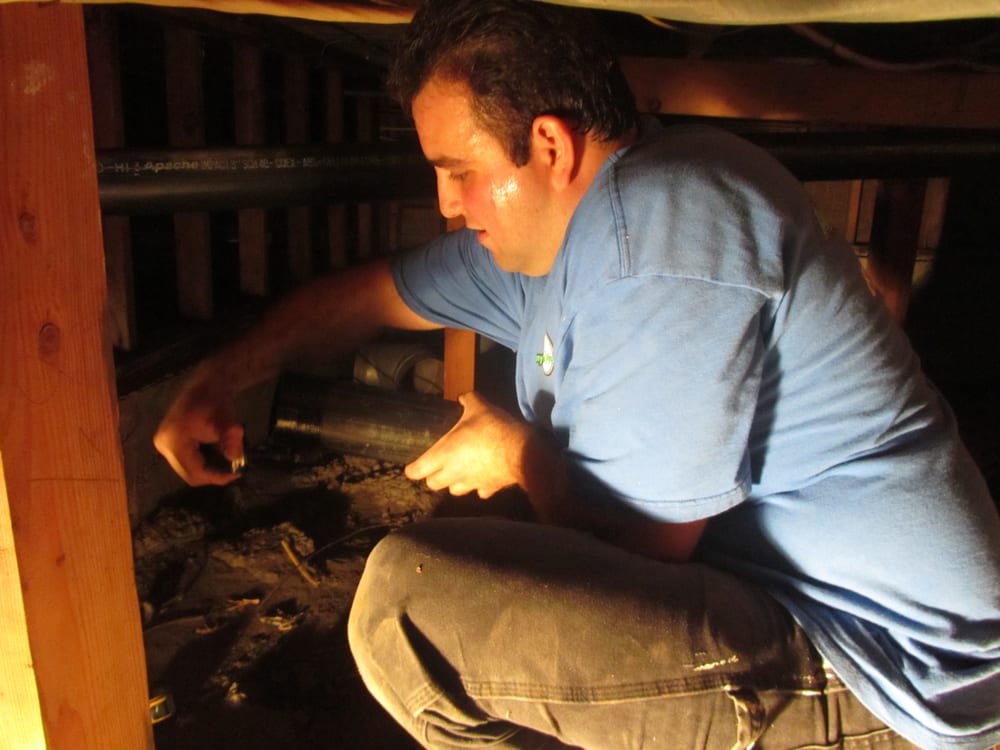
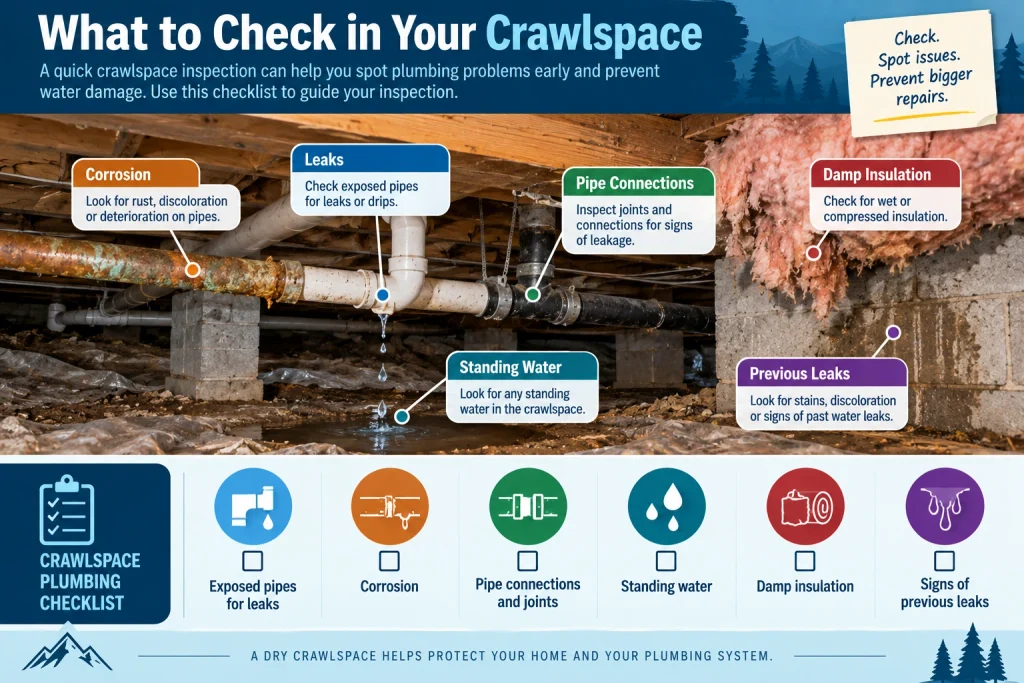
Crawlspaces can hide plumbing problems because pipes and connections may be out of everyday view. Regularly check accessible areas for crawlspace moisture, dripping connections, corrosion, or other signs that water is getting where it should not. Pay particular attention around pipe penetrations, joints, and areas where plumbing passes through floors or walls.
Don’t look only for an active drip. Damp insulation, standing water, musty odours, or discoloured materials can indicate previous or recurring crawlspace pipe leaks. Leaking pipes under the house can continue unnoticed and may eventually contribute to structural or moisture-related problems.
Crawlspace plumbing checklist:
- Check exposed pipes for leaks
- Look for corrosion
- Check pipe connections and joints
- Look for standing water
- Inspect insulation for dampness
- Check for signs of previous leaks
If moisture keeps returning or the plumbing is difficult to access safely, a professional plumbing inspection crawlspace can help identify hidden problems and support better plumbing leak prevention.
Make Sure the Main Water Shut-Off Is Easy to Reach
Knowing the water shut off valve location can make a big difference when a plumbing emergency happens. Mountain properties may have the main water shutoff in less convenient areas, such as outside the home or in a crawlspace. Make sure the valve is easy to find and isn’t blocked by storage, vegetation, soil, or other obstacles.
Check that the main water shut off valve can be operated when needed. If the valve is difficult to turn or appears damaged, consider a shut off valve inspection before an emergency occurs.
| Check | Why It Matters |
|---|---|
| Know the valve location | Saves time during a leak |
| Keep access clear | Allows quick shut-off |
| Check valve condition | Helps during emergencies |
| Label the valve if needed | Helps everyone identify it |
Don’t wait for a burst pipe to discover that your plumbing shut off valve is inaccessible. Easy access to an emergency water shut off can help limit water damage.
Look for Aging Pipes and Sewer Line Problems
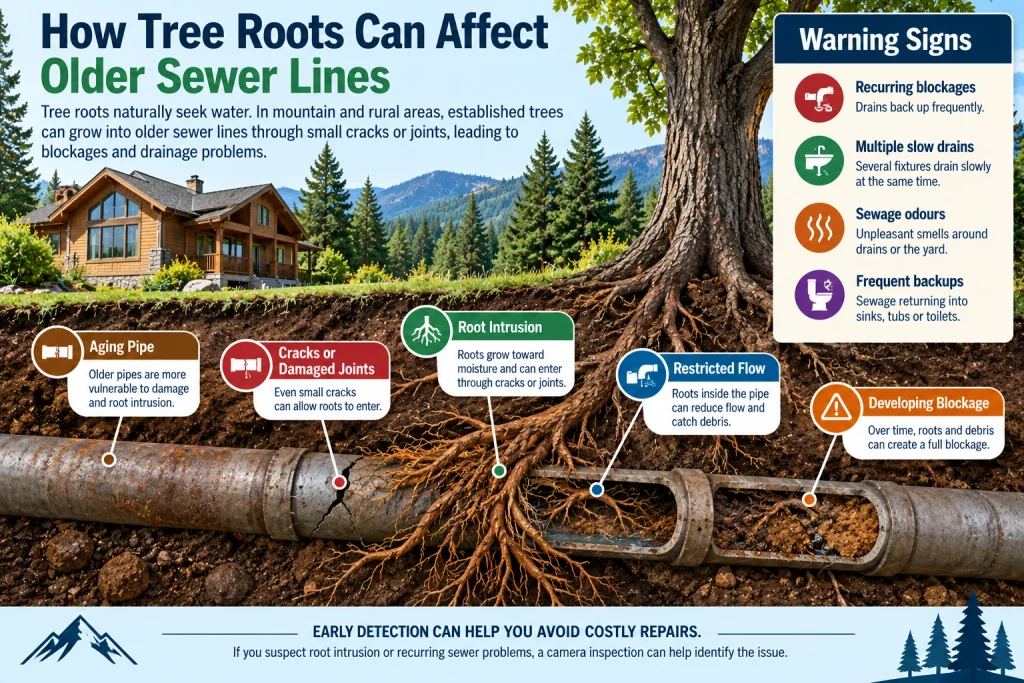
Older mountain properties may have plumbing materials that are reaching the end of their useful life. Old pipes in mountain homes can develop corrosion, leaks, reduced water flow, or discolouration over time. Homeowners should pay attention to recurring plumbing issues rather than waiting for repeated failures. Problems such as galvanized pipe problems may also become more noticeable as older plumbing continues to deteriorate.
Sewer and drain lines deserve attention as well. Established trees and vegetation can contribute to tree roots in sewer lines, potentially causing blockages or sewer line root intrusion. Slow drains or recurring backups may indicate a problem farther along the sewer line. A sewer camera inspection can help locate cracks, root intrusion, blockages, or other damage without immediately resorting to excavation.
Consider a professional inspection if you notice:
- Repeated drain blockages
- Slow drains throughout the house
- Sewage odours
- Frequent backups
- Discoloured water
- Multiple pipe leaks
- Unexplained changes in water flow
An old home plumbing inspection or sewer line inspection can help identify problems before they become more disruptive.
Prepare Your Plumbing for Heavy Rain and Storms
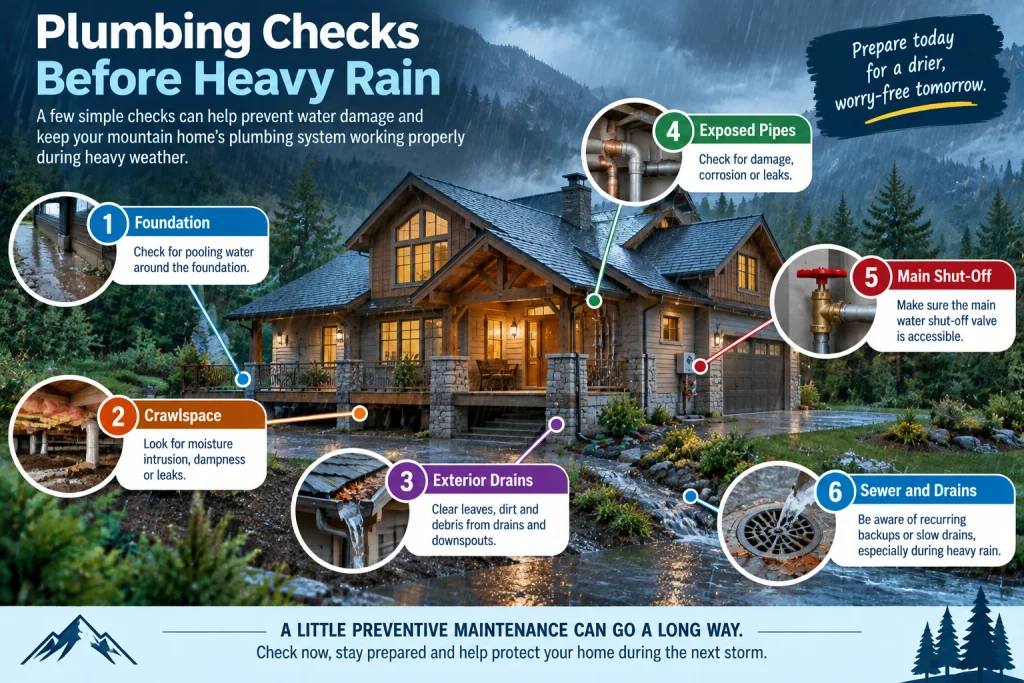
Heavy rain can expose drainage and plumbing problems that may not be obvious during dry weather. Storm plumbing preparation should start with checking how water moves around the property. Look for pooling near the foundation, blocked exterior drains, and areas where water could enter a crawlspace or other low-lying spaces.
Before periods of severe weather, inspect exposed plumbing for visible damage and make sure the main water shut-off remains easy to access. Address existing leaks rather than waiting for them to worsen during a storm. These simple steps can support plumbing leak prevention and reduce the risk of water-related problems.
| Before Heavy Rain | What to Check |
|---|---|
| Around the foundation | Water pooling |
| Crawlspace | Moisture or water intrusion |
| Exterior drains | Blockages |
| Exposed pipes | Damage or leaks |
| Main shut-off | Easy access |
| Sewer/drains | Recurring backups |
For mountain home storm preparation, homeowners should also consider plumbing before winter storms, particularly where drainage around the foundation or crawlspace water intrusion has been an ongoing concern.
A Simple Mountain Home Plumbing Maintenance Checklist
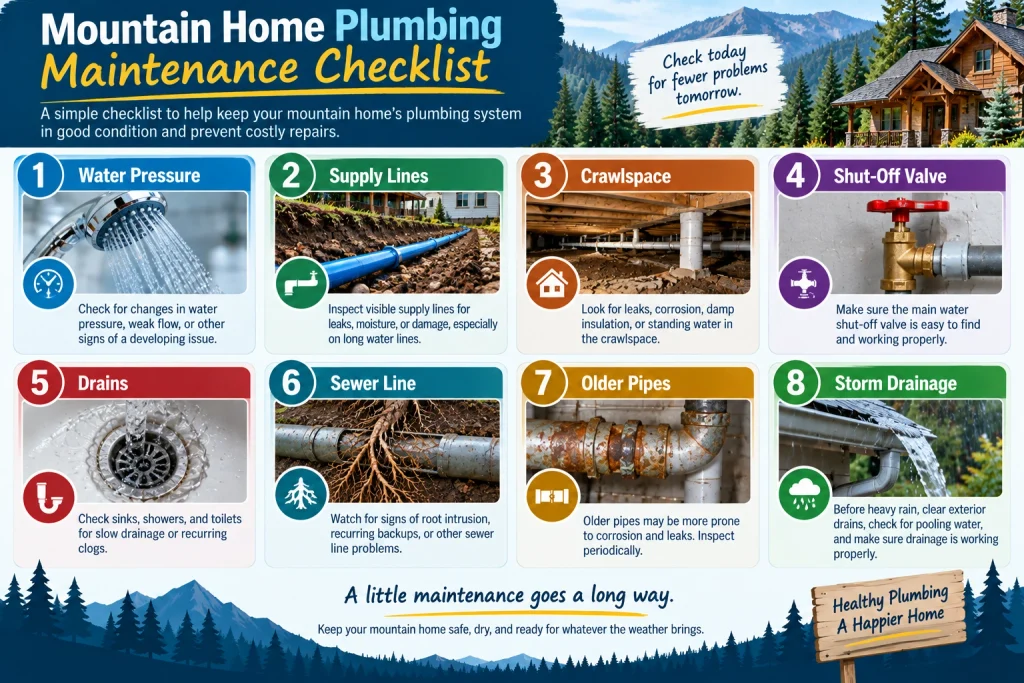
A regular rural home plumbing maintenance routine can help homeowners spot small problems before they become expensive repairs. Use this checklist as a quick reference throughout the year, especially before periods of heavy rain or after noticing changes in water pressure, drainage, or water usage.
| Check | Recommended Action |
|---|---|
| Water pressure | Watch for sudden or gradual changes |
| Supply lines | Check visible sections for leaks |
| Crawlspace | Look for moisture and corrosion |
| Shut-off valve | Keep it accessible |
| Drains | Watch for recurring slowdowns |
| Sewer | Investigate repeated backups |
| Older pipes | Check for corrosion and leaks |
| Storm drainage | Look for pooling or blocked drains |
These simple checks support mountain home plumbing maintenance and plumbing leak prevention. If several warning signs appear, a professional home plumbing inspection can help identify the underlying issue and support ongoing plumbing maintenance Santa Cruz homeowners can rely on.
When to Schedule a Professional Plumbing Inspection
You don’t have to wait for a plumbing emergency before scheduling a home plumbing inspection. For mountain properties, a professional check can help identify hidden leaks, aging components, water pressure issues, and other concerns that may be difficult to spot during routine household checks.
An inspection can be especially useful when buying an older mountain home, after recurring plumbing problems, or before periods of heavy weather. Regular rural home plumbing maintenance can help homeowners address smaller issues before they lead to more disruptive repairs.
For homeowners who need Santa Cruz Mountains plumbing support, Anytime Plumbing can help with preventive inspections and maintenance. Whether you’re concerned about an aging system or simply want to prepare your property for the next season, proactive plumbing maintenance Santa Cruz homeowners can schedule ahead of time can help reduce unexpected Santa Cruz plumbing repair needs.
Frequently Asked Questions
Mountain homes can experience issues such as low water pressure, leaks in long supply lines, crawlspace moisture, aging pipes, and sewer line blockages. Tree roots, difficult-to-access plumbing, and heavy rainfall can also create additional maintenance concerns.
A professional plumbing inspection can be useful periodically, especially for older homes or properties with recurring leaks, drainage problems, or water pressure changes. Homeowners should also perform basic checks throughout the year and before periods of heavy rain.
Check exterior drainage, look for water pooling around the foundation, inspect crawlspaces for moisture, and make sure drains are clear. It is also important to check exposed pipes for leaks or damage and ensure the main water shut-off valve is easy to access.