

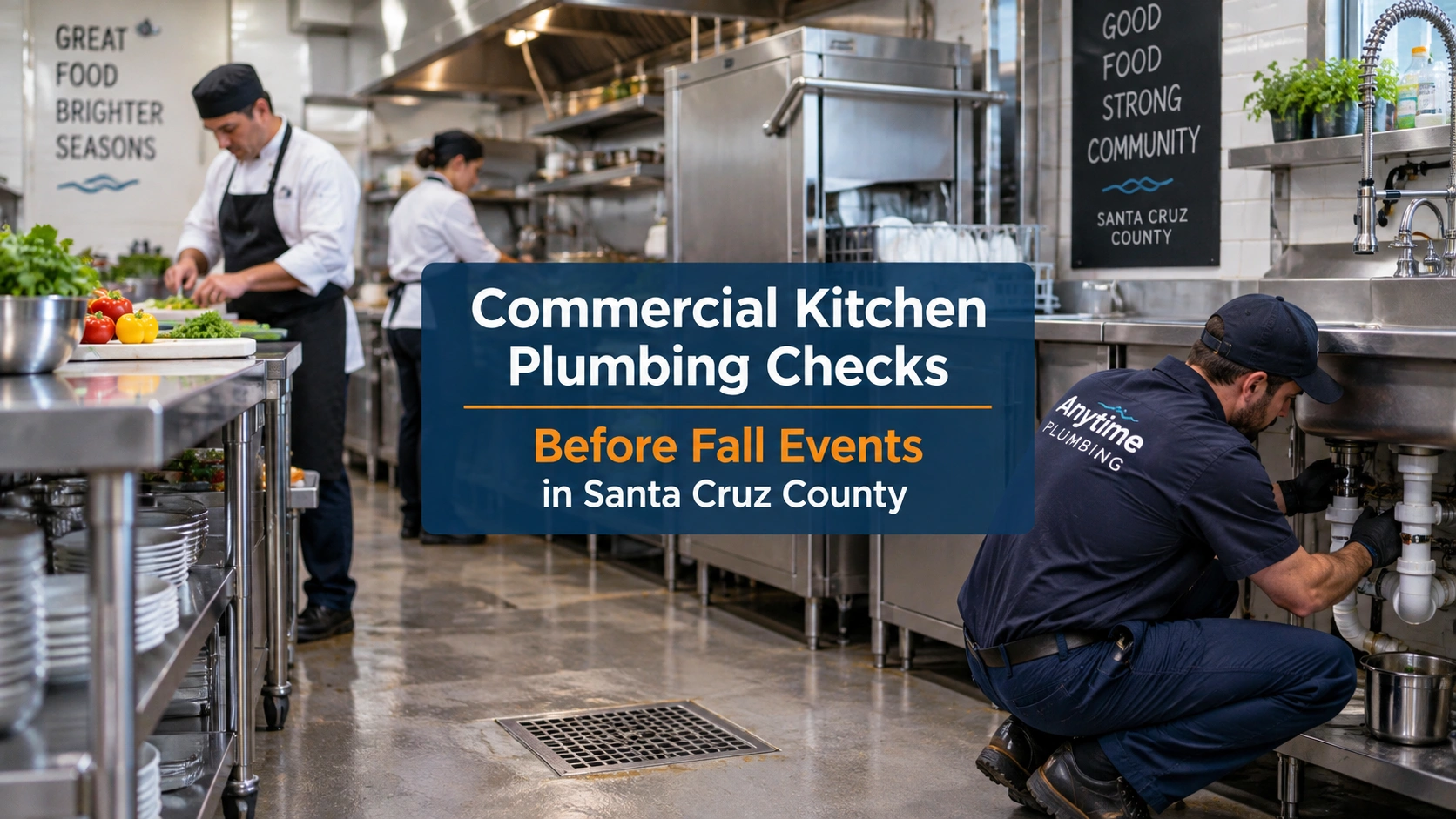
Commercial Kitchen Plumbing Checks Before Fall Events in Santa Cruz County
Fall events can bring a noticeable increase in activity for restaurants, cafés, breweries, schools, and event venues across Santa Cruz County. More customers often mean more food preparation, dishwashing, handwashing, and heavier use of sinks, drains, and hot-water systems. When commercial kitchen plumbing is already experiencing a minor issue, that extra demand can quickly turn it into a costly disruption.
A commercial kitchen plumbing inspection before the busy season can help identify slow drains, leaks, grease buildup, worn connections, and other problems before they affect daily operations. Regular commercial kitchen plumbing maintenance also helps businesses prepare their systems for increased demand and reduce the risk of unexpected backups or hot-water interruptions. For businesses relying on dependable restaurant plumbing in Santa Cruz, a pre-event check is a practical step toward keeping the kitchen running smoothly.
Why Commercial Kitchens Need a Plumbing Check Before Fall Events
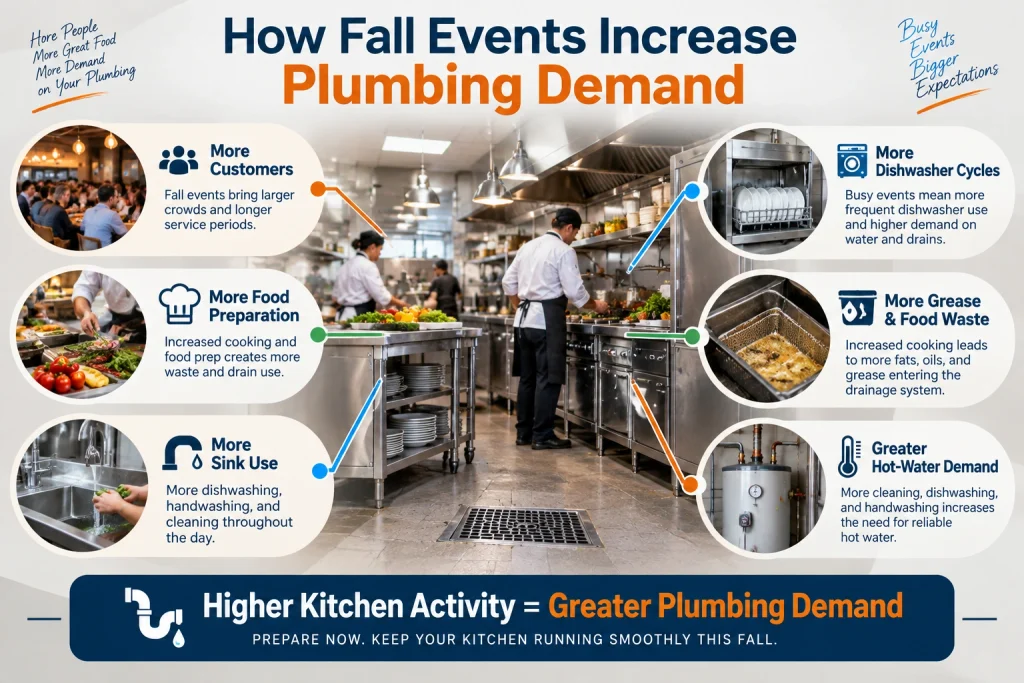
Fall events can put more pressure on a commercial kitchen than normal daily operations. More customers, additional food preparation, and longer service periods can increase water use and place greater demands on drains, sinks, dishwashers, and hot-water systems. Regular commercial kitchen plumbing maintenance helps identify problems before increased activity turns them into operational disruptions.
Common areas of increased demand include:
- Increased water demand from additional food preparation and handwashing
- Heavier drain usage from more frequent sink and floor drain activity
- Greater grease accumulation from increased cooking and food preparation
- More frequent dishwasher use during busy service periods
- Increased hot-water demand for cleaning, dishwashing, and handwashing
- Higher risk of backups when existing drainage problems are exposed by peak service
Including these checks as part of restaurant plumbing maintenance and broader commercial plumbing maintenance can help businesses keep their kitchens operating reliably during busy fall events.
6 Commercial Kitchen Plumbing Checks to Complete Before Fall
Inspect Commercial Kitchen Floor Drains and Floor Sinks
Commercial kitchen floor drains handle water, food debris, grease, and cleaning runoff throughout the day. Before fall events increase kitchen activity, check whether drains and floor sinks are clearing water properly and whether debris has started restricting flow. Good floor drain maintenance can help reduce the chance of standing water or a commercial kitchen drain backup during busy service.
As part of a commercial kitchen plumbing inspection, check for:
- Drain flows normally
- No standing water
- Drain screen is clear
- No unusual odour
Check Mop Sinks and Kitchen Sinks
Mop sinks and kitchen sinks can see constant use during busy food-service periods. Inspect faucets, supply connections, drain fittings, and the areas underneath sinks for signs of leaks or water damage. Including these fixtures in routine restaurant plumbing maintenance can help identify small problems before they interfere with kitchen operations.
Look for:
- Slow or restricted drainage
- Leaking faucets or supply lines
- Loose connections
- Water pooling around fixtures
- Damaged or worn drain components
Review Grease Traps and Grease Interceptors
Fats, oils, and grease can accumulate inside commercial drainage systems and gradually restrict water flow. A commercial grease trap or commercial grease interceptor should be checked regularly to ensure it is accessible, properly maintained, and not approaching a condition that could contribute to a backup. Regular grease trap maintenance, along with appropriate grease interceptor maintenance, is particularly important before periods of increased kitchen use.
Businesses should watch for warning signs such as:
- Slow kitchen drains
- Persistent grease odours
- Frequent backups
- Overflow around the grease interceptor
- Recurring drain clogs
Routine restaurant grease line maintenance and commercial kitchen drain maintenance can help address buildup before it becomes a larger plumbing problem.
Check Dishwasher Plumbing and Drain Connections
Commercial dishwashers may run much more frequently during fall events, increasing demand on both water supply and drainage connections. Include the dishwasher in your dishwasher plumbing inspection and check for leaks, restricted drainage, or water remaining inside the unit after a cycle.
Pay attention to:
- Drain connections
- Water supply lines
- Visible leaks
- Slow drainage
- Standing water after cycles
- Unusual noises or drainage problems
Addressing these issues early can help keep commercial dishwasher plumbing reliable when the kitchen is operating at peak capacity.
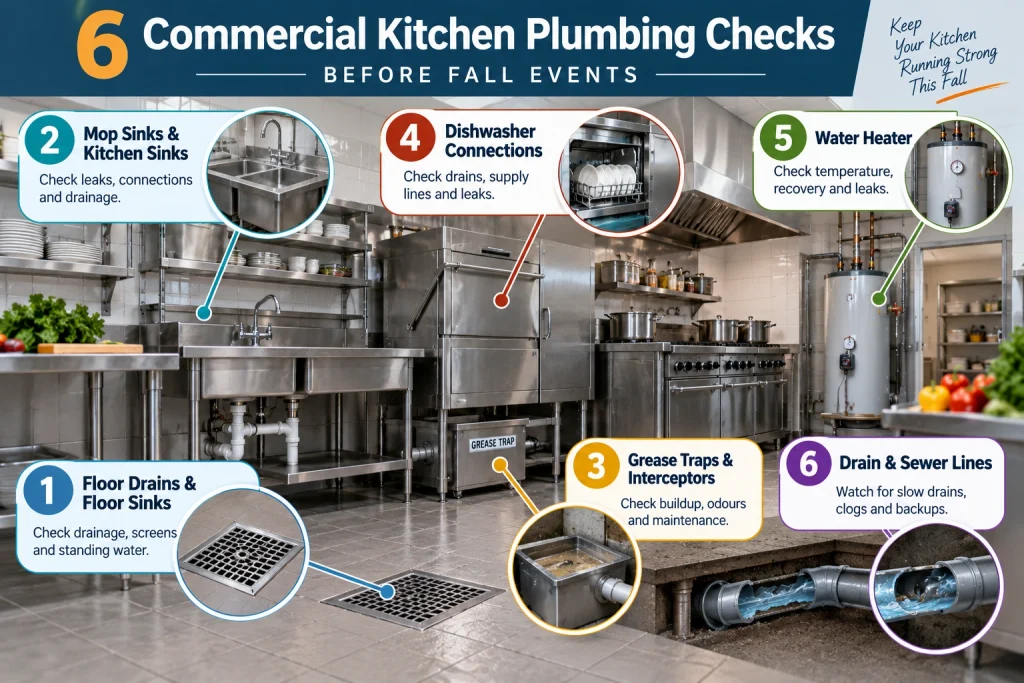
Inspect the Commercial Water Heater and Hot-Water Supply
Busy fall events can increase hot-water demand for handwashing, food preparation, cleaning, and dishwashing. A commercial water heater inspection can help identify leaks, performance problems, or signs that the system may struggle to meet increased demand.
Check for:
- Consistent water temperature
- Normal recovery after heavy use
- No visible leaks
- No unusual noises
Regular commercial water heater maintenance can help businesses identify developing problems before a lack of hot water disrupts kitchen operations. Pay particular attention to recurring restaurant water heater or commercial kitchen hot-water problems.
Look for Early Signs of Drain or Sewer Problems
Small drainage problems can become much more disruptive when a commercial kitchen is handling a larger-than-usual crowd. Slow drains, recurring clogs, gurgling, or foul odours should not be ignored, particularly when several fixtures are showing symptoms at the same time. Multiple slow drains may indicate a larger issue that requires commercial sewer inspection or commercial sewer line inspection.
Watch for these warning signs:
- Slow drains throughout the kitchen
- Gurgling from sinks or floor drains
- Recurring clogs
- Foul or persistent drain odours
- Water backing up from drains
- Multiple fixtures draining slowly
Scheduling commercial drain cleaning or commercial kitchen drain cleaning before a major event can help address developing blockages and reduce the risk of an unexpected commercial drain backup.
Santa Cruz County Businesses Should Pay Attention to Grease and Drainage
Restaurants, cafés, breweries, schools, catering kitchens, and event venues can all experience heavier plumbing demand when fall events increase customer traffic. More cooking, dishwashing, cleaning, and food preparation can place additional strain on drains and grease-management systems. For businesses relying on commercial kitchen plumbing in Santa Cruz County, addressing existing drainage concerns before the busy season can help prevent avoidable disruptions.
Grease buildup can gradually restrict drainage and contribute to recurring clogs, slow drains, and unpleasant odours. Including grease interceptor maintenance and routine commercial plumbing maintenance in a pre-event checklist gives businesses an opportunity to address these issues before they become urgent.
For businesses looking for commercial kitchen plumbing in Santa Cruz or restaurant plumbing in Santa Cruz, preventive inspections can be a practical way to prepare kitchen plumbing systems for increased fall activity.
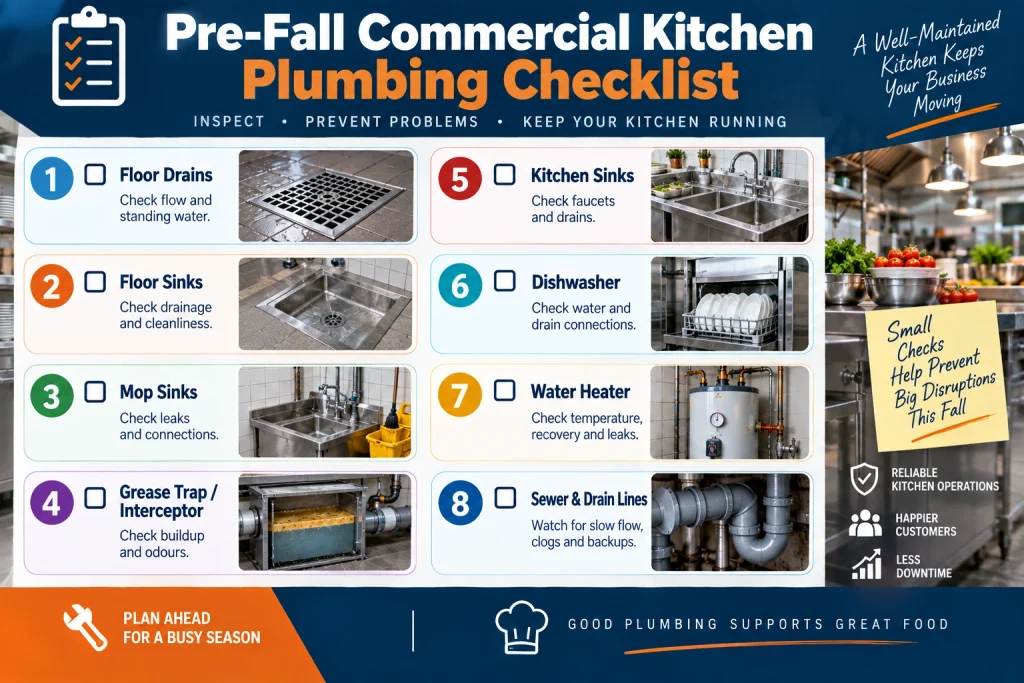
Pre-Fall Commercial Kitchen Plumbing Checklist
A simple commercial kitchen plumbing checklist can help restaurants and other food-service businesses identify problems before fall events increase demand. As part of a commercial kitchen plumbing inspection, review the main fixtures, drains, grease-management equipment, and water-heating system rather than waiting for a visible failure.
| Plumbing Area | What to Check |
|---|---|
| Floor drains | Slow drainage, debris, standing water |
| Floor sinks | Drainage and cleanliness |
| Mop sinks | Leaks, drainage, and connections |
| Grease trap/interceptor | Buildup, odours, and maintenance |
| Kitchen sinks | Faucets, drains, and supply lines |
| Dishwasher | Drain and water connections |
| Water heater | Leaks, temperature, and performance |
| Sewer/drain lines | Recurring backups or slow drainage |
Using this restaurant plumbing checklist alongside routine restaurant plumbing maintenance and broader commercial kitchen maintenance can help businesses address minor issues before they interfere with busy fall operations.
Don’t Wait for a Plumbing Backup During a Fall Event
A drain backup during a busy service period can disrupt kitchen operations, delay customers, and create an avoidable emergency. Scheduling commercial drain cleaning, commercial kitchen drain cleaning, or commercial plumbing maintenance before a major event can help address developing problems before they become urgent.
Call for professional attention if you notice:
- Recurring drain backups
- Multiple slow fixtures
- Persistent grease or sewer odours
Prompt commercial plumbing repair can also help resolve leaks, damaged connections, or drainage issues before they affect a busy event. When a serious problem occurs unexpectedly, emergency commercial plumbing may be necessary to restore normal operations and minimise disruption.
Schedule Commercial Kitchen Plumbing Maintenance Before Fall Events
Preparing your plumbing before the busy season can help reduce the risk of unexpected backups, leaks, and drainage problems during fall events. Businesses looking for commercial kitchen plumbing in Santa Cruz can benefit from checking high-use fixtures, drains, grease-management systems, and hot-water equipment before event schedules become busier.
Anytime Plumbing can inspect commercial kitchen plumbing, identify developing drainage or plumbing issues, and recommend appropriate maintenance or repairs. From commercial drain cleaning in Santa Cruz to commercial plumbing repair in Santa Cruz, addressing problems early can help restaurants and other businesses keep their kitchens operating reliably throughout the fall.
Frequently Asked Questions
Commercial kitchen plumbing should be inspected regularly, with additional checks before periods of increased activity such as fall events. Businesses should pay particular attention to floor drains, grease traps, sinks, dishwashers, water heaters, and drainage lines.
Restaurants should look for slow drains, recurring clogs, standing water, leaking faucets or connections, grease buildup, unusual drain odours, and inconsistent hot water. Addressing these warning signs early can help reduce the risk of plumbing backups during busy service periods.
Regular commercial drain cleaning, grease trap maintenance, and inspections of floor drains and sewer lines can help prevent backups. Businesses should address recurring drainage problems before major events rather than waiting for a blockage to disrupt kitchen operations.