

Is Your Water Heater Making Strange Noises? The Santa Cruz Homeowner’s Guide to Sediment Buildup
If your water heater is making noise, you’re not alone. Many Santa Cruz homeowners notice popping, rumbling, or cracking sounds coming from their hot water heater—especially during the cooler months when systems work harder. While it’s easy to assume these sounds are just part of an aging heater, unusual noise is often an early sign that something inside the system isn’t functioning efficiently.
Santa Cruz’s coastal climate plays a role as well. Cooler temperatures mean longer heating cycles, and many homes in the area rely on older plumbing systems that run year-round without much downtime. Over time, this constant use can put extra strain on the heater, making internal issues more noticeable. Paying attention to new or changing sounds can help homeowners address small problems early, maintain consistent hot water, and keep their system running quietly and efficiently without unnecessary disruption.
What Does a Noisy Water Heater Actually Sound Like?
Different sounds can point to different issues inside a water heater, and recognizing them early can help homeowners understand what’s happening before performance drops.
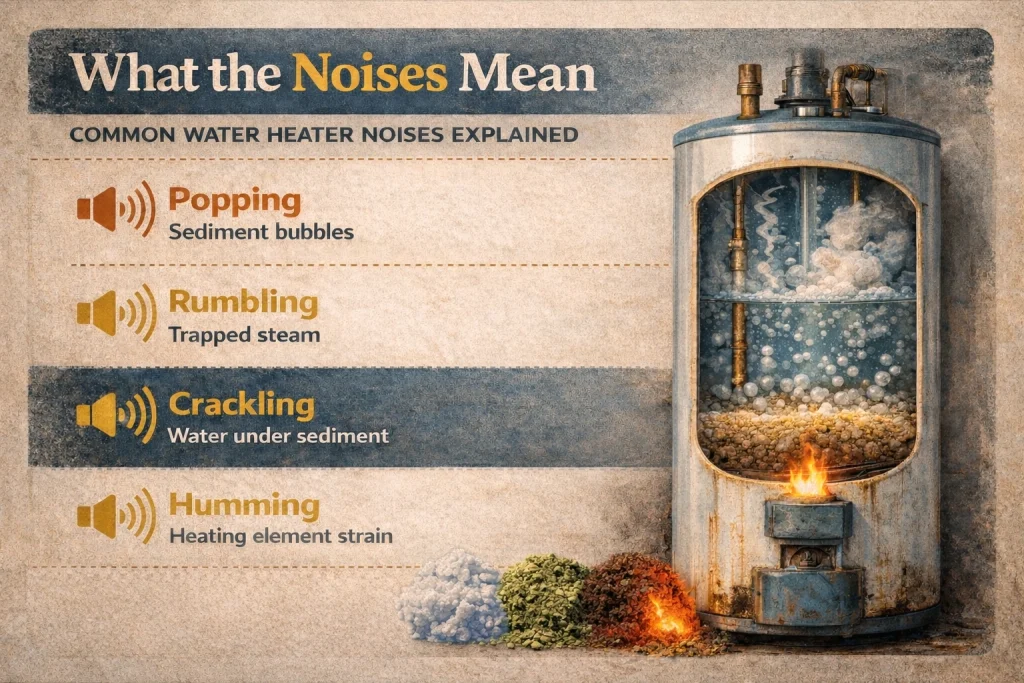
- Rumbling or popping sounds
A hot water heater rumbling sound is most often caused by sediment at the bottom of the tank reacting to heat. Trapped water bubbles burst through mineral buildup, creating a low, rolling noise. - Crackling or sizzling noises
These sounds typically occur when water is heated beneath a layer of sediment. The noise may come and go as the hot water system cycles on and off. - Banging or knocking
Louder, sharper sounds can happen when hardened sediment shifts inside the tank. This is more common in older water heaters or systems that haven’t been flushed regularly. - Low humming or vibration
A steady hum is often related to heating elements or water flow and may indicate efficiency strain within the hot water system.
These noises often become more noticeable after heavy hot water use, when sediment is disturbed and the system works harder to reheat the tank.
The Real Cause: Sediment Buildup Inside the Tank
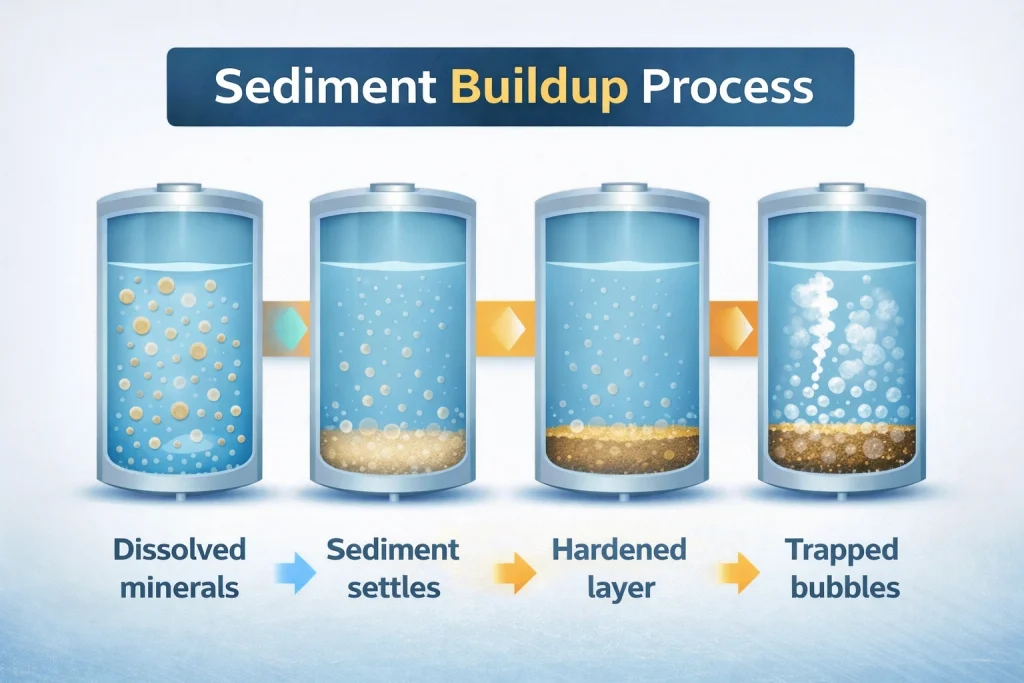
- Minerals naturally settle over time
Most Santa Cruz water contains dissolved minerals that separate as water heats. These minerals sink and collect at the bottom of the water heater tank. - Sediment forms a hardened layer
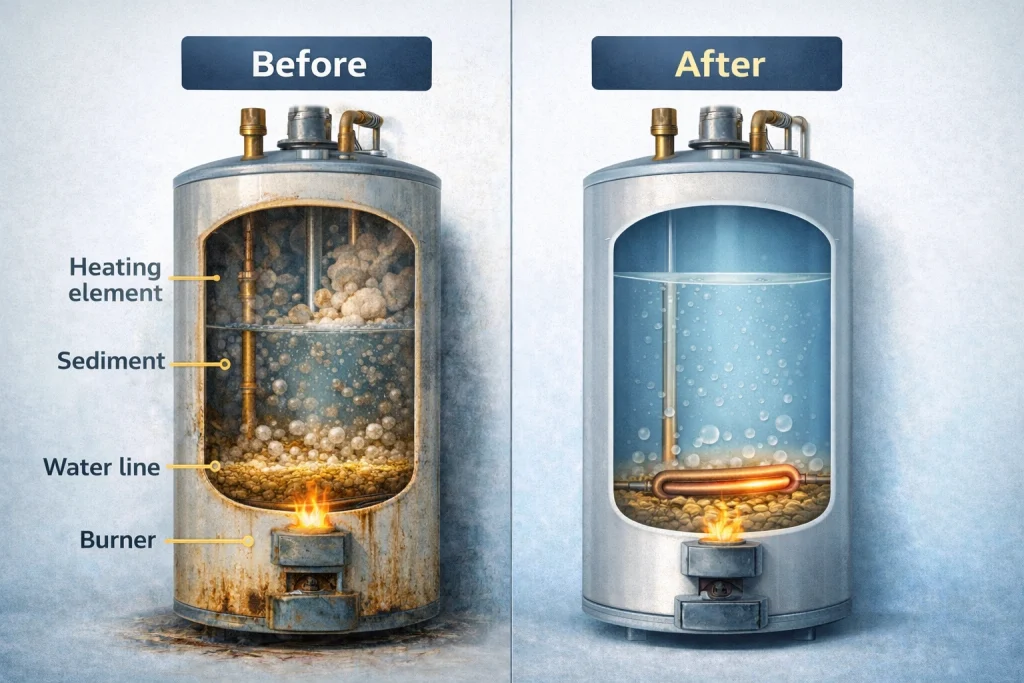
As heating cycles continue, this mineral layer thickens and hardens. The hot water system then has to heat water through this barrier instead of directly. - Trapped water creates noise
When water gets trapped beneath sediment, it overheats and releases steam bubbles. These bubbles push through the buildup, causing popping or rumbling sounds inside the water heater. - Heat transfer becomes less efficient
Sediment prevents even heat distribution, forcing the system to work longer. This strain contributes to noise, temperature inconsistency, and gradual performance loss. - Santa Cruz homes are especially prone
Older plumbing systems, year-round heater use, and cooler coastal temperatures all accelerate sediment buildup in water heaters across Santa Cruz County.
Understanding sediment buildup early helps homeowners address noise issues before they lead to efficiency problems or unexpected hot water disruptions.
How Sediment Affects Heating Performance and Energy Use
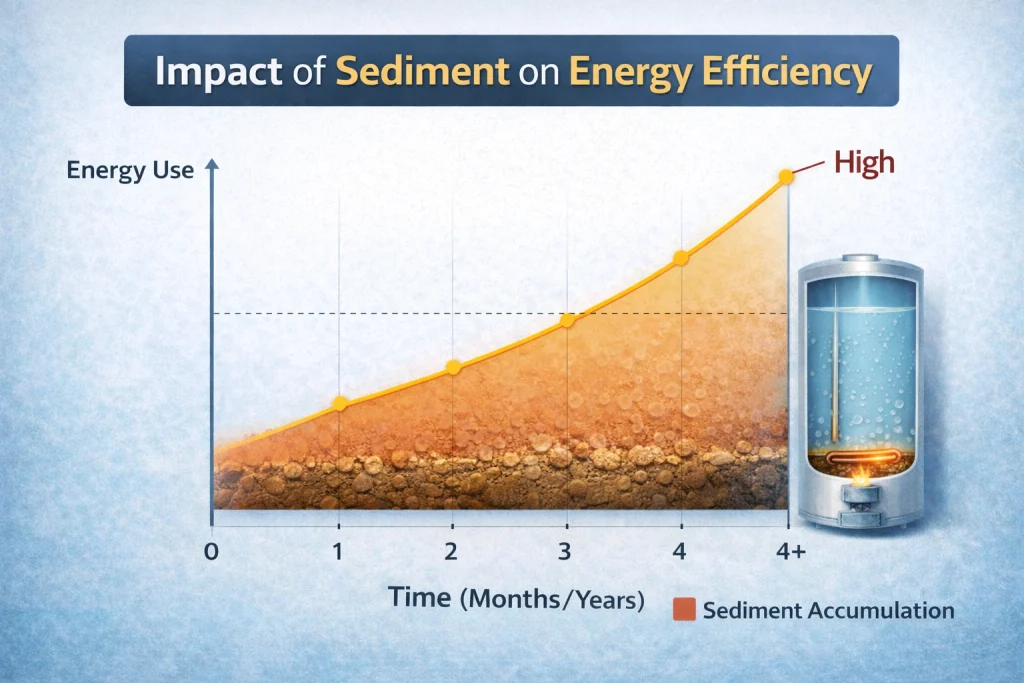
Sediment buildup does more than create noise—it directly contributes to water heater efficiency problems that affect daily comfort and energy use. When minerals collect at the bottom of the tank, they act as an insulating layer between the burner or heating element and the water. This forces the system to work harder and longer to reach the same temperature, reducing overall hot water system efficiency over time.
- Longer heating cycles
The water heater must run longer to push heat through sediment, increasing wear on internal components. - Higher energy usage
Extended run times lead to increased energy consumption, which can gradually raise overall water heater cost. - Uneven water temperatures
Heat transfer becomes inconsistent, resulting in fluctuating hot water during showers or appliance use. - Reduced usable hot water
Sediment takes up space inside the tank, limiting the amount of hot water available when demand is high.
Addressing sediment early helps maintain efficiency and prevents long-term performance decline.
Why You Might Suddenly Have No Hot Water
A sudden loss of hot water can feel like a system failure, but it’s often the result of issues that build gradually over time. When sediment accumulates inside a tank-style heater, it can interfere with normal heating and trigger performance problems that lead to no hot water in the house. In many cases, the system is reacting to strain rather than breaking down completely.
- Sediment blocking heat transfer
Mineral buildup prevents burners or heating elements from efficiently warming the water, reducing output until hot water stops altogether. - Overheating safety shutoffs
Trapped heat beneath sediment can cause the system to overheat, activating safety controls that shut the heater down to prevent damage. - Component stress and wear
Prolonged efficiency loss puts extra strain on internal parts, increasing the need for timely hot water repair.
Identifying noise and performance changes early can help homeowners avoid unexpected hot water loss and restore reliable operation before bigger issues develop.
Santa Cruz–Specific Factors That Accelerate Sediment Issues
| Santa Cruz Factor | How It Affects the Water Heater |
| Coastal climate | Cooler, moisture-heavy coastal air leads to longer heating cycles, which keeps sediment exposed to heat for extended periods and speeds buildup inside the water heater. |
| Older housing stock | Many Santa Cruz homes were built decades ago and use older plumbing systems. Aging pipes and tanks are more prone to mineral accumulation and internal wear. |
| Inconsistent maintenance histories | Water heater maintenance is often delayed or skipped entirely, especially in rental or long-owned properties. Without routine flushing, sediment continues to harden over time. |
| Seasonal usage spikes | Winter brings increased hot water demand for showers, laundry, and daily use. These spikes disturb settled sediment, making noise and efficiency problems more noticeable. |
Understanding these local factors highlights why water heater maintenance Santa Cruz homeowners rely on is especially important for preventing noise, efficiency loss, and unexpected service interruptions.
Preventive Maintenance That Reduces Noise and Wear
Preventive care is one of the most effective ways to reduce noise and extend the life of a hot water system. When sediment is addressed early, the water heater runs more quietly, heats more efficiently, and experiences less internal stress. Routine water heater service focuses on maintaining performance rather than reacting to breakdowns, helping Santa Cruz homeowners avoid sudden disruptions.
- Periodic professional flushing
Sediment is safely removed during scheduled service visits, preventing mineral layers from hardening and reducing internal noise without the risks of DIY flushing. - System efficiency checks
Temperature settings, heating elements, and overall performance are evaluated to ensure the water heater is operating efficiently and evenly. - Early inspections when noises begin
Addressing sounds as soon as they appear allows technicians to resolve minor issues before they escalate into major repairs. - Maintenance suited to local conditions
Regular water heater maintenance Santa Cruz homes require accounts for coastal climate factors and year-round system use.
Preventive service keeps the system reliable while protecting comfort and efficiency over time.
When Noise Means It’s Time to Call a Professional
Occasional sounds can happen as a water heater cycles on and off, but persistent or worsening noise usually signals a problem that requires professional attention. When homeowners begin searching for water heater repair near me, it’s often because the issue has moved beyond normal operation and into performance loss or system stress.
- Persistent rumbling or popping
Ongoing noise that doesn’t fade after use often points to hardened sediment that can’t be resolved without professional service. - Unstable water temperatures
Sudden changes from hot to lukewarm water indicate uneven heating and internal strain, a common reason to call a licensed water heater technician. - Repeated no hot water events
Frequent shutdowns or complete loss of hot water suggest safety controls or heating components are being affected. - The need for trained diagnosis
A professional evaluation ensures the correct source of the noise is identified and handled safely, preventing unnecessary damage or premature water heater repair.
Addressing these signs early helps restore quiet operation and protects the system’s long-term reliability.
What a Professional Water Heater Inspection Typically Involves
Scheduling water heater service doesn’t have to feel uncertain or intimidating. A professional inspection is designed to give homeowners clarity about their hot water system, not pressure them into unnecessary repairs. The goal is to understand what’s causing noise, efficiency loss, or performance changes.
- Visual inspection of the system
A licensed water heater technician checks the tank, connections, and surrounding components for visible wear, corrosion, or signs of stress. - Sediment assessment
The technician evaluates whether mineral buildup is contributing to noise or heat transfer problems inside the hot water system. - Performance and safety checks
Temperature consistency, heating cycles, and system response are reviewed to ensure the unit is operating safely and efficiently. - Clear explanation before any work
Findings are explained in plain language, with options outlined before any service is recommended.
This approach helps homeowners make informed decisions with confidence.

Final Thoughts: Quiet Operation Means a Healthier Water Heater
A water heater making noise doesn’t automatically mean something is broken, but it should never be ignored. In many cases, those sounds are early indicators of sediment buildup or efficiency strain that can be addressed before they turn into larger problems. Paying attention to changes in how a water heater sounds or performs allows homeowners to take action while solutions are still simple and preventive.
Routine water heater service helps maintain quiet operation, consistent temperatures, and long-term efficiency. With Santa Cruz’s coastal climate and many older home systems, regular care plays an important role in protecting daily comfort. Anytime Plumbing understands the unique conditions local water heaters face and focuses on keeping systems running smoothly, efficiently, and reliably for the long term.
Frequently Asked Questions
In many cases, professional maintenance can reduce or eliminate noise by addressing sediment buildup. A proper inspection helps determine whether maintenance or targeted repair is needed.
Yes. Over time, sediment can interfere with heating elements or burners, which may result in no hot water in the house even if the system hasn’t completely failed.
Most noises aren’t immediately dangerous, but they do indicate reduced efficiency or internal stress. Addressing the issue early helps prevent safety shutoffs or unexpected hot water loss.
Strange sounds coming from a water heater can sometimes signal internal tank issues such as heavy sediment buildup, pressure changes, or aging components. Ignoring these noises may lead to reduced efficiency, higher energy use, or eventual system failure.