

Are Your Sprinklers Wasting Water? How to Fix Outdoor Irrigation Waste in Santa Cruz
In Santa Cruz, water is a coastal lifeline. Drought cycles, rising rates, and fines for runoff or overspray make waste costly. The good news: most irrigation loss comes from fixable issues. This guide gives you simple yard checks, fast DIY tweaks, and clear cues for when professional help makes the biggest difference. Alongside controller tips and nozzle choices, we’ll focus on stopping leaks you can’t see. Anytime Plumbing locates and repairs hidden outdoor losses at the meter, backflow assembly, zone valves, and the service lines feeding your sprinkler system so every drop lands where it should.
60-Second Self-Audit: Spot the Waste Now
Turn on one irrigation zone and walk the line. In under a minute, you can spot the biggest culprits behind high bills and runoff. Watch the spray, listen for hissing, and glance at the meter when everything in the house is off.
Screenshot-ready checklist
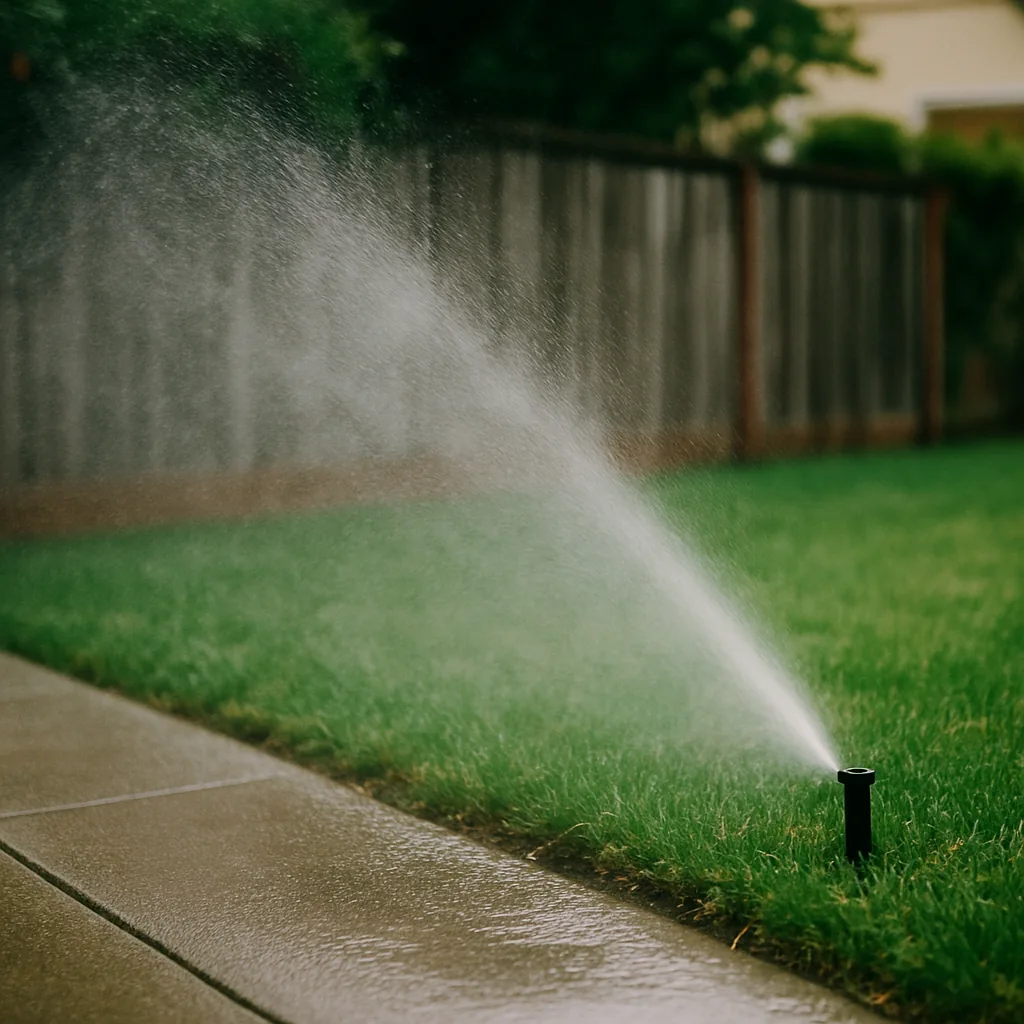
- Fine misting/fog = pressure too high.
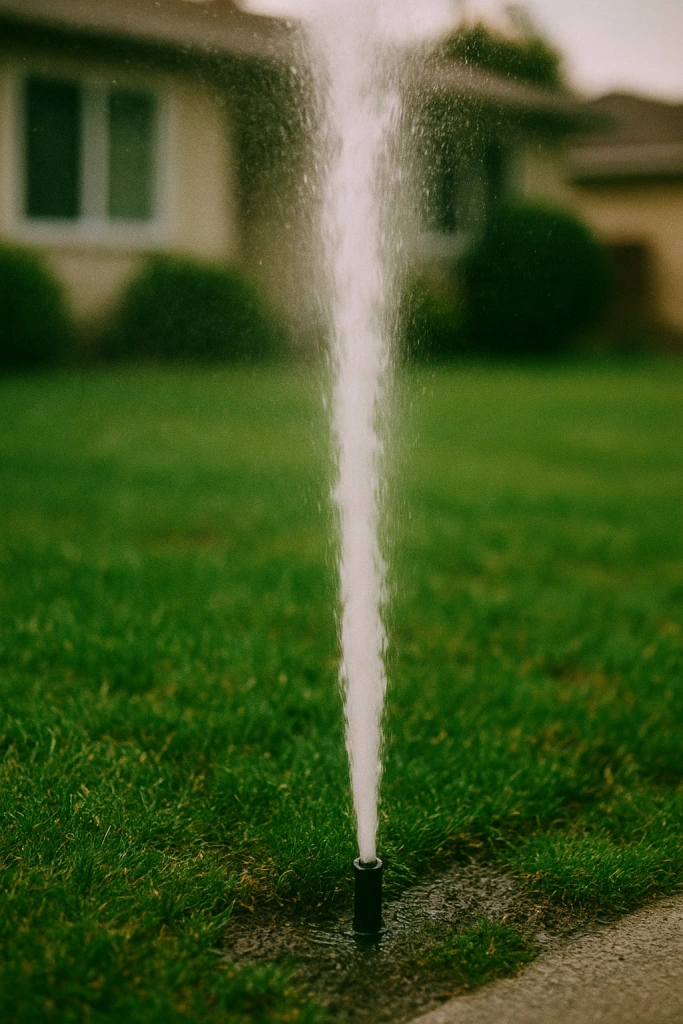
- Geysers/sputter = broken head or snapped riser.
- Sidewalks/fence/windows wet = overspray or mis-aimed nozzle.
- Pooling/rivulets = low spots, leaks, or runtimes that are too long.
- Meter test dial moving with all fixtures off = leak between meter and valves.
- Overspray test: are hardscapes wet after a cycle?
- Runoff test: does water leave your property or wet the curb?
- Hardware: tilted/sunken heads, clogged filters, stuck valves, brittle/exposed tubing.
- Controller: sprays + rotors mixed in one zone; long single cycles on clay soils.
Snap photos and jot the zone number. Fix broken heads and overspray first for instant savings. If the meter spins or a zone won’t shut off, that points to a pressurized leak or valve failure—call a pro like Anytime Plumbing.
Biggest Water-Wasters (and Fast Fixes)
Most outdoor waste traces to a few repeat offenders. Tackle these and you’ll usually see immediate, measurable savings.
- Misting/fogging : Pressure too high. Install pressure-regulated heads or a zone PRV (nozzles/heads often <$20; PRV is typically a pro job).
- Overspray : Wrong nozzle/arc. Swap to the correct pattern or MP rotators, re-aim, and raise/level sunken heads.
- Runoff on slopes : Adopt cycle-and-soak: 2–3 short cycles with soak time between; add check-valve heads to stop drain-down.
- Mixed devices in one zone : Separate sprays vs rotors or schedule to the slowest device; aim for matched precipitation.
- Hidden lateral leaks : Soggy turf, algae, unexplained spikes. Isolate the zone, repair fittings/pipe, replace cracked risers.
DIY parts usually <$20: nozzles, filters, riser extensions, check-valve heads.
Typically pro work: PRV installs, valve manifold rebuilds, backflow repairs, main-line leaks. Fix the quick wins first; then invest in pressure control and smart scheduling for lasting efficiency.
Smart Scheduling & Zoning
Great irrigation starts with timing and grouping. A few schedule tweaks can slash waste without changing a single head.
- Water early morning to cut evaporation and wind drift; skip hot/afternoon or gusty windows.
- Cycle-and-soak: run 2–3 short cycles with soak time between to match soil infiltration, especially on clay and slopes.
- Seasonal adjust: dial runtimes down in cool months; temporarily ramp during heat waves, then reset.
- Zone by need: separate turf vs. beds, shade vs. sun, and slopes vs. flats so each gets the right runtime.
- Soil-based scheduling: sandy soils need shorter, more frequent cycles; clay prefers shorter pulses with longer soak times.
Small schedule edits bring fast results and healthier plants. In a later section, we’ll show how weather/ET smart controllers automate these adjustments so you set it once and save all season. Sprinkler efficiency matters most in neighborhoods with established landscaping, like Pasatiempo and Laurel Heights, where smart scheduling and leak checks can cut outdoor water waste fast.
Pressure & Nozzles that Save Water
Right pressure and modern nozzles deliver uniform coverage with less runoff—so you water plants, not pavement.
- Measure static/dynamic pressure; most spray devices work best around ~30–45 psi (check your model).
- If street pressure is high, add a whole-yard PRV; for finesse, use pressure-regulated heads/bodies per zone.
- Convert fixed sprays to multi-stream rotators for slower precipitation and better uniformity.
- Install check-valve heads at low points to prevent drain-down between cycles.
These upgrades curb misting, overspray, and puddling—exactly the issues that spike bills. When you’re unsure whether you need a PRV or head-level regulation, a quick pressure test and device audit can point the way.
Drip Where It Makes Sense -Beds, Trees, Perimeters
Sprays excel on active turf, but many landscapes save more with targeted drip that feeds roots—not air or hardscape.
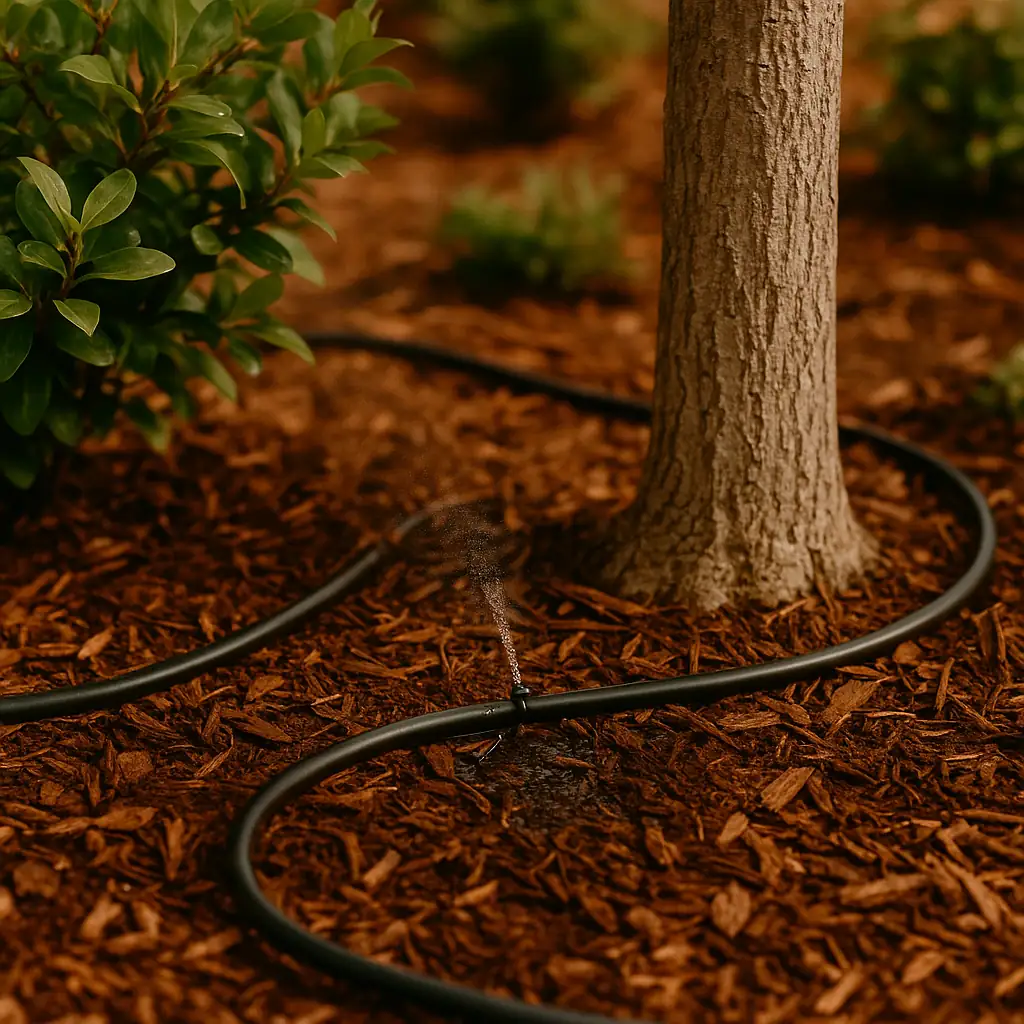
- Use drip or inline emitter tubing for shrubs, trees, and perimeter beds; place emitters at the root zone, not just on the mulch.
- Gains: less evaporation, minimal overspray/runoff, deeper watering for healthier roots.
- Add filters and pressure reducers on drip zones to keep emitters flowing cleanly.
- Layout tips: space emitters for plant size, loop around tree canopies, and run a dedicated valve for drip separate from sprays.
- Keep spray heads for turf or high-traffic grass where uniform surface coverage matters.
A thoughtful drip conversion trims water use and maintenance while boosting plant health. If you’d like a zone-by-zone plan, we can map where drip pays off fastest and where sprays should stay.
Soil, Mulch & Infiltration
Healthy soil lets you water less and grow more. Improve how fast water sinks in, then protect it from evaporating.
- Add compost to beds and top-dress lawns to boost infiltration and root depth.
- Mulch 2–3 inches (keep off trunks) to cut evaporation and moderate soil temps.
- Fix compaction: core-aerate turf; break up hardpan in planting areas.
- Shape the grade: small berms/swales on slopes slow water and prevent runoff.
- Right plant, right place: choose climate-appropriate, coastal-tolerant species to reduce runtime.
Do this first, and your controller changes actually stick. Many customers see shorter cycles with greener results after a soil and mulch tune-up.
Leak Detection Outside: Where Pros Find the “Invisible” Loss
Not all leaks gush. Some hide underground, quietly spiking your bill.
- Common failure points: meter box, backflow assembly, and the main service line into the valve manifold.
- Zone hardware: seeping valves (solenoids/diaphragms), lateral pinholes, and cracked risers.
- How we find them: pressure tests, zone isolation, and acoustic listening to pinpoint seep vs. burst.
- Why act fast: even a small weep can waste thousands of gallons per month.
If your meter moves with everything off, or a zone won’t fully shut, it’s time for professional isolation and repair to stop the silent drain.
Seasonal Tune-Ups & Winterization
A quick pass each season keeps coverage even and waste low—no major remodel required.
- Spring: raise/level sunken heads, clean filters, re-aim arcs after mowing; run a uniformity check.
- Summer: shorten cycles, add cycle-and-soak, and watch for wind drift or hot spots.
- Fall/Winter: reduce runtimes or shut turf zones; insulate exposed piping; drain low points where water collects.
Set a reminder to update controller schedules quarterly (or let a smart controller do it). These small tune-ups prevent leaks, curb runoff, and keep landscapes healthy year-round.
When to DIY vs Call Anytime Plumbing
Handle the simple stuff, and call us for pressure, wiring, and underground leaks—this split saves water and weekends.
- DIY: re-aim heads, swap nozzles/filters, raise/level sunken risers, add mulch, basic controller tweaks.
- Call a pro: high street pressure/PRV installs, leak isolation/repairs, backflow testing/fixes, valve manifold rebuilds, drip conversions, controller upgrades with wiring faults.
- Value: code-compliant work, verified pressure/coverage, less water and fewer callbacks.
A weekend audit and a few upgrades can slash outdoor waste and protect the coast. Book an Outdoor Water-Waste Check with Anytime Plumbing for leak diagnosis, pressure/schedule tuning, and a prioritized, efficiency-first fix plan.
Frequently Asked Questions
Signs of an underground sprinkler leak include soggy spots in the yard, unusually high water bills, uneven grass growth, or sprinkler heads that do not pop up properly. Low water pressure in a zone can also indicate a leak. A professional can pinpoint the problem with specialized tools to prevent water waste and yard damage.
You should inspect your sprinkler heads at least once a month during the watering season. Check for clogs, misalignment, or leaks that can cause uneven coverage and water waste. Regular adjustments and cleaning help your system run efficiently and keep your lawn healthy.
Sometimes a sprinkler system can waste water even if there are no visible leaks in the pipes. One common sign is unusually high water bills compared to the same time last year. Another way to check is to observe your lawn during a watering cycle. If water is pooling in certain areas, running off onto sidewalks or driveways, or creating soggy spots while other areas remain dry, the system may be overwatering or the heads may be misaligned. Inspecting sprinkler heads for clogs, broken nozzles, or incorrect spray patterns can also reveal hidden water waste. Adjusting the timer settings to match your yard’s needs and checking the system regularly can prevent unnecessary water loss.
A damaged sprinkler line can waste large amounts of water and sometimes flood nearby areas. If the leak worsens or affects underground pipes, urgent repairs may be needed to stop water loss.