

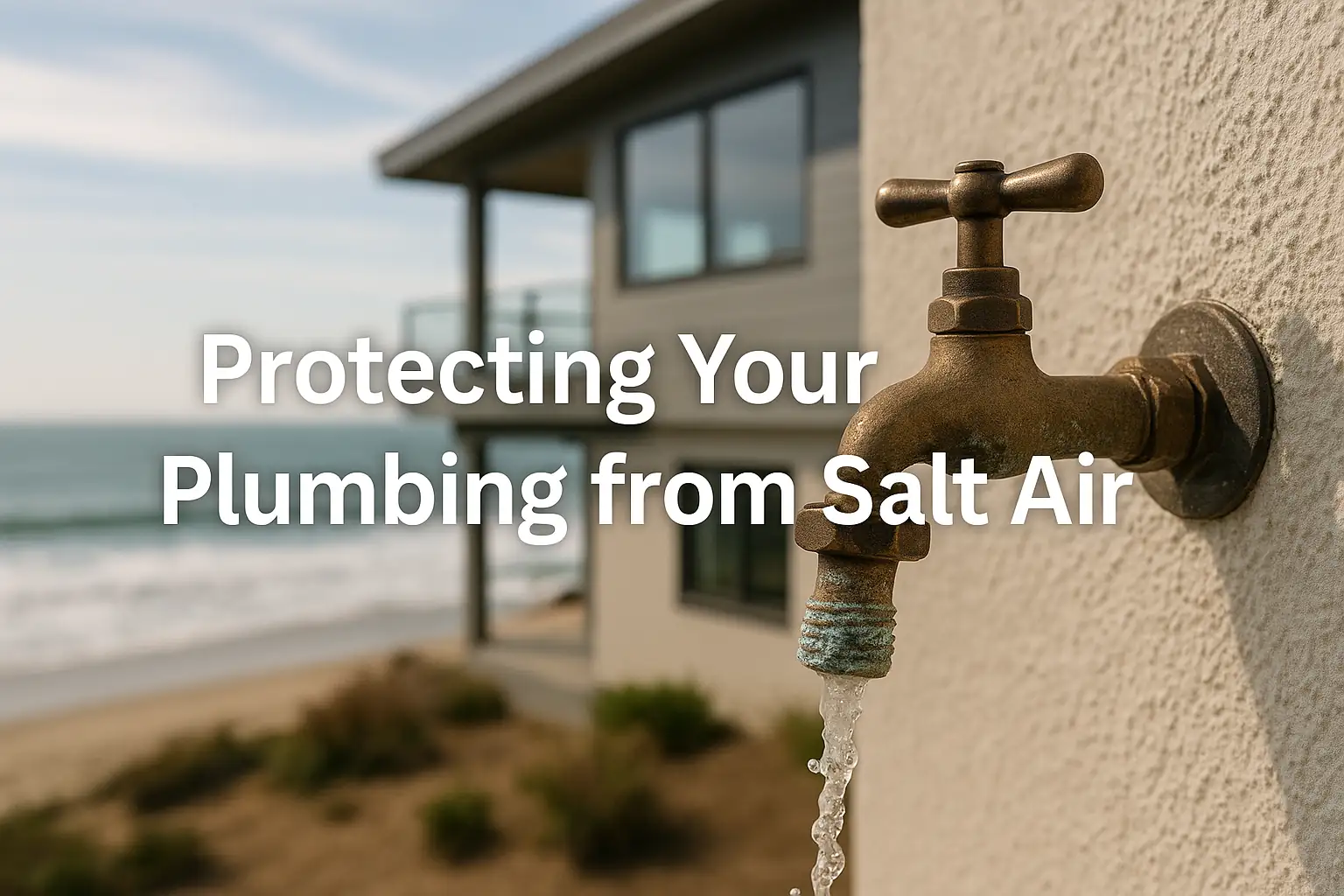
Protecting Your Plumbing from Salt Air Damage in Santa Cruz Coastal Homes
Living in Santa Cruz offers stunning ocean views, refreshing breezes, and a relaxed coastal lifestyle—but it also means your home is constantly exposed to salty air. While the fresh sea breeze feels invigorating, it carries fine salt particles that can settle on your plumbing systems and slowly cause damage over time. Many homeowners aren’t aware that salt air can corrode pipes, fixtures, and appliances, leading to leaks, reduced efficiency, and costly repairs if left unchecked. This is especially true for homes closer to the water in Pleasure Point, where constant ocean breeze and humidity can speed up corrosion on exposed plumbing components. In this blog, we’ll explore the science behind how salt air impacts plumbing, the warning signs to watch for, and practical steps you can take to protect your home’s water systems—keeping them strong, reliable, and ready to withstand the coastal climate.
Understanding the Impact of Salt Air on Plumbing
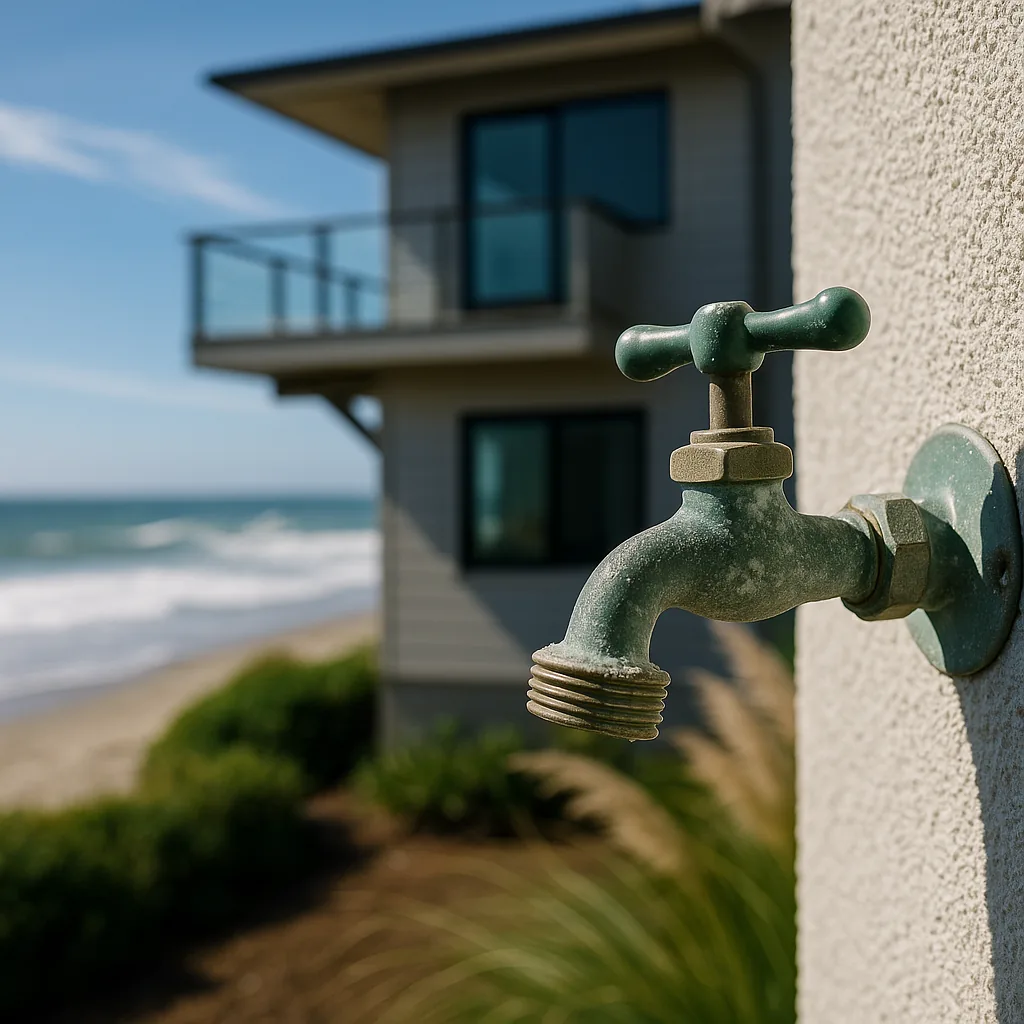
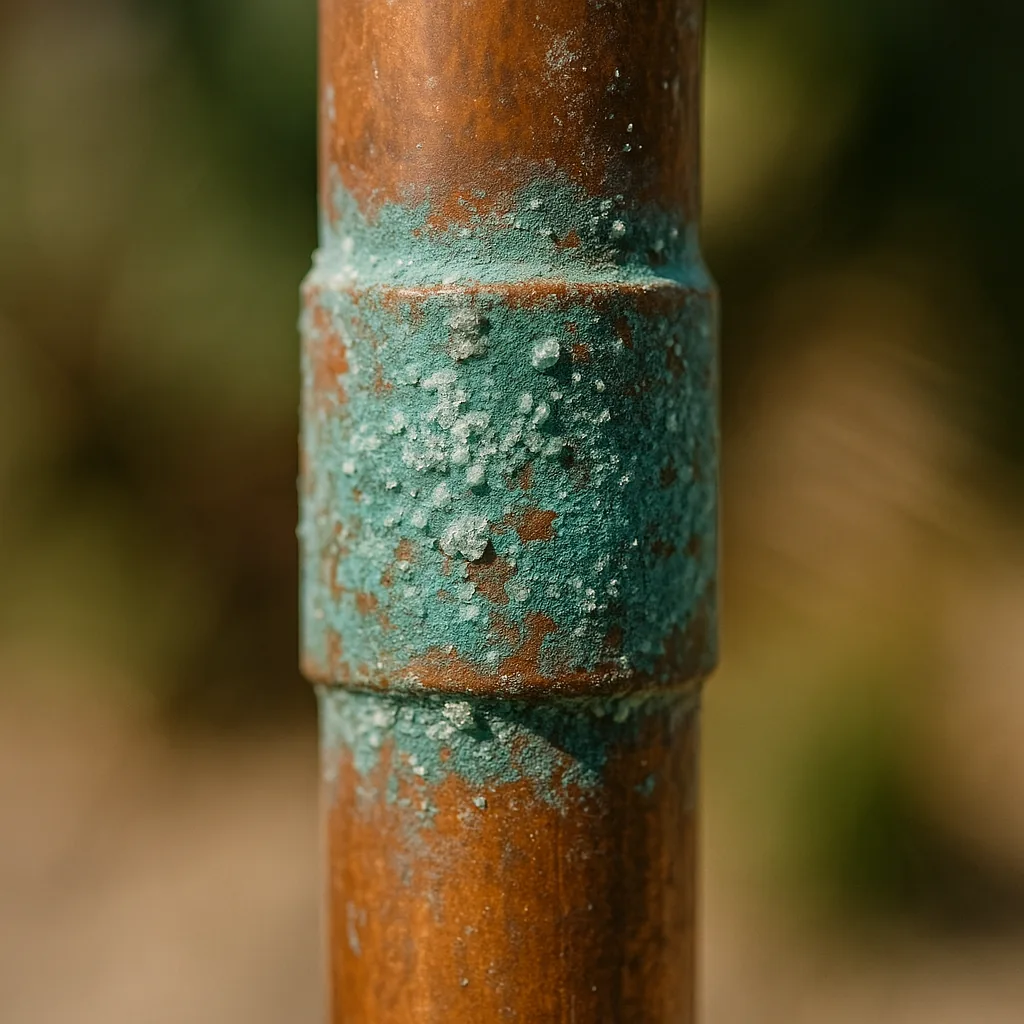
Salt air is a natural byproduct of living near the ocean, created when wind and waves carry tiny salt particles from seawater into the atmosphere. In coastal areas like Santa Cruz, constant ocean breezes and moist air increase the concentration of these particles, allowing them to travel further inland. When this salt-laden moisture comes into contact with plumbing systems, it can settle on metal surfaces and begin to eat away at them over time. The most damaging process is galvanic corrosion, which occurs when different metals in your plumbing come into contact with each other in the presence of salt and moisture, accelerating deterioration. This can weaken joints, create pinhole leaks, and reduce overall system lifespan. Plumbing components most vulnerable to salt air damage include outdoor hose bibs, exposed copper or galvanized steel pipes, metal fittings, and even water heater tanks. Left unprotected, these areas can suffer significant wear and tear in just a few years.
Signs of Salt Air Damage in Your Plumbing System
Salt air damage can develop gradually, but there are clear signs to watch for before it leads to costly repairs:
- Green or white corrosion on copper pipes – Caused by the reaction between salt, moisture, and copper surfaces.
- Rust on steel or iron fixtures – Common on outdoor taps, hose bibs, and exposed metal parts.
- Reduced water pressure – Often due to internal buildup or narrowing of pipes from corrosion deposits.
- Leaks in joints or valves – Small drips can signal weakened seals or pitting in the metal.
- Early warning signs vs. severe damage – Discoloration or slight flow changes indicate early issues, while frequent leaks, burst pipes, or failing fixtures suggest advanced corrosion.
Spotting these symptoms early allows you to take preventive action, protecting both your plumbing system and your home’s structural integrity.
Why Coastal Homes in Santa Cruz Are at Higher Risk
Santa Cruz’s unique coastal weather patterns make homes here particularly vulnerable to salt air damage. Frequent fog, prevailing ocean winds, and fine ocean spray carry salt particles far inland, coating plumbing systems even miles from the shore. Homes located right along the beachfront face the highest exposure, but elevated or inland neighborhoods aren’t immune—especially during windy or humid conditions. Neighborhoods like Opal Cliffs often experience heavier salt spray and wind-driven moisture, which can cause metal fittings and outdoor connections to wear out faster than expected. Studies have shown that metal corrosion can occur up to ten times faster in coastal climates compared to dry inland areas. Local plumbers often encounter cases where relatively new fixtures and pipes show significant wear within just a few years. Whether it’s a beachside bungalow or a hillside home with ocean views, any property in Santa Cruz can experience accelerated plumbing deterioration without proper maintenance and protective measures.
Plumbing Materials That Resist Salt Air Damage
Using corrosion-resistant materials is one of the best ways to protect your plumbing in Santa Cruz’s salty coastal environment. Here are some top options:
- PEX piping – Flexible, durable, and completely resistant to rust or corrosion. Ideal for both hot and cold water supply lines.
- CPVC (Chlorinated Polyvinyl Chloride) – Strong, heat-resistant, and non-metallic, making it a great option for indoor plumbing.
- Marine-grade stainless steel – Specifically designed to withstand harsh saltwater environments, reducing the risk of pitting and rust.
- Plastic or PVC fixtures – Perfect for outdoor applications like irrigation systems, pool plumbing, or hose bibs.
Upgrading to these materials may cost more initially, but the long-term benefits—fewer repairs, longer lifespan, and better resistance to corrosion—make it a smart investment for coastal homeowners.
Preventive Maintenance Tips for Coastal Plumbing
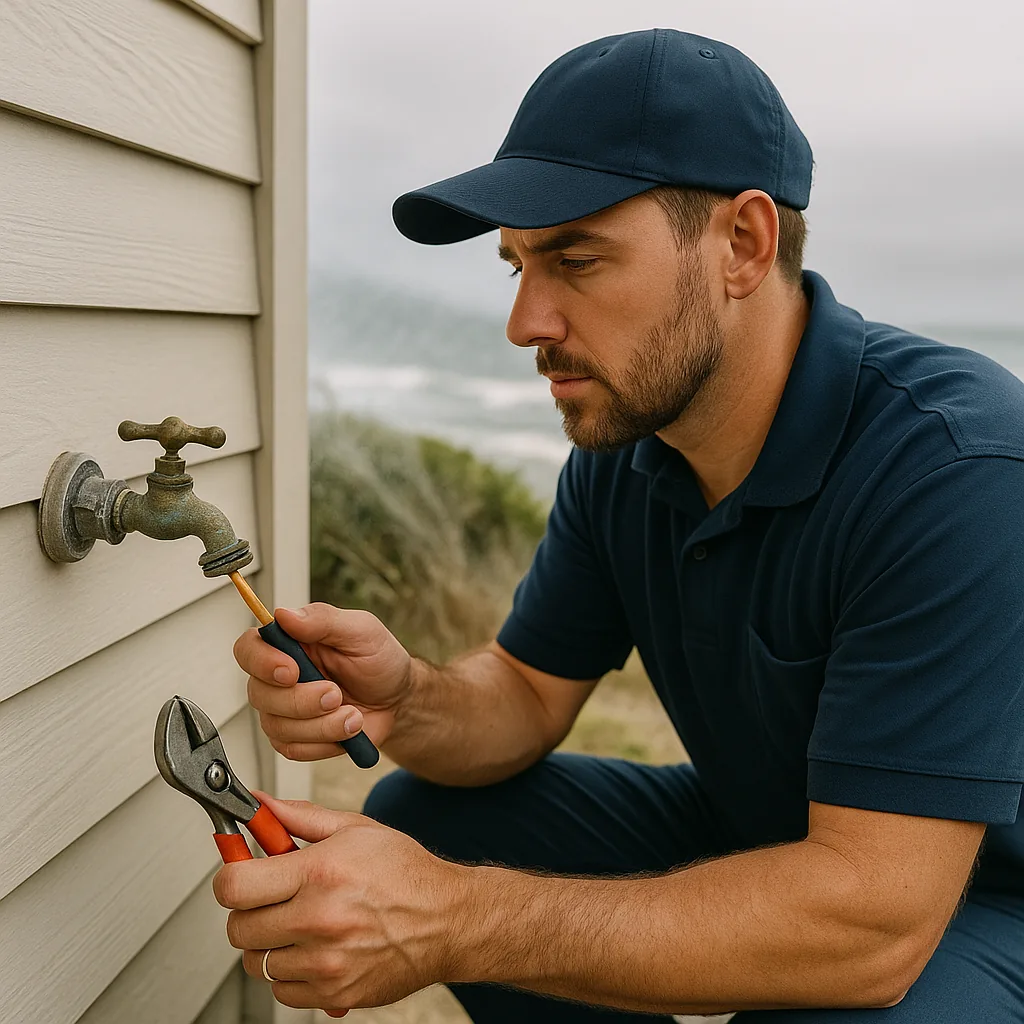
Protecting your plumbing from salt air damage in Santa Cruz starts with consistent, simple maintenance habits:
- Rinse exposed fixtures with fresh water – Wash off salt deposits on outdoor taps, hose bibs, and visible pipe sections at least once a week. For coastal properties in Seascape, this quick rinse (especially after windy days) helps remove salt deposits before they start pitting valves, hose bibs, and exterior fittings.
- Apply protective coatings or sealants – Use corrosion-resistant sprays or sealants on metal fittings to create a barrier against salt and moisture.
- Improve ventilation – Keep crawl spaces, pump rooms, and enclosed plumbing areas well-ventilated to reduce moisture buildup.
- Insulate pipes – Wrapping pipes helps minimize condensation and shields them from direct salt exposure.
- Schedule annual inspections – Hire a local plumber familiar with coastal conditions to identify and address early signs of corrosion.
- Cover outdoor taps – Use protective caps or covers when taps are not in use, especially during stormy or windy weather.
By following these steps, you can extend the life of your plumbing, prevent costly leaks, and keep your water systems operating efficiently—even in the harsh coastal climate.
Appliance Care in Salt Air Environments
Salt air doesn’t just affect your pipes—it can also damage household appliances:
- Water heaters – Inspect tanks and fittings regularly for corrosion or rust spots.
- Dishwashers and washing machines – Check inlet valves, hoses, and connectors for mineral or corrosion buildup.
- Outdoor showers and pool plumbing – Rinse fixtures after use and remove any salt or mineral deposits to prevent deterioration.
Routine care helps appliances last longer and maintain efficiency, even in a salty coastal environment.
The Role of Water Filtration and Softening Systems
A whole-house water filtration system can significantly reduce the minerals and impurities that speed up corrosion in coastal plumbing. By removing sediments and chemicals, filtration helps protect pipes, fixtures, and appliances from internal buildup. Pairing this with a water softening system can further extend the lifespan of your plumbing by preventing scale deposits, which often combine with salt exposure to accelerate wear. In a coastal environment like Santa Cruz, these systems not only improve water quality but also provide long-term protection for your home’s plumbing infrastructure.
Local Expertise Matters: Choosing a Santa Cruz Plumber
When it comes to protecting your plumbing from salt air damage, working with a local expert is key. Plumbers in Santa Cruz understand the unique challenges that coastal weather presents and can recommend the best materials and maintenance strategies for your home. Anytime Plumbing has extensive experience in corrosion prevention and repair across Santa Cruz, Capitola, Soquel, Aptos, Watsonville, Scotts Valley, Felton, Ben Lomond, Boulder Creek, La Selva Beach, Live Oak, and Bonny Doon. Our team provides tailored solutions to keep your plumbing systems strong, efficient, and ready to withstand the salty coastal climate.
Protect Your Plumbing Before Salt Air Takes Its Toll
Living in Santa Cruz means enjoying the beauty of the coast, but it also requires extra care to protect your home from the effects of salt air. Regular maintenance, the right materials, and timely inspections can prevent corrosion from damaging your plumbing and appliances. Don’t wait until small issues turn into costly repairs—early action is the best defense. Call Anytime Plumbing at 831-431-6593 to schedule your plumbing inspection and keep your home protected from salt air damage.
Frequently Asked Questions
Living near the ocean exposes plumbing to salt air, which can accelerate corrosion and wear. It’s a good idea to inspect your pipes, fixtures, and outdoor plumbing at least twice a year. During these inspections, check for rust, leaks, and any signs of deterioration. Catching problems early can prevent costly repairs and extend the life of your plumbing. Regular maintenance like flushing water heaters and cleaning outdoor faucets also helps protect your system.
For plumbing in coastal areas, materials that resist corrosion are ideal. Stainless steel, CPVC, PEX, and brass perform well against salty air. These options maintain durability, prevent rust, and reduce maintenance needs, making them reliable choices for long-lasting plumbing near the ocean or other salty environments.
In coastal areas, the salty air can speed up corrosion and wear on pipes, fittings, and fixtures. Having a professional inspect your plumbing once a year can help catch small issues before they turn into costly repairs. During an inspection, a plumber can check for leaks, corrosion, and any signs that metal pipes are weakening. Regular inspections also ensure that protective coatings or treatments are still effective and that your plumbing is in good shape to handle the effects of a salty environment. Scheduling maintenance at least once a year keeps your system reliable and extends the life of your pipes.
Coastal homes benefit from plumbing inspections at least once a year because salty air slowly wears down metal pipes and fixtures. Regular checks help spot early corrosion, allowing small problems to be handled before leaks or pipe failures develop.