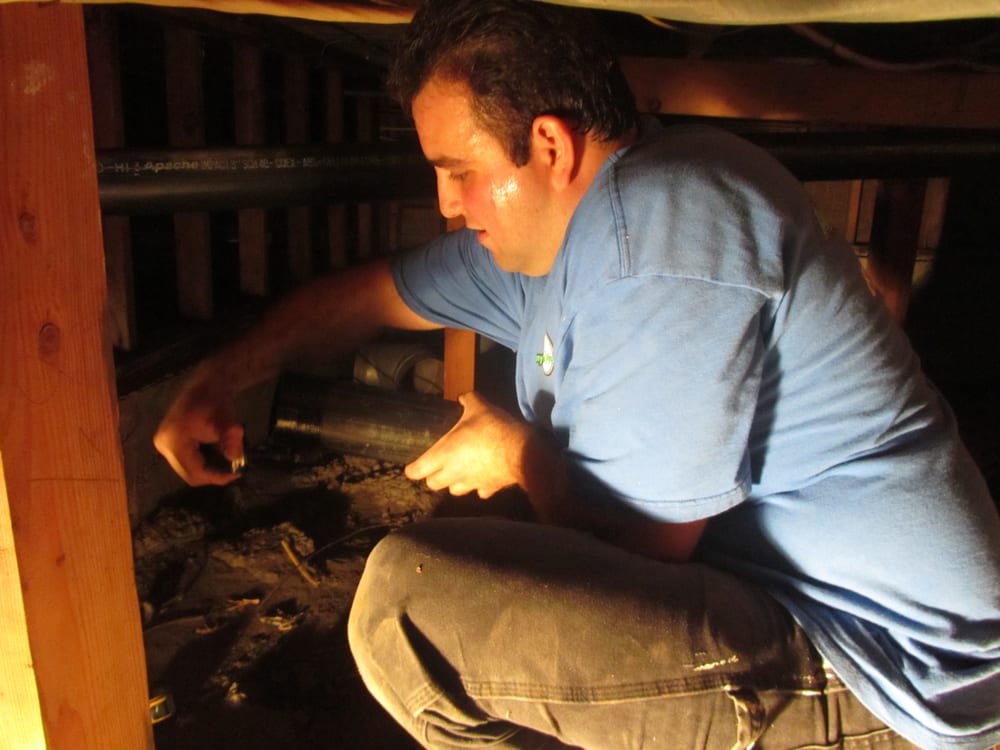



The Truth About Slab Leaks in Santa Cruz’s Wet Winter: Signs, Risks, and Fast Repair
Santa Cruz’s wet winters bring more than cooler temperatures and steady rainfall—they also create the perfect conditions for a hidden slab leak to develop beneath your home. As soil becomes saturated from prolonged rain, pressure builds under concrete foundations, increasing the risk of a water leak under concrete slab pipes that many homeowners don’t notice right away. In older homes especially, shifting ground and aging plumbing can allow moisture to escape unnoticed, eventually causing water seeping through concrete floor surfaces or unexplained dampness indoors. Because these leaks often stay hidden during the rainy season, slab leaks are far more common in winter than most property owners realize—making early awareness critical for protecting your home.
Why Santa Cruz’s Wet Winters Increase Slab Leak Risks
During Santa Cruz’s rainy season, persistent storms lead to wet soil expansion around and beneath homes, placing added stress on underground plumbing. As the ground absorbs moisture, groundwater pressure increases, pushing against concrete slabs and the pipes embedded below them. Over time, this pressure can cause small fractures or joint failures that result in a water leak in slab foundation systems. Older homes are particularly vulnerable, as aging pipes may not withstand seasonal movement caused by temperature changes between day and night. Once a leak under slab begins, water can spread unseen, slowly turning into a foundation water leak that worsens throughout winter. Because these changes happen below the surface, homeowners often remain unaware until visible damage appears, making winter one of the most critical times to identify slab-related plumbing issues early.
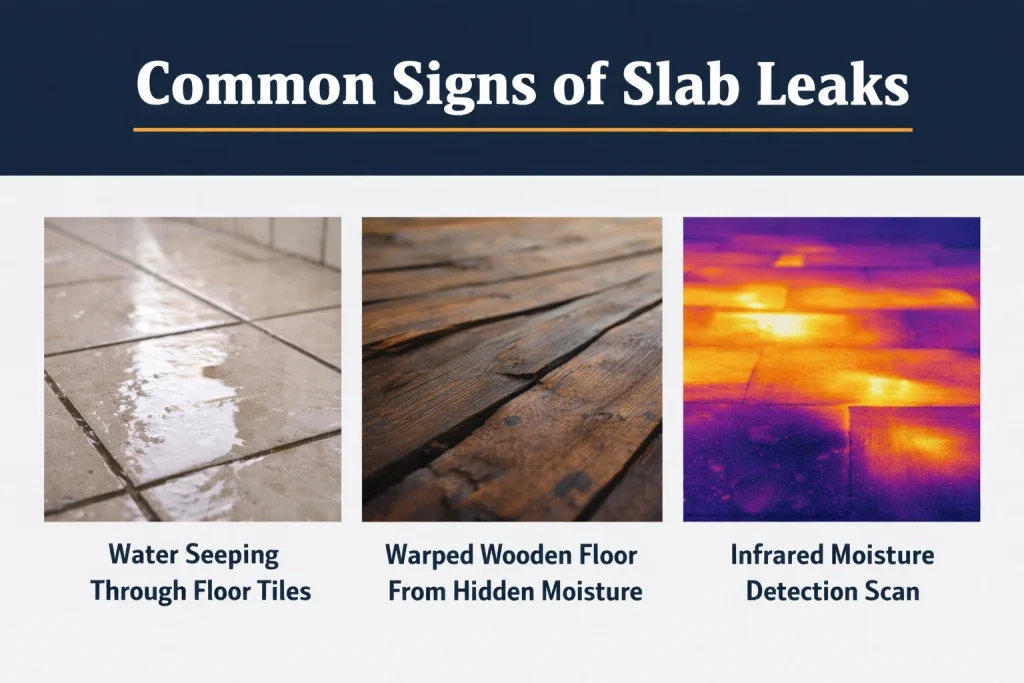
Common Signs of a Slab Leak During the Rainy Season
Visible and Physical Warning Signs
During the wet winter months, excess moisture can make slab leaks more noticeable at ground level. Watch for these physical clues inside and around your home:
- Water coming up through concrete floor areas, especially in bathrooms, kitchens, or laundry rooms
- Persistent damp patches or water seeping through concrete slab surfaces even when no fixtures are running
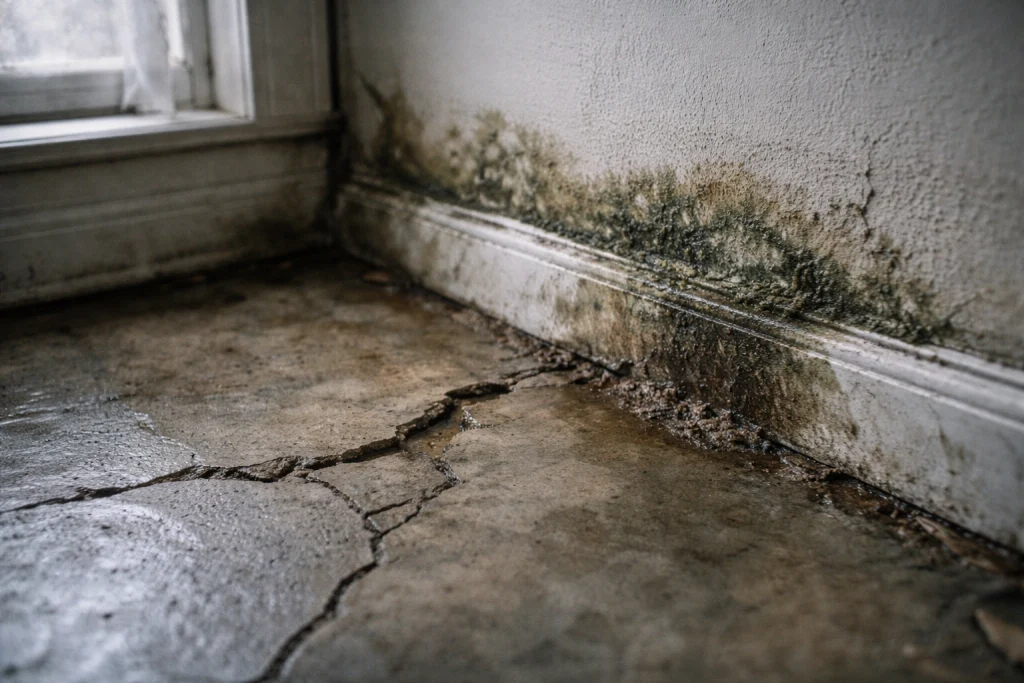
- Warped flooring, lifting tiles, or cracks forming in concrete
- Unexplained warmth on floors, which may indicate a hot water leak under slab piping
- Mold or mildew forming along baseboards or low walls due to trapped moisture
Utility and Comfort Red Flags
Not all slab leak symptoms are visible. Many warning signs show up through changes in comfort or utility usage:
- A sudden increase in water bills caused by a hidden slab water leak
- The sound of running water when taps and appliances are off
- Reduced water pressure throughout the home from a water leak under slab lines
- Musty or earthy odors indoors, especially common during winter when ventilation is limited
Recognizing these signs early can help prevent serious foundation and moisture damage during the rainy season.
What Happens If a Slab Leak Is Left Unrepaired
When a slab leak goes undetected, the damage often extends far beyond a simple plumbing issue. Continuous moisture beneath the home can weaken soil support, leading to erosion under the slab and increasing the risk of structural movement. Over time, this can result in cracks, uneven flooring, or a more serious foundation leak that compromises the stability of the home.
As moisture spreads, damp conditions create an ideal environment for mold growth, which can affect indoor air quality and pose health concerns for occupants. A hidden water leak in foundation of house systems may also damage insulation, flooring materials, and nearby walls. Delaying foundation water leak repair allows these issues to intensify, often turning what could have been a targeted fix into a more extensive and costly restoration project. Addressing slab leaks early is critical to preventing long-term damage and escalating repair expenses.
How Slab Leak Detection Works in Wet Conditions
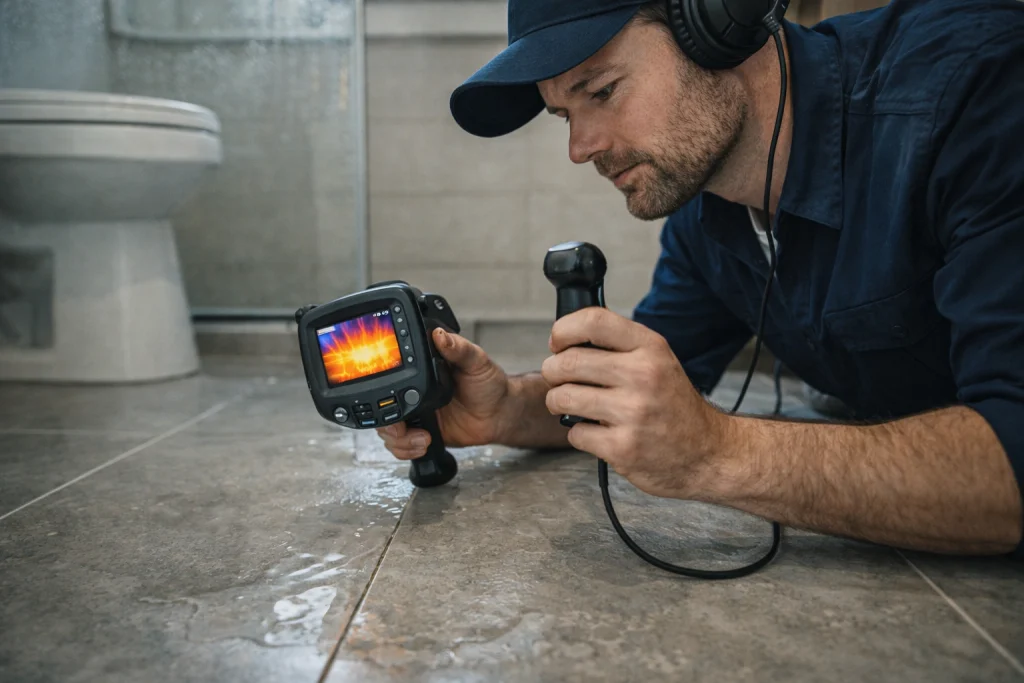
Detecting a slab leak during the rainy season requires a careful and methodical approach, as excess moisture can mask early warning signs. Professional slab leak detection and repair focuses on identifying the exact source of moisture without disturbing the concrete slab whenever possible. Modern concrete slab leak detection methods rely on non-invasive techniques that allow specialists to pinpoint leaks hidden beneath flooring and foundations, even when surrounding soil is saturated.
Winter conditions make under slab water leak detection more challenging because groundwater levels are higher and surfaces remain damp for longer periods. However, this also makes detection more critical, as ongoing leaks can spread faster and cause greater structural stress during wet months. By accurately locating the problem early, homeowners can avoid unnecessary excavation and ensure repairs are targeted, efficient, and less disruptive—especially when winter weather already places additional strain on the home’s foundation.
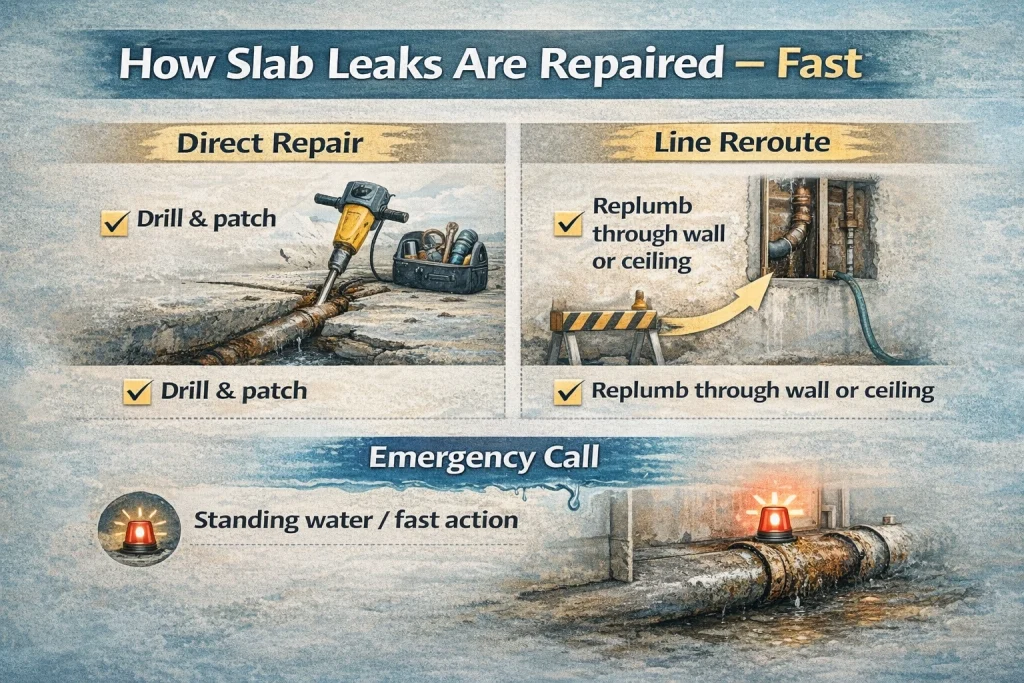
Fast Slab Leak Repair Options for Santa Cruz Homes
Direct Repair vs Line Rerouting
Once a leak is confirmed, the right slab leak repair method depends on the location and severity of the damage. In some cases, a targeted concrete slab leak repair can be performed by accessing the affected area and fixing the damaged pipe directly. This approach works well when the leak is isolated and easily reachable. For recurring issues or aging plumbing systems, under slab leak repair may involve rerouting the water line above ground or through walls, reducing future risk without disturbing large sections of concrete.
When Emergency Repair Is Needed
Certain situations require immediate attention, especially during winter storms. Standing water, rapidly rising moisture levels, or sudden loss of hot water may signal an urgent issue. Searching for slab leak repair near me or contacting plumbers slab leak repair services quickly can help limit foundation damage, prevent mold growth, and reduce costly structural repairs. Acting fast is key to protecting your home during Santa Cruz’s wet winter months.
Slab Leak Repair Costs – What Homeowners Should Expect
The overall slab leak repair cost can vary widely depending on several important factors. One of the first considerations is the slab leak detection cost, which depends on how difficult it is to locate the leak beneath the foundation, especially during wet winter conditions. Accessibility also plays a major role—leaks beneath finished flooring or hard-to-reach areas typically require more labor.
The severity of the damage and the chosen repair method also influence pricing. A localized fix may cost less than extensive slab leak reroute cost solutions, which involve redirecting plumbing lines to avoid future under-slab issues. Home age, pipe material, and the extent of moisture damage can further impact repair complexity. Understanding these factors helps homeowners make informed decisions before moving forward with repairs.
When to Call a Slab Leak Specialist This Winter
Winter is the right time to consult a slab leak specialist if you notice persistent moisture, unexplained water usage, or changes in indoor comfort. Early assessment helps prevent small issues from turning into major structural concerns. Experienced slab leak plumbers can identify problems before visible damage appears, especially during Santa Cruz’s rainy season. Scheduling professional slab leak detection services with a trusted local provider like Anytime Plumbing allows homeowners to address potential risks proactively, protecting both the foundation and long-term value of the home—without waiting for an emergency to occur.
Frequently Asked Questions
Yes, prolonged heavy rain can oversaturate the soil around a home, increasing pressure on underground pipes and leading to a water leak under concrete slab areas. This added stress can expose weaknesses in aging plumbing that often remain hidden during drier months.
A slab leak can become an emergency in winter because moisture spreads faster and causes damage more quickly in wet conditions. Seeking slab leak repair Santa Cruz services early helps prevent foundation issues, mold growth, and costly structural repairs.
Yes, ongoing moisture beneath a home can weaken soil support and lead to a foundation water leak that compromises structural stability. Over time, this can result in cracks, uneven floors, and long-term damage if left unaddressed.
Colder months often hide early warning signs of slab leaks because damp soil and seasonal moisture are common. Homeowners may overlook small changes like faint water sounds, mild floor warmth, or slow increases in water usage. Regular plumbing inspections during winter help catch hidden leaks before damage spreads beneath the foundation.