

Residential vs. Commercial Emergency Plumbing: What to Do When a Pipe Bursts in Santa Cruz
Pipe bursts rarely come with a warning, and when they happen, the damage can escalate within minutes. Whether it’s a sudden emergency water leak in a home or a major failure in a commercial building, situations like these require immediate attention. In coastal areas like Santa Cruz, plumbing systems face added stress from aging infrastructure, moisture in the air, and fluctuating water pressure, making emergency plumbing issues more common than many property owners expect.
Quick action is critical. Delays can lead to structural damage, mold growth, disrupted daily life, and costly repairs. This is where understanding how emergency plumbing services differ between residential and commercial properties becomes essential. While both demand fast response, the scale, complexity, and impact of a burst pipe can vary significantly. This guide breaks down those differences and explains exactly what steps to take when a pipe bursts, helping you minimize damage and regain control quickly.
What Is Considered an Emergency Plumbing Situation?
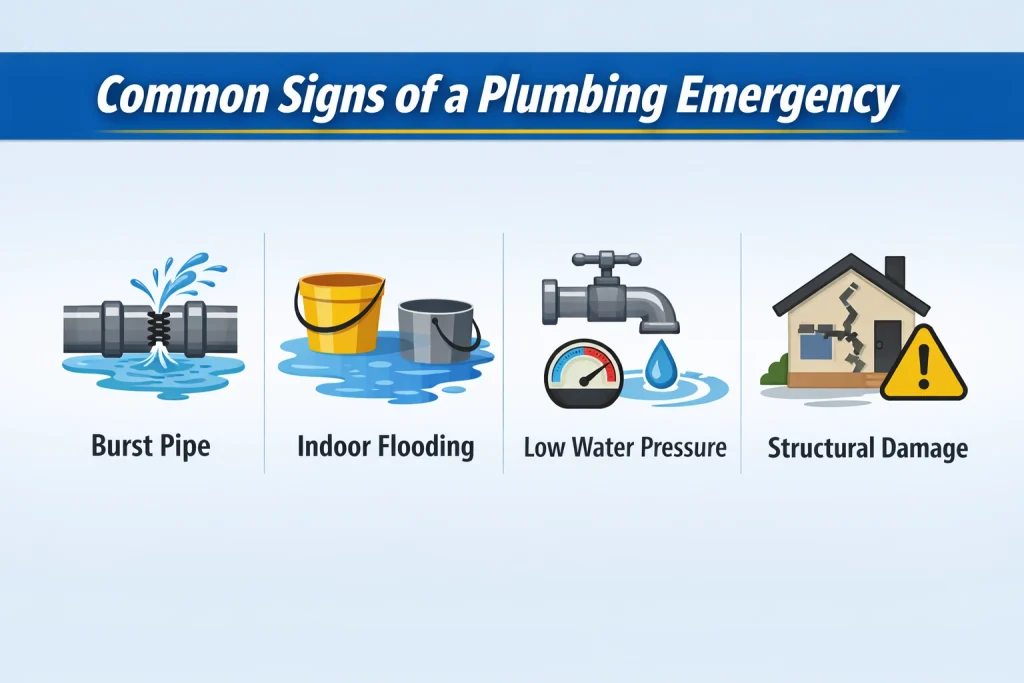
An emergency plumbing situation is any plumbing issue that poses an immediate risk to property, safety, or daily operations and cannot wait for a scheduled repair. One of the most common examples is a burst pipe, which can release large volumes of water in a short time and quickly cause structural damage. Sudden indoor flooding, whether from a failed pipe or a major fixture breakdown, is another clear sign that immediate action is needed.
A noticeable loss of water pressure can also indicate a serious underlying problem, such as a hidden pipe rupture or a significant leak within the system. In these cases, contacting an urgent plumber is critical. Delaying repairs allows water to spread, weakens walls and flooring, and increases the likelihood of mold growth. The longer the response time, the higher the repair costs and the greater the disruption, especially for businesses and occupied homes.
Residential Emergency Plumbing – What Homeowners Should Do
Residential plumbing emergencies can be stressful, especially when water starts spreading through living spaces. In most cases, emergency plumbing issues in homes develop suddenly but are often linked to long-term wear or environmental factors. Knowing the common causes and taking quick, calm action can significantly reduce damage and speed up emergency water leak repair.
Common Causes of Burst Pipes in Homes
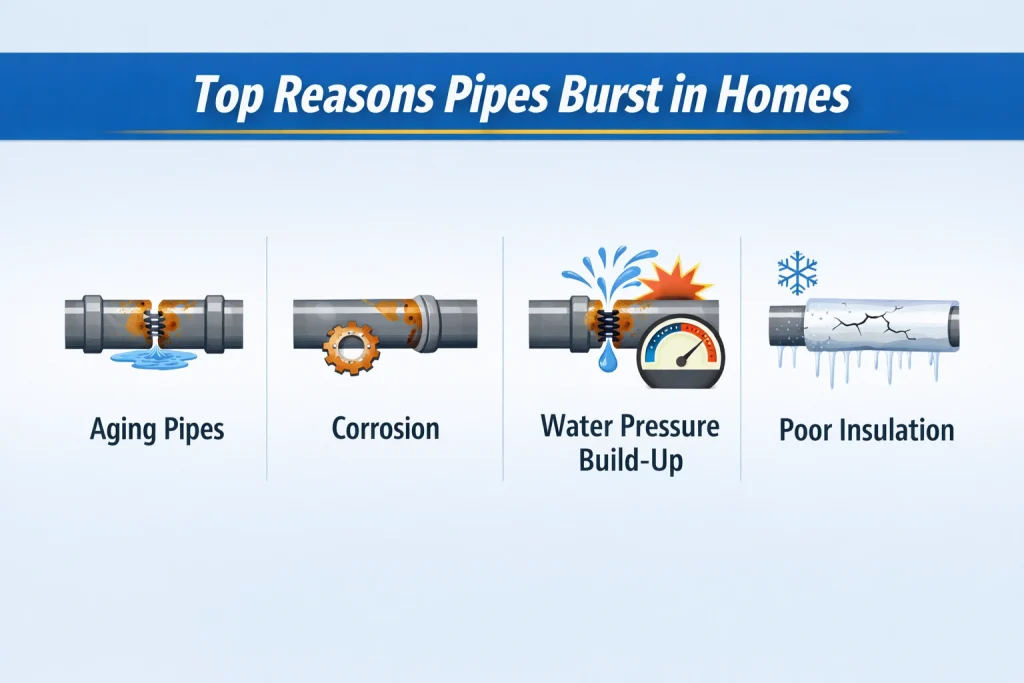
Burst pipes in residential properties are commonly caused by:
- Aging pipes that weaken over time, especially in older Santa Cruz homes
- Corrosion from mineral buildup or prolonged moisture exposure
- Pressure buildup due to blockages or faulty pressure regulators
- Poor insulation, which leaves pipes vulnerable to temperature changes
Immediate Steps to Take
If a pipe bursts in your home, take the following steps immediately:
- Shut off the main water valve to stop additional water flow
- Turn off electricity in affected areas if water is near outlets or appliances
- Drain remaining water by opening faucets to relieve pressure
- Call for professional help to assess the damage and perform proper repairs
Acting quickly helps limit water damage, protects your home’s structure, and reduces overall repair costs.
Commercial Emergency Plumbing – What Business Owners Must Handle
Commercial plumbing emergencies carry higher risks due to the size and complexity of building systems and the potential impact on daily operations. When a pipe bursts in a commercial property, fast coordination and professional emergency plumbing services are essential to limit damage, avoid safety hazards, and reduce costly downtime.
Why Commercial Plumbing Emergencies Are More Complex
Compared to residential systems, commercial plumbing issues escalate faster because they involve:
- Larger pipe systems that release greater volumes of water when damaged
- Higher water pressure, increasing the severity of leaks and flooding
- Multiple fixtures and connected lines, making isolation more difficult
- Business downtime risks, including lost revenue, tenant disruption, and compliance concerns
Immediate Actions for Commercial Properties
When faced with a commercial plumbing emergency, business owners or facility managers should:
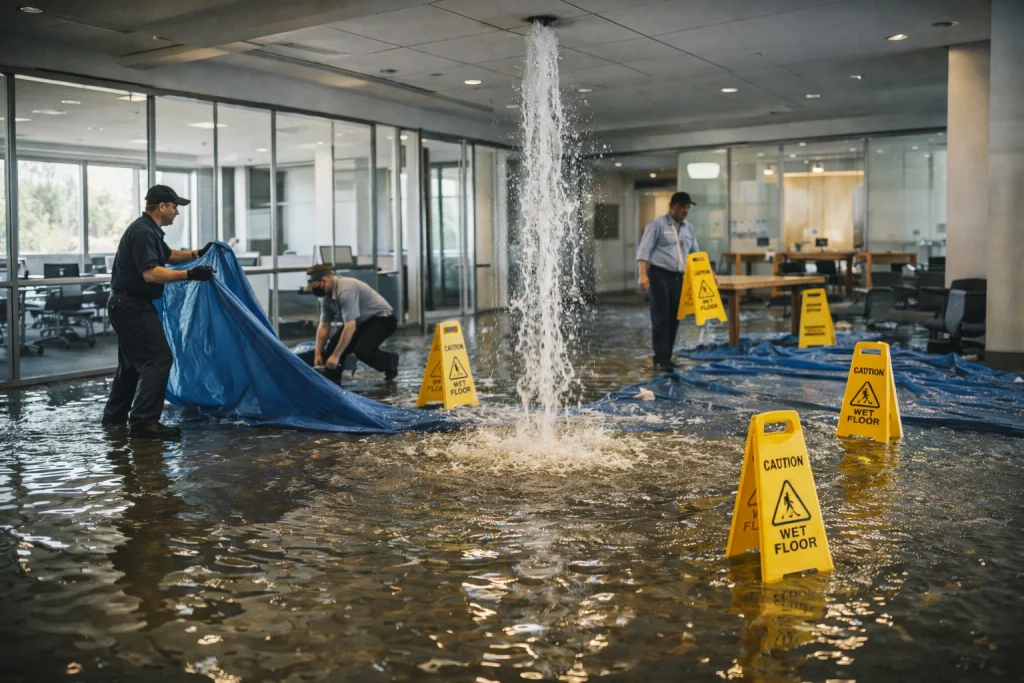
- Shut down affected zones to prevent water from spreading throughout the building
- Protect equipment and inventory by moving or covering sensitive assets
- Control water spread using barriers, drains, or temporary containment measures
- Contact emergency plumbing services with commercial experience, such as Anytime Plumbing, to handle repairs efficiently and safely
Quick, organized action helps minimize operational disruption and speeds up recovery after a plumbing emergency.
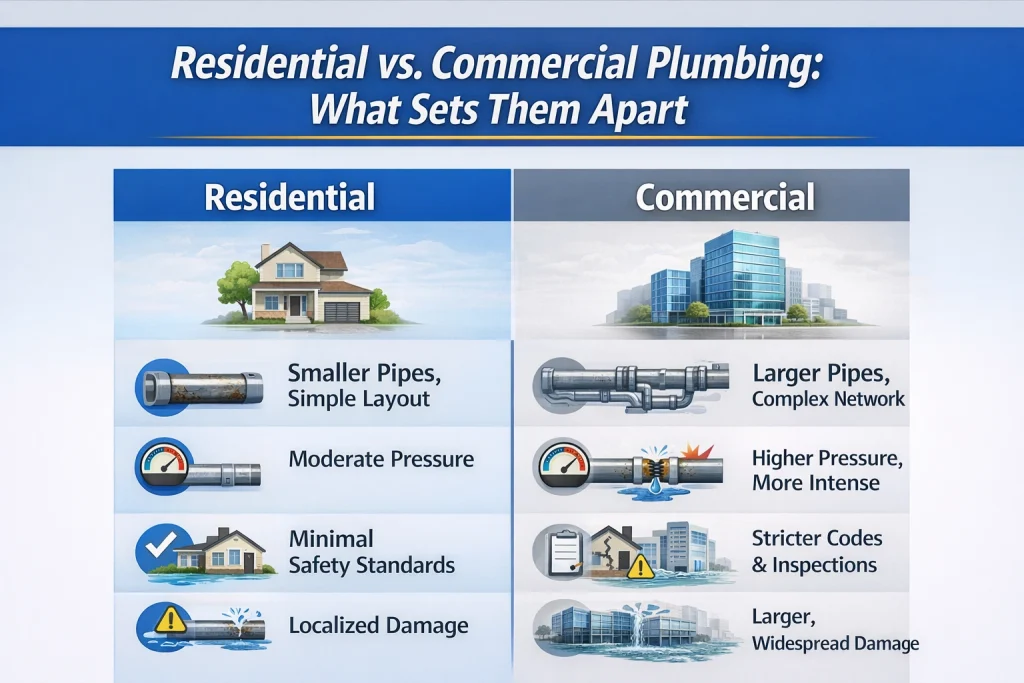
Residential vs Commercial Emergency Plumbing – Key Differences
While both residential and commercial properties can face serious emergency plumbing situations, the scope and response required often differ significantly. The table below outlines the key differences and explains why emergency plumbing services for businesses tend to be more complex and time-sensitive.
| Factor | Residential Emergency Plumbing | Commercial Emergency Plumbing |
| Pipe Size & Layout | Smaller pipes with simpler layouts, usually limited to one household system | Larger pipe networks with complex layouts serving multiple floors or units |
| Water Pressure | Moderate pressure designed for daily household use | Higher pressure systems that can intensify leaks and flooding |
| Damage Scale | Damage is typically contained to limited areas of the home | Water damage can spread rapidly across large areas and multiple zones |
| Repair Time | Repairs are often quicker due to simpler access and fewer fixtures | Repairs may take longer because of system size and operational constraints |
| Compliance Requirements | Generally minimal, focused on residential safety standards | Often subject to stricter building codes, safety regulations, and inspections |
Understanding these differences helps property owners and managers respond more effectively during emergencies and choose the right approach when dealing with plumbing failures.
After-Hours, Weekend & Same-Day Plumbing Emergencies
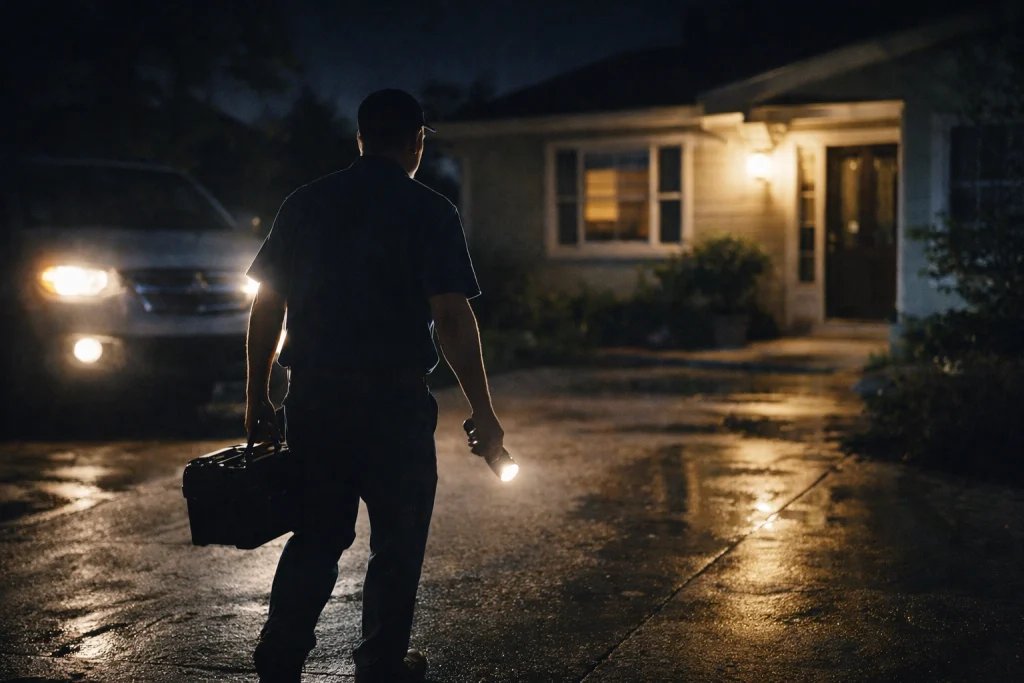
Plumbing emergencies rarely follow a schedule, which is why many serious issues occur late at night, early in the morning, or over the weekend. Changes in water usage, pressure fluctuations, and reduced monitoring during off-hours often contribute to pipe failures, making after hours plumbing situations especially common.
Waiting until regular business hours can significantly increase the extent of water damage. A burst pipe left unattended for several hours can saturate walls, flooring, and foundations, leading to higher repair costs and longer recovery times. For businesses, delays may also result in lost operating hours and safety concerns.
In these situations, contacting a same day plumber becomes critical. Rapid response helps stop water flow quickly, limits structural damage, and reduces the risk of secondary problems such as mold growth. Reliable weekend plumbing services ensure that emergencies are addressed promptly, regardless of when they occur.
Why 24-Hour Emergency Plumbing Matters During a Pipe Burst
When a pipe bursts, every minute counts. Access to a 24 hour plumber can make the difference between a manageable repair and extensive property damage. Water damage escalates quickly—within the first few minutes, flooring and drywall begin absorbing moisture, and within hours, water can compromise insulation, electrical systems, and structural materials.
Delays also increase the risk of mold growth, which can start developing in damp environments in as little as 24 to 48 hours. As moisture spreads, walls may weaken, foundations can be affected, and repair costs rise sharply. For commercial properties, prolonged leaks often lead to business interruption, safety concerns, and potential compliance issues.
This is why 24 hour emergency plumbing response is critical. Providers like Anytime Plumbing are known for same-day service and quick response times, frequently arriving within 30–40 minutes for major leaks or broken main lines, helping to stop damage early and stabilize the situation before it worsens.
Preventing Future Pipe Bursts in Santa Cruz Properties
While not all plumbing emergencies can be predicted, proactive care plays a major role in reducing the risk of sudden failures. Preventive planning helps limit the need for emergency plumbing and protects both residential and commercial properties from costly damage.
Key prevention measures include:
- Regular inspections to identify early signs of corrosion, wear, or hidden leaks
- Pressure regulation to prevent stress on pipes caused by fluctuating or excessive water pressure
- Pipe upgrades, especially in older buildings where materials may no longer meet current standards
Preventive maintenance differs by property type. Residential systems typically benefit from periodic checks and targeted repairs, while commercial buildings require scheduled maintenance programs due to larger systems, higher usage, and stricter compliance needs. Investing in these measures reduces reliance on reactive emergency plumbing services and extends the lifespan of plumbing infrastructure.
When to Call an Emergency Plumber
Certain situations require immediate attention and should never be delayed. Contacting an urgent plumber is necessary when conditions indicate an active or escalating plumbing emergency.
You should seek emergency plumbing assistance if:
- Water won’t stop flowing, even after shutting off nearby fixtures
- Visible pipe damage such as cracks, bursts, or collapsed sections is present
- Flooding is spreading quickly, affecting walls, floors, or electrical areas
- Business operations are affected, posing safety, compliance, or revenue risks
Recognizing these warning signs and acting quickly can significantly reduce damage, repair time, and long-term costs.
Plumbing emergencies can be overwhelming, but understanding the differences between residential and commercial situations helps you respond with clarity and confidence. While homes typically face localized damage, commercial properties often deal with larger systems, higher pressure, and greater operational impact. In both cases, fast action is essential. Delaying emergency plumbing response can lead to escalating water damage, mold growth, and costly repairs, especially when immediate emergency water leak repair is needed.
The key is recognizing the warning signs early and acting quickly to protect your property. Whether you’re a homeowner or business owner in Santa Cruz, having a reliable response plan makes all the difference. For urgent situations, Anytime Plumbing can be reached at 831-431-6593 to help stabilize emergencies and prevent further damage.
Frequently Asked Questions
Immediately shut off the main water supply and keep electricity away from affected areas to reduce safety risks. Acting quickly helps limit water damage until professional help arrives in Santa Cruz.
Yes, commercial properties often involve larger pipe systems, higher water pressure, and stricter compliance requirements. Residential emergencies are usually more localized but still require fast response to prevent damage.
Emergency water leaks should be addressed as soon as possible, ideally within minutes of detection. Rapid response reduces structural damage, mold risk, and overall repair costs in Santa Cruz properties.
The first step is turning off the main water supply to stop additional flooding. Move valuables away from the affected area and try to remove standing water if possible. Calling an emergency plumber quickly helps limit structural damage and prevents moisture from spreading into walls, flooring, and insulation.