

Stop the Drip: Why Fixing That Dripping Faucet in Santa Cruz Saves More Than Water
That quiet dripping faucet in the kitchen or bathroom is easy to brush off—until it becomes impossible to ignore. Many Santa Cruz homeowners have had the thought, “my faucet is leaking, but it’s not a big deal.” After all, it’s just a few drops at a time. But a leaking faucet is rarely just about wasted water. It’s often an early sign that internal components are wearing down, pressure is slightly off, or moisture is starting to affect surrounding fixtures.
In a community like Santa Cruz, where water conservation is part of everyday life, even small plumbing issues deserve attention. Coastal moisture, older homes, and daily use can quietly turn a minor drip into long-term damage beneath sinks or behind walls. Recognizing a drip as a signal—not a nuisance—helps protect both your plumbing system and your home. At Anytime Plumbing, understanding how local conditions affect everyday plumbing issues is part of serving Santa Cruz homes responsibly and practically.

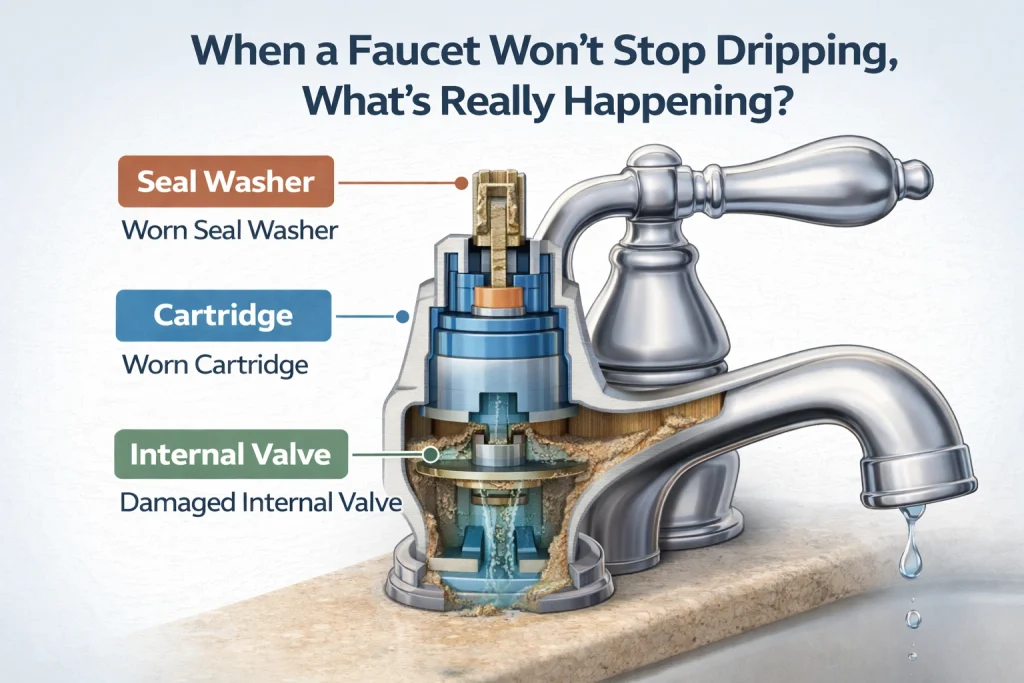
When a Faucet Won’t Stop Dripping, What’s Really Happening?
Worn Internal Seals Are the Most Common Cause
When a faucet won’t stop dripping, the problem usually starts inside the fixture. Faucets rely on small internal seals, washers, or cartridges to shut water off completely. Over time, these parts wear down from regular use, mineral exposure, and pressure changes. Once the seal weakens, a small opening remains, allowing water dripping from the tap even when the handle is fully closed.
How Water Pressure Affects Older Santa Cruz Homes
Many Santa Cruz homes—especially older ones—experience subtle water pressure inconsistencies. These pressure changes place extra stress on faucet components, causing seals to degrade faster than expected. Even when pressure issues aren’t obvious, they can slowly contribute to leaks that appear to come out of nowhere.
Why Dripping Faucets Tend to Get Worse Over Time
A dripping faucet rarely stays the same. Each drop indicates continued friction and wear inside the fixture. As damaged parts remain in use, the leak often becomes more frequent or noticeable. What starts as an occasional drip can turn into a steady leak, increasing moisture exposure and putting unnecessary strain on the plumbing system behind the wall.
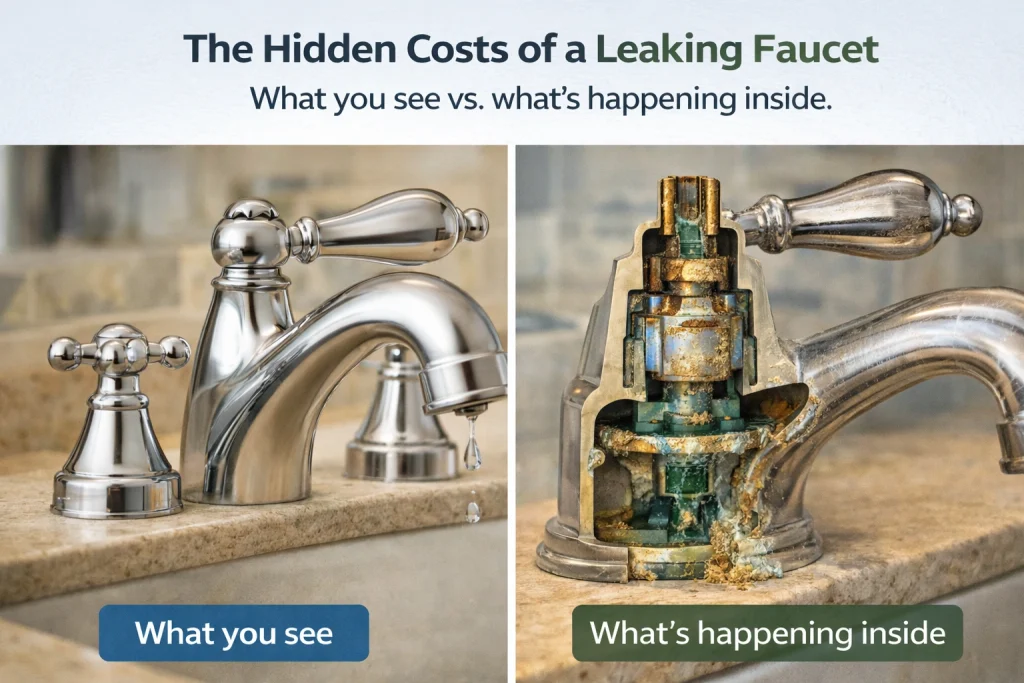
The Hidden Costs of a Leaking Faucet (Beyond Water Waste)
How Constant Drips Lead to Fixture Corrosion
A leaking faucet keeps metal components exposed to moisture far longer than they’re designed for. Over time, this constant exposure can lead to corrosion inside the faucet body, around handles, and at connection points. Even finishes that look fine on the surface may be deteriorating underneath, shortening the life of the fixture and increasing the likelihood of more complex repairs.
Mineral Buildup Is a Common Issue in Coastal Homes
In Santa Cruz, coastal conditions and mineral content in the water can accelerate buildup inside faucets. A slow, persistent dripping faucet allows minerals to settle and harden around valves and internal passages. As this buildup grows, it interferes with proper sealing and water flow, making leaks harder to resolve the longer they’re ignored.
Moisture Damage Often Develops Out of Sight
One of the most overlooked consequences of a leaking faucet is hidden moisture damage. Water can collect under sinks, inside cabinets, or behind walls without obvious signs at first. Over time, this moisture can affect wood, drywall, and surrounding plumbing connections, turning a simple leak into a broader repair issue.
The Long-Term Impact on Your Plumbing System
While a single drip may seem harmless, its effects add up. Ongoing leaks place extra strain on plumbing components and increase overall system wear. Addressing a leaking faucet early helps preserve the longevity of fixtures and reduces the risk of related plumbing issues developing elsewhere in the home.
Kitchen Faucet Leaking? Why High-Use Areas Wear Faster
Daily Kitchen Use Accelerates Internal Wear
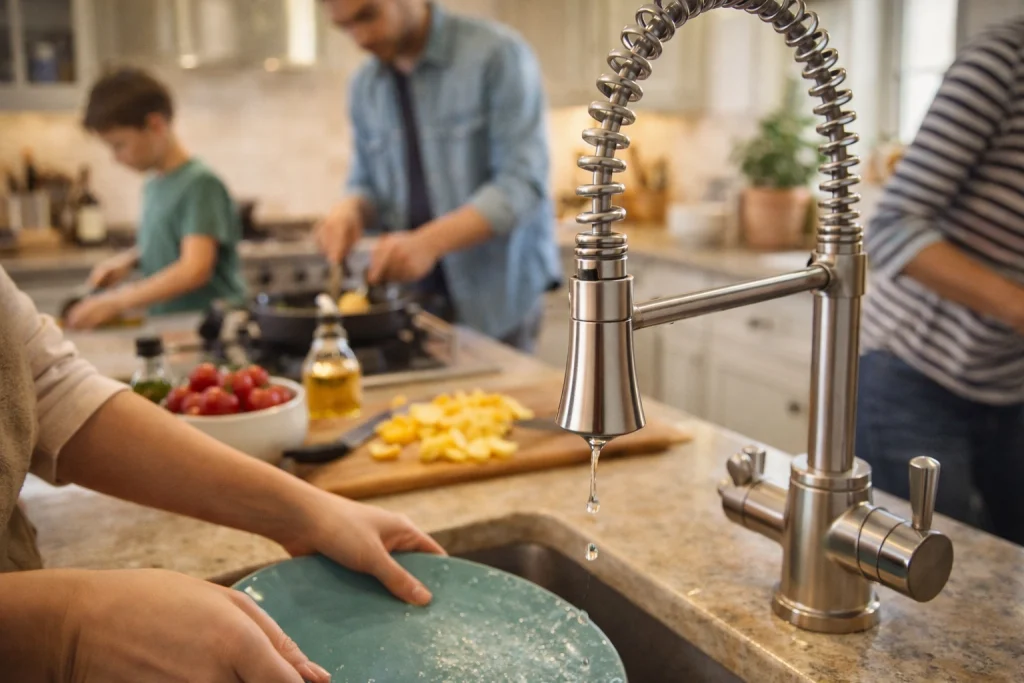
When a kitchen faucet leaking issue shows up, it’s often because the kitchen faucet is the most frequently used fixture in the home. From cooking and cleaning to quick hand washes throughout the day, constant operation places repeated stress on internal seals and cartridges. Over time, this wear makes it harder for the faucet to close tightly, leading to a persistent dripping sink faucet even when the handle appears fully shut.
Pull-Down and Swivel Faucets Have Extra Stress Points
Many modern kitchens in Santa Cruz feature pull-down sprayers or swivel-neck faucets for convenience. While practical, these designs introduce additional movement at the base and handle. The more a faucet flexes and rotates, the more strain it places on internal connections, increasing the likelihood of small leaks developing around joints and seals.
Why Kitchen Leaks Often Start at the Base or Handle
Kitchen faucet leaks commonly begin where movement is most frequent. Small drips may appear near the base, around the handle, or under the sink before becoming noticeable from the spout. These early signs often indicate internal wear rather than a surface issue, which is why addressing a kitchen faucet leak early can prevent further damage to cabinets, countertops, and plumbing connections.
Bathroom Faucet Leaking & Bathtub Drips — Small Leaks, Bigger Signals
A bathroom faucet leaking may seem like a minor inconvenience at first, but it often becomes one of the most noticeable plumbing issues in the home. Constant dripping sounds—especially at night—can disrupt sleep and quickly turn into a daily frustration. Because bathrooms are quieter and used at predictable times, even a slow bathtub faucet dripping tends to feel louder and more persistent than leaks elsewhere.
Beyond the noise, bathroom leaks create steady moisture around tubs, vanities, and flooring. Over time, this moisture can affect cabinet materials, caulking, and nearby surfaces, increasing the risk of deterioration in areas that are already exposed to humidity. In many cases, these leaks are linked to worn internal valves or cartridges rather than surface issues. When bathroom drips are ignored, underlying components continue to wear down, making repairs more involved later on and increasing the chance of moisture-related damage behind walls or beneath fixtures.
Bathroom Faucet Leaking & Bathtub Drips — Small Leaks, Bigger Signals
A bathroom faucet leaking may seem like a minor inconvenience at first, but it often becomes one of the most noticeable plumbing issues in the home. Constant dripping sounds—especially at night—can disrupt sleep and quickly turn into a daily frustration. Because bathrooms are quieter and used at predictable times, even a slow bathtub faucet dripping tends to feel louder and more persistent than leaks elsewhere.
Beyond the noise, bathroom leaks create steady moisture around tubs, vanities, and flooring. Over time, this moisture can affect cabinet materials, caulking, and nearby surfaces, increasing the risk of deterioration in areas that are already exposed to humidity. In many cases, these leaks are linked to worn internal valves or cartridges rather than surface issues. When bathroom drips are ignored, underlying components continue to wear down, making repairs more involved later on and increasing the chance of moisture-related damage behind walls or beneath fixtures.
Should You Fix a Dripping Faucet Right Away?
If you’re debating whether to fix a dripping faucet now or put it off, it helps to understand what early action actually prevents. Addressing a leak sooner rather than later often saves time, effort, and unnecessary wear on your plumbing system.
- Early fixes are usually simpler
Small leaks often involve worn seals or minor adjustments. Taking care of them early makes it easier to stop a leaky faucet before internal components deteriorate further or additional parts are affected. - Delaying repairs allows leaks to escalate
A slow drip rarely stays the same. Continued use increases friction and pressure on already worn parts, turning a minor issue into a more persistent leak that can affect surrounding fixtures or cabinets. - Prompt attention helps avoid repeat repairs
Fixing the root cause early reduces the chance of recurring leaks. Addressing the problem once—before it spreads—helps maintain fixture performance and prevents repeated service calls for the same issue.
This approach keeps small plumbing problems from turning into long-term frustrations while protecting the overall health of your home’s plumbing system.
Temporary Fixes — What Helps (and What Doesn’t)
When a drip starts unexpectedly, it’s natural to look for a temporary stop leaky faucet solution to get through the day. In some cases, gently tightening a loose handle or turning the faucet off more firmly can reduce dripping for a short period. These quick adjustments may help slow the leak, especially if the issue has just started.
Temporary fixes can be acceptable when you need short-term relief, such as overnight or until a proper inspection can be scheduled. They can also help confirm that the issue is internal rather than caused by splashing or condensation. However, it’s important to understand that these measures don’t address worn seals or damaged components inside the faucet.
Relying on temporary fixes long-term often allows the problem to worsen. Continued use increases wear on already weakened parts, making the eventual repair more involved. Treating temporary solutions as a stopgap—not a fix—helps prevent small leaks from turning into ongoing plumbing issues.

Leaks from the Handle or Spout — What That Usually Means
Where a faucet leaks often provides helpful clues about what’s happening inside the fixture. Understanding these signs can help homeowners recognize when a small issue deserves attention.
- Faucet leaking from handle
When water appears around the handle, it usually points to worn internal seals or packing. These components are designed to prevent water from escaping when the faucet is turned on and off. As they wear down, moisture can seep out during use or even when the faucet is off. - Faucet leaking from spout
A drip from the spout typically indicates a problem with the internal valve or cartridge. Even when the handle is fully closed, a damaged or misaligned valve may allow water to pass through slowly, resulting in a steady drip. - Why early diagnosis matters
Identifying the source of a leak early helps prevent additional wear on surrounding parts. Addressing handle or spout leaks sooner can reduce the risk of further fixture damage and help maintain reliable faucet performance over time.
This simple awareness helps homeowners make informed decisions without needing to understand the technical details behind the repair.
Why Santa Cruz Homes See These Issues More Often
Santa Cruz homes face a unique mix of environmental and structural factors that can contribute to a leaking faucet or persistent dripping faucet more often than homeowners expect.
- Coastal moisture exposure
Proximity to the ocean means higher humidity levels year-round. Moist air can accelerate corrosion and wear on faucet components, especially in bathrooms and kitchens with limited ventilation. - Older plumbing infrastructure
Many Santa Cruz neighborhoods feature older homes with original or aging plumbing systems. Older pipes and fixtures are more susceptible to seal wear, mineral buildup, and pressure inconsistencies that lead to leaks. - Water pressure variations across neighborhoods
Elevation changes and localized supply conditions can cause subtle pressure differences throughout Santa Cruz. These fluctuations place added stress on faucet valves and seals, increasing the likelihood of slow drips developing over time.
Understanding these local factors helps homeowners recognize why even small faucet issues deserve timely attention.
When a Professional Inspection Makes Sense
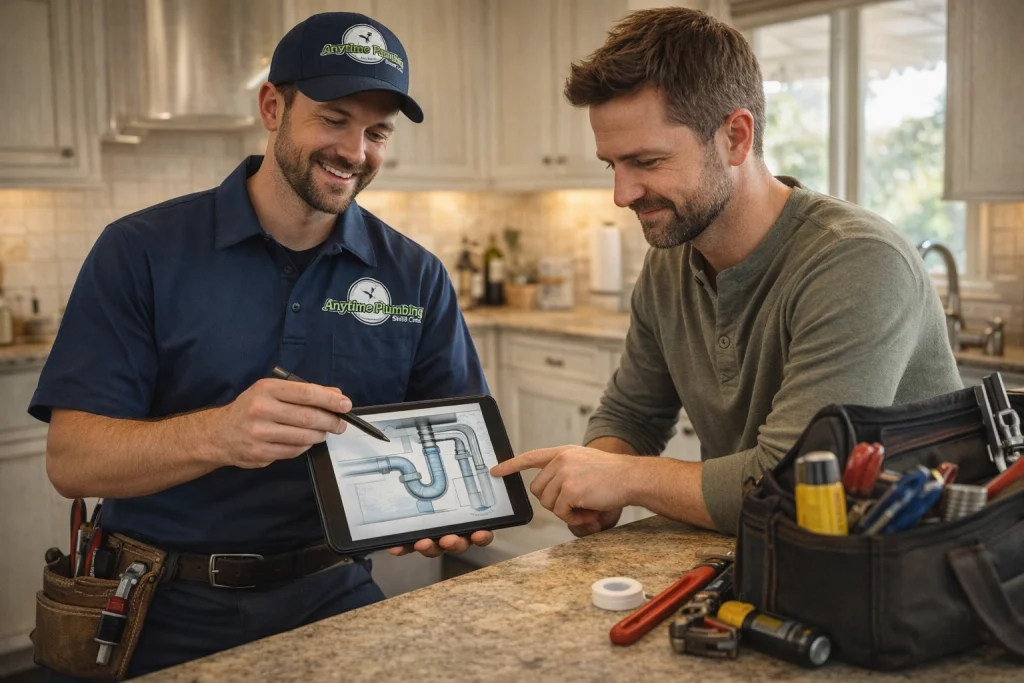
There are times when a dripping or leaking faucet benefits from a closer look, especially when the cause isn’t obvious or the problem keeps returning. A professional inspection helps identify whether the issue is limited to a worn component or connected to broader pressure or valve concerns within the plumbing system.
As a local Santa Cruz plumbing company, Anytime Plumbing focuses on clear explanations and practical guidance during inspections. Homeowners are walked through what’s happening, why it matters, and what options make sense—without pressure or unnecessary recommendations. This approach helps ensure faucet issues are addressed correctly the first time, protecting both fixtures and the overall plumbing system.
Frequently Asked Questions
In most cases, a dripping faucet isn’t an emergency. However, if my faucet is leaking continuously or the drip worsens over time, it’s a sign that internal components may be failing and should be checked before damage develops.
When a faucet won’t stop dripping, it’s usually due to worn seals, a damaged cartridge, or valve wear inside the fixture. Even a small internal gap can allow water to pass through slowly after the handle is closed.
Yes. Small leaks often lead to moisture buildup, corrosion, and added stress on plumbing components. Left unaddressed, a minor drip can contribute to fixture damage and hidden moisture problems under sinks or behind walls.
A faucet can continue dripping even when the handle feels tight because internal parts may be worn out. Common causes include a damaged washer, worn cartridge, or mineral buildup inside the valve. These small components control water flow, and when they deteriorate, water can slowly leak through. Replacing the faulty part usually stops the drip and helps prevent unnecessary water waste.