

Post-Holiday Sewer Line Clogs: Grease, Roots, and Winter Rain in Santa Cruz
The holiday season brings extra cooking, more guests, and heavier water use—but for many Santa Cruz County homeowners, the plumbing problems don’t show up until weeks later. By January, it’s common to see sewer line clogs surface as grease buildup from holiday meals hardens inside pipes and winter rain adds pressure to aging sewer systems. What started as normal seasonal use can quietly turn into a sewer clogged situation once cooler temperatures and saturated soil come into play.
Across Santa Cruz, Aptos, and Capitola, many homes rely on older sewer lines that are especially vulnerable during the wet winter months. Tree roots remain active in moisture-rich soil, and repeated rain events can push small blockages into full backups. These delayed issues often catch homeowners off guard, especially when everything seemed fine during the holidays themselves.
Anytime Plumbing works with homeowners throughout Santa Cruz County to identify and address post-holiday sewer problems before they escalate into major disruptions. Understanding why these issues appear in January is the first step toward preventing costly backups and keeping your plumbing system moving smoothly through the winter season.
Why Sewer Line Clogs Spike After the Holidays
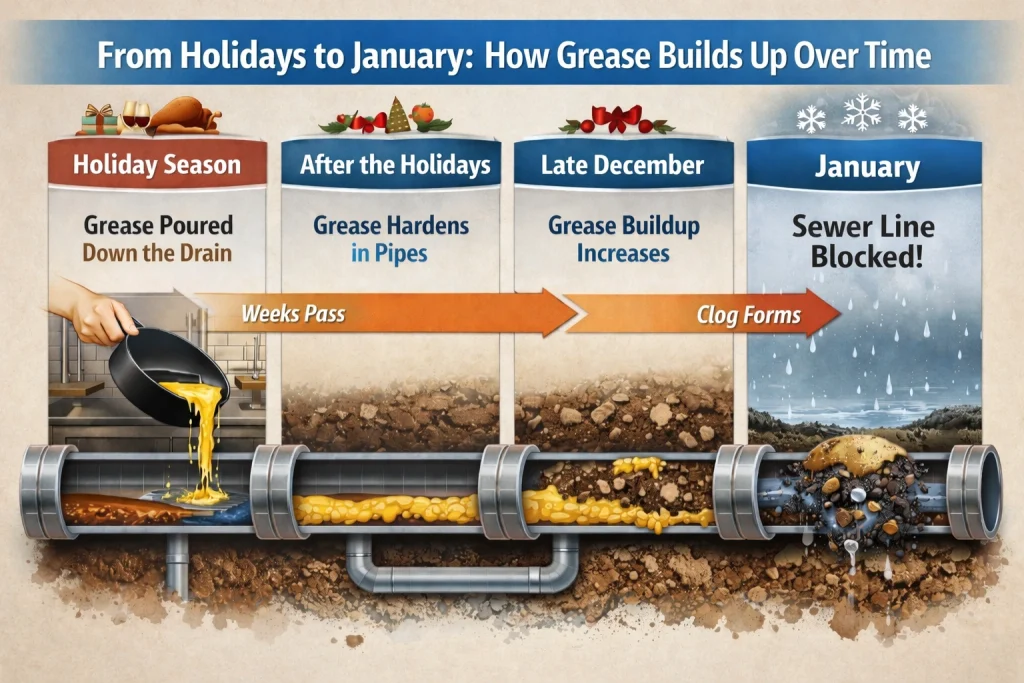
The weeks following the holidays are one of the most common times for sewer line clogs to surface, even though the heavy use may have happened earlier. During Thanksgiving, Christmas, and New Year gatherings, kitchens are used far more than usual. Extra cooking, dishwashing, and food prep send grease, oils, and food residue into the plumbing system, where they slowly build up inside pipes rather than causing immediate blockages.
At the same time, hosting family and guests increases overall water usage throughout the home. Multiple showers, laundry loads, and bathroom use place added strain on the main sewer line, especially in older homes where pipes may already be narrowed by years of buildup. This added demand can push the system closer to a main sewer line clog, even if everything appears to be draining normally during the holidays.
In areas like Santa Cruz and Capitola, many homes feature aging sewer infrastructure and shared or mixed-use plumbing systems. Coastal moisture, winter rain, and saturated soil further stress these lines, turning minor restrictions into noticeable drainage problems weeks later. Because the damage develops gradually, homeowners often experience slow drains or backups in January, long after the holiday gatherings have ended.
Holiday Cooking Grease and Its Impact on Sewer Pipes
Holiday cooking creates one of the most common causes of a sewer pipe clogged problem, especially when grease and oils are poured down kitchen drains. While grease may leave the sink as a liquid, it behaves very differently once it enters the plumbing system.
- Grease hardens as it cools inside pipes
As warm grease travels away from the kitchen and into cooler sewer lines, it begins to solidify. In winter, lower ground and pipe temperatures accelerate this process, causing grease to cling to pipe walls instead of flowing through. - Buildup slowly narrows the pipe’s diameter
Over time, layers of grease reduce the usable space inside the pipe. This restriction slows wastewater flow and increases the likelihood that food particles, paper products, and debris will get trapped, eventually leading to a main drain blocked situation. - Hot water and soap only provide short-term relief
Running hot water may temporarily soften grease, but it does not remove it from the system. Once the water cools downstream, the grease re-solidifies farther along the sewer line, allowing the problem to grow unnoticed. - Winter temperatures make the issue worse
January conditions in Santa Cruz County mean colder soil and pipes, which cause grease to harden faster and remain stuck longer. What seemed like a minor issue during the holidays can turn into a serious blockage weeks later.
Tree Roots and Winter Rain: A Perfect Storm for Sewer Blockages
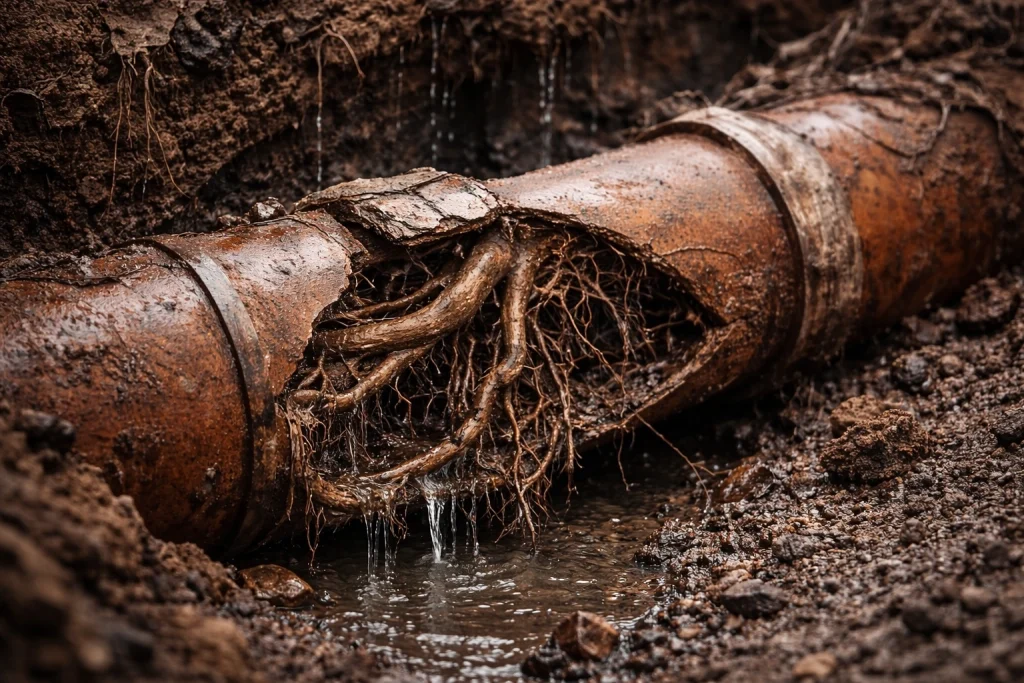
Tree roots and winter rain are a major reason sewer problems surface in January across Santa Cruz County. Together, they create ideal conditions for a blocked sewer line, especially in areas with older underground pipes.
- Winter rain saturates the soil around sewer lines
Heavy seasonal rainfall raises groundwater levels and softens surrounding soil. This increases pressure on aging pipes and exposes small cracks, joints, or weak points that were previously sealed by dry ground. - Roots actively seek out moisture during wet months
Tree roots naturally grow toward consistent water sources. Sewer lines provide a steady supply, and even tiny openings allow roots to enter and expand inside the pipe, leading to a main line sewer blockage over time. - Root growth accelerates after the holidays
While roots may enter pipes earlier in the year, winter moisture allows them to grow rapidly. Combined with post-holiday grease buildup, this growth can turn minor restrictions into full sewer blockages. - Santa Cruz County landscapes increase the risk
Tree-dense neighborhoods in Aptos and Santa Cruz feature redwoods, oaks, and coastal vegetation with aggressive root systems. Coastal moisture keeps soil damp longer, allowing roots to remain active even in cooler temperatures. - Small intrusions create big drainage problems
Once roots take hold, they trap grease, paper, and debris. This compounds the issue, slowing drainage until backups become noticeable inside the home.
Warning Signs of a Main Sewer Line Problem
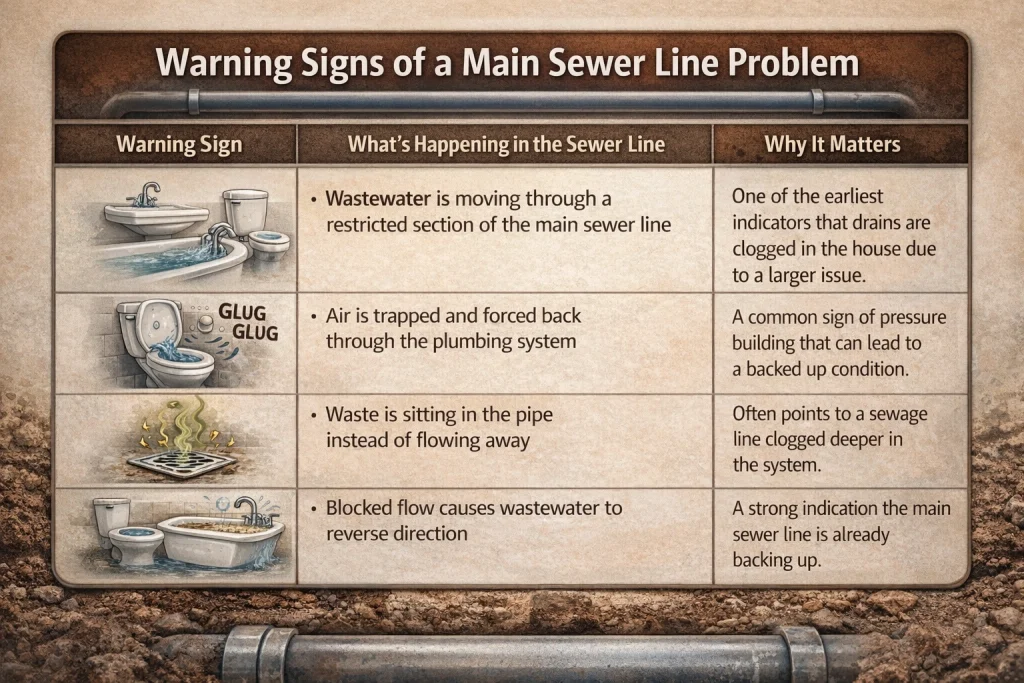
Main sewer issues rarely start as sudden emergencies. In many cases, early main sewer line clog symptoms appear gradually, especially in winter when increased water use and rain place added strain on the system. Recognizing these warning signs early can help prevent more serious damage.
| Warning Sign | What’s Happening in the Sewer Line | Why It Matters |
| Multiple drains slowing at once | Wastewater is moving through a restricted section of the main sewer line | One of the earliest indicators that drains are clogged in the house due to a larger issue |
| Gurgling sounds from drains or toilets | Air is trapped and forced back through the plumbing system | A common sign of pressure building that can lead to a main line backed up condition |
| Sewer or sewage odors | Waste is sitting in the pipe instead of flowing away | Often points to a sewage line clogged deeper in the system |
| Water backing up in the lowest fixtures | Blocked flow causes wastewater to reverse direction | A strong indication the main sewer line is already backing up |
| Recurring drainage issues throughout the home | The blockage extends beyond individual fixtures | Confirms the problem is in the main sewer line, not a single drain |
Ignoring these early signs allows grease, debris, and tree roots to continue building inside the pipe. Over time, a partial restriction can escalate into a fully main line backed up situation, increasing the risk of water damage and unsanitary conditions—particularly during Santa Cruz’s wet winter months.
Why the Main Sewer Line Keeps Clogging in Winter
When homeowners notice that their main sewer line keeps clogging, the issue is often more than a one-time blockage. In many cases, temporary clearing methods remove only part of the problem while leaving buildup behind inside the pipe. This allows restrictions to return as soon as water usage increases or conditions change.
During winter, multiple factors work together to worsen the situation. Holiday cooking grease may already be lining the pipe walls, narrowing the flow path. At the same time, winter rain saturates the soil, increasing pressure on sewer lines and encouraging tree roots to push into small cracks or joints. These combined effects can quickly turn a minor restriction into a recurring blockage.
In Santa Cruz, many homes still rely on older clay or cast-iron sewer lines. These materials are more prone to cracking, corrosion, and joint separation over time, making them especially vulnerable to grease buildup and root intrusion. Without thorough cleaning or inspection, blockages tend to reappear because the underlying causes remain untreated. Addressing the full condition of the sewer line—not just the immediate clog—is key to preventing repeat problems throughout the winter season.
Post-Holiday Prevention Tips for Santa Cruz Homeowners
Preventing sewer problems after the holidays is often easier than dealing with a full backup. Simple, proactive steps can help reduce the risk of winter blockages and keep your system flowing reliably through the rainy season.
- Schedule a camera inspection after heavy-use periods
A sewer camera inspection helps identify grease buildup, root intrusion, or pipe damage before it turns into a major issue. This is especially useful after holiday gatherings when sewer lines experience higher-than-normal demand. - Plan routine sewer line clearing before problems appear
Preventive sewer line clearing removes early buildup that can restrict flow over time. Clearing the line before winter rains peak can help avoid emergency situations later in the season. - Clean the main sewer line periodically, not just when clogged
Waiting until drains back up often means the blockage has already worsened. Proactively cleaning the main sewer line helps maintain proper flow and reduces the chance of recurring winter clogs. - Practice proper grease disposal year-round
Pouring grease into containers instead of drains prevents buildup inside pipes. Even small amounts added over time can harden and contribute to blockages during colder months. - Pay attention to early warning signs
Slow drains, odors, or gurgling sounds are often signals to take action early. Addressing minor issues promptly can prevent larger disruptions during Santa Cruz’s wet winter season.

When to Call a Professional Plumber for Sewer Issues
Some drainage problems can be handled with basic maintenance, but main sewer line issues require professional attention. When a main sewer line clog develops, surface-level fixes like plungers or chemical cleaners only address symptoms, not the blockage deeper in the system. These temporary measures often allow grease, roots, and debris to remain in place, increasing the chance of repeat problems.
Ignoring warning signs can lead to a sewer line backed up situation, where wastewater has nowhere to go but back into the home. This can result in water damage, unsanitary conditions, and costly repairs—especially during Santa Cruz’s winter months when heavy rain places additional stress on sewer lines.
Licensed plumbers have the tools and experience to identify the true cause of sewer issues, whether it’s root intrusion, pipe damage, or long-term buildup. Working with a local provider ensures familiarity with older infrastructure, coastal soil conditions, and common plumbing challenges in the area. Anytime Plumbing serves homeowners throughout Santa Cruz County, including Santa Cruz, Aptos, and Capitola, providing professional sewer evaluations and solutions designed for local conditions.
Serving Santa Cruz County Through Every Season
Plumbing systems in Santa Cruz County face unique challenges throughout the year, from coastal moisture to aging sewer infrastructure. During winter, heavy rain and saturated soil can turn minor drainage issues into a sewer clogged or blocked sewer line situation if left unaddressed. Understanding how these seasonal conditions affect underground pipes is key to preventing long-term problems.
Anytime Plumbing works with homeowners across Santa Cruz County and nearby communities, bringing local knowledge of older sewer lines, coastal soil conditions, and winter rain patterns that place added stress on plumbing systems. This familiarity allows potential issues to be identified early and managed before they escalate. By staying aware of seasonal changes and responding to early warning signs, homeowners can protect their plumbing systems and avoid unexpected disruptions throughout the year.
Frequently Asked Questions
Sewer line clogs often develop gradually as holiday cooking grease cools and hardens inside pipes, narrowing the flow over time. In Santa Cruz, winter rain and saturated soil can worsen the problem, causing backups to appear in January rather than immediately after the holidays.
When multiple drains in the house slow down at once, or water backs up in the lowest fixtures, it often points to a main sewer line clog rather than a single drain issue. Homes in areas like Santa Cruz and Aptos are especially prone due to older sewer lines and seasonal ground saturation.
Yes, heavy winter rains can raise groundwater levels and increase pressure on aging sewer pipes, making blockages more likely. This is particularly common in coastal neighborhoods such as Capitola, where tree roots and moisture-rich soil can contribute to sewer line backups.
Holiday cooking and extra household activity can send grease, food scraps, coffee grounds, and paper products down drains. These materials collect inside pipes and restrict flow, eventually creating stubborn sewer line clogs that require professional clearing.