

How Cooler Temperatures in Santa Cruz Affect Your Water Heater & Plumbing Efficiency
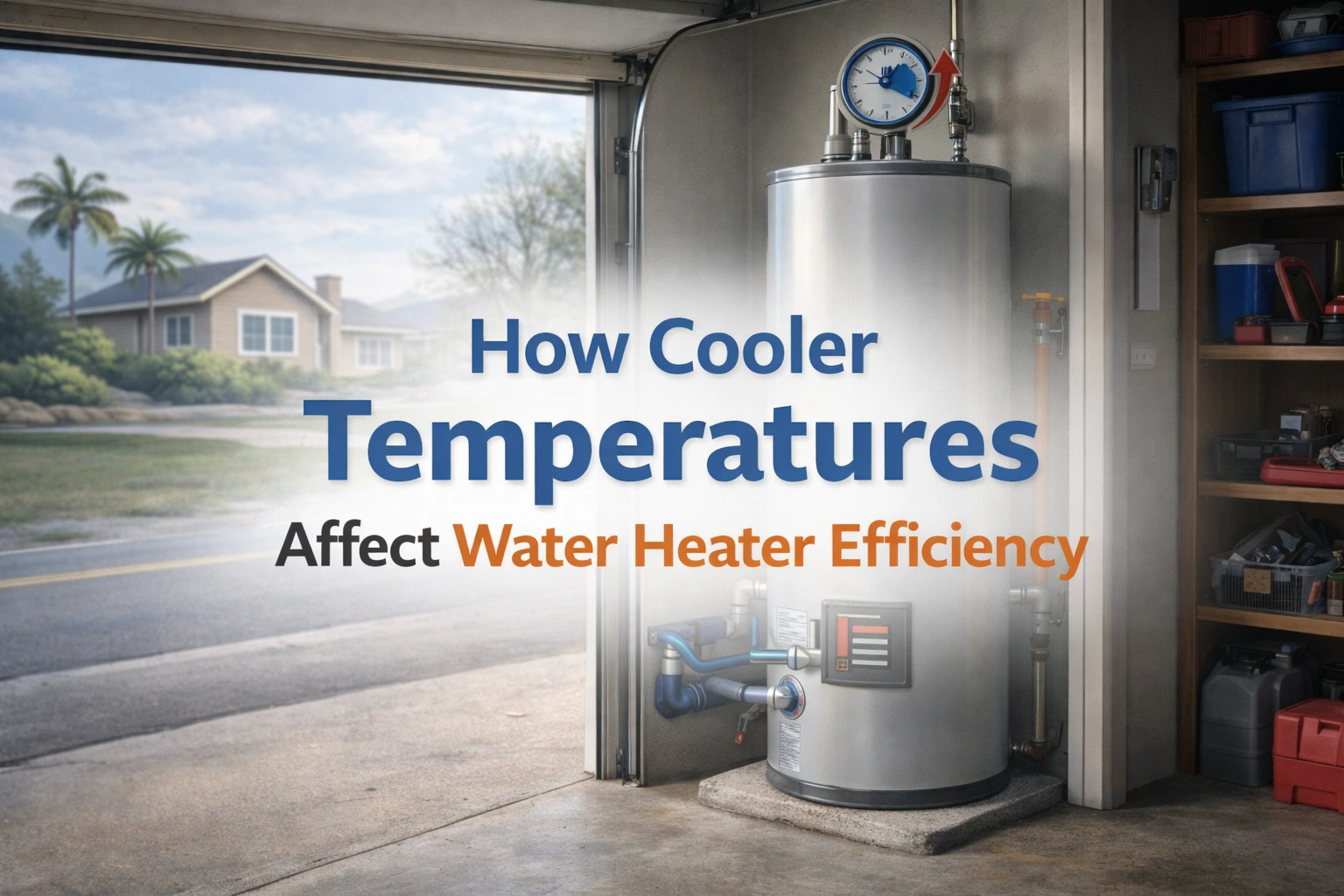
Winter in Santa Cruz doesn’t bring heavy snow or extreme cold, but the cooler coastal temperatures, increased moisture, and colder groundwater still affect how home plumbing systems perform. As temperatures drop, plumbing efficiency in cooler weather often declines, and water heaters are forced to run longer to keep up with daily demand. These seasonal shifts can expose underlying issues that may go unnoticed during warmer months. Recognizing how winter conditions contribute to seasonal plumbing efficiency issues helps homeowners maintain consistent hot water, control energy usage, and avoid unexpected plumbing disruptions as the colder months set in.
How Cold Weather Affects Water Heater Performance
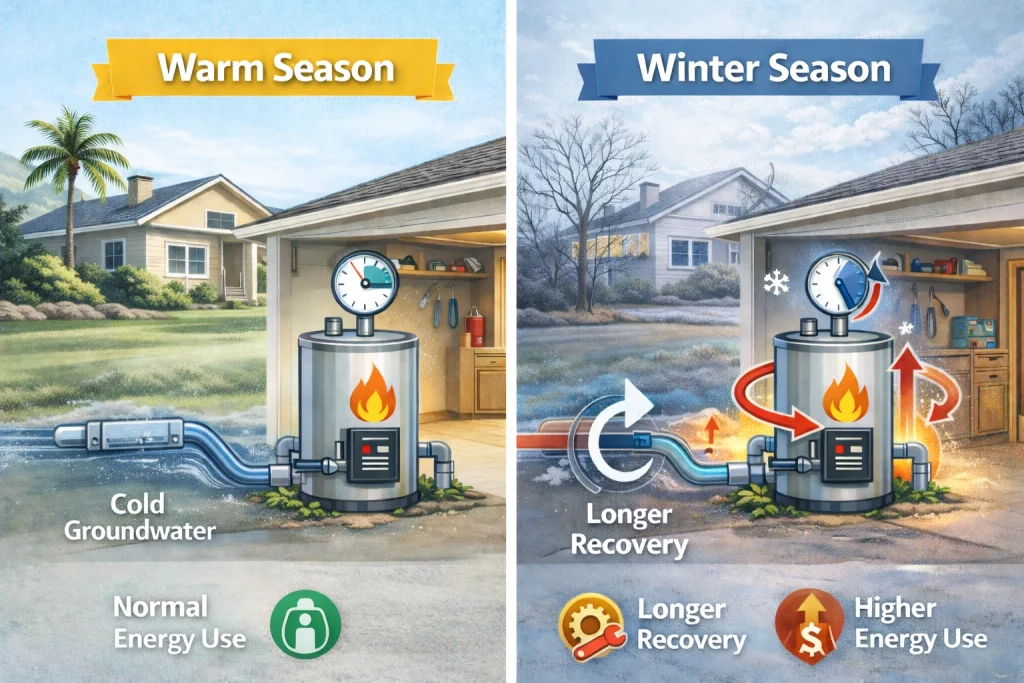
During winter, several environmental factors directly impact hot water heater performance in winter, even in Santa Cruz’s relatively mild climate. As systems adjust to colder conditions, many homeowners notice subtle but consistent changes.
- Colder incoming water: Winter groundwater temperatures drop, forcing the system to use more energy to heat water to the same set temperature.
- Increased operating cycles: To compensate, the water heater works harder in winter, turning on more frequently to maintain hot water availability.
- Longer recovery times: After hot water is used, the tank or heating elements take longer to reheat, especially during high-demand periods.
- Efficiency loss: Cooler ambient air around the unit—particularly in garages or utility spaces—contributes to greater heat loss.
- Added system strain: Over time, this extra workload creates water heater strain in cold temperatures, which can reveal existing wear or performance issues even when the unit isn’t technically failing.
Why Your Water Heater Takes Longer to Heat in Winter
Homeowners often wonder why a water heater takes longer to heat in winter, even when the system appears to be functioning normally. The change is driven by a combination of environmental and usage factors.
- Lower groundwater temperatures: Cold winter water enters the system at a much lower starting temperature, requiring more energy to heat it to the same level.
- Extended heating cycles: Because the temperature gap is larger, heating elements or burners must run longer to reach the set output.
- Higher energy demand: These longer cycles contribute directly to increased water heater energy usage in winter.
- Reduced recovery speed: After hot water is used, the system refills with cold water and takes longer to reheat, slowing availability.
- Back-to-back usage strain: Activities like consecutive showers, laundry, and dishwashing can quickly outpace the heater’s ability to recover during colder months.
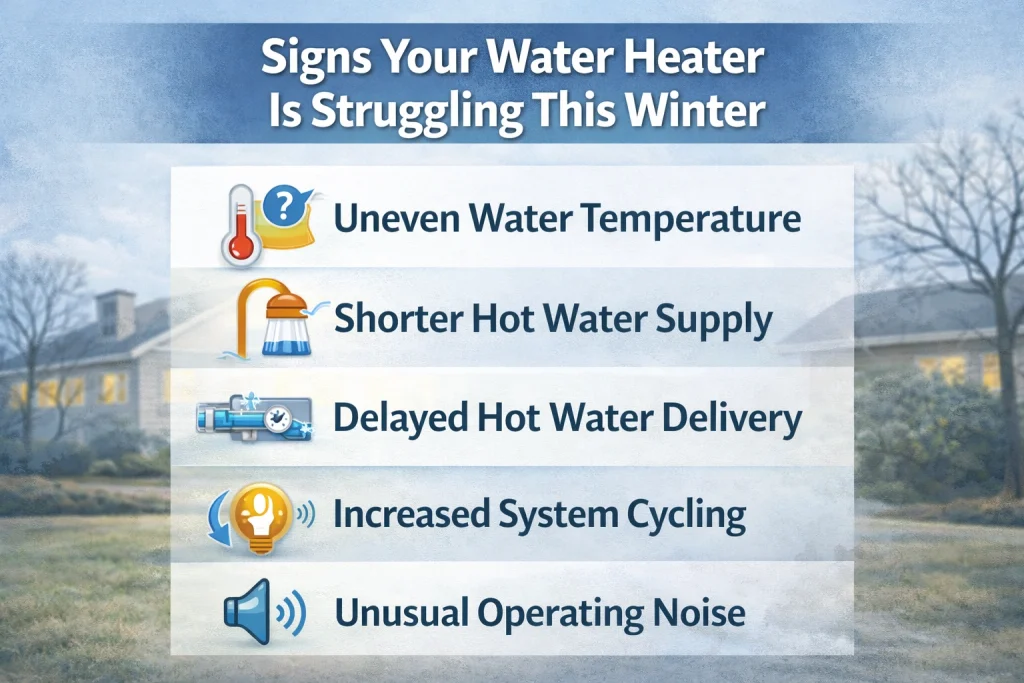
Common Cold Weather Water Heater Problems
Many cold weather water heater issues aren’t caused by sudden breakdowns, but by winter conditions amplifying existing inefficiencies. As demand increases and temperatures drop, homeowners may begin to notice subtle hot water system problems in winter that affect comfort and consistency.
- Uneven water temperatures: Hot water may fluctuate during use as the system struggles to maintain output under colder conditions.
- Shorter hot water supply: Stored hot water is used more quickly in winter, leading to faster depletion during normal daily activities.
- Delayed hot water delivery: It may take longer for hot water to reach faucets or showers, especially in homes with longer pipe runs.
- Increased system cycling: The heater may turn on and off more frequently as it works to keep up with demand.
- Unusual operational noise: Expanded cycling and colder components can make normal operating sounds more noticeable.
- Inconsistent hot water during winter: These combined factors often result in noticeable variability, even when the unit itself is still functioning properly.
When There’s No Hot Water at All
In colder weather, a system that was already under strain may reach a tipping point, resulting in no hot water in the house. Components such as heating elements, gas burners, thermostats, or internal sensors can struggle to operate efficiently when winter demand increases, leading to a situation where the water heater is not heating at all. While some winter-related performance issues are temporary, a complete loss of hot water typically indicates a functional failure rather than a seasonal efficiency drop and should be addressed promptly to prevent further damage or safety concerns.
Tankless Water Heaters and Cold Weather Performance
Because tankless systems heat water on demand rather than storing it, tankless water heater efficiency is closely tied to the temperature of incoming water. During winter, colder groundwater requires the unit to work harder to reach the same output, which can affect flow rate or limit how many fixtures can be used at once. As a result, tankless water heater cold weather performance may feel different in cooler months, even in newer systems, especially if the unit isn’t sized for higher winter demand or hasn’t been properly maintained.
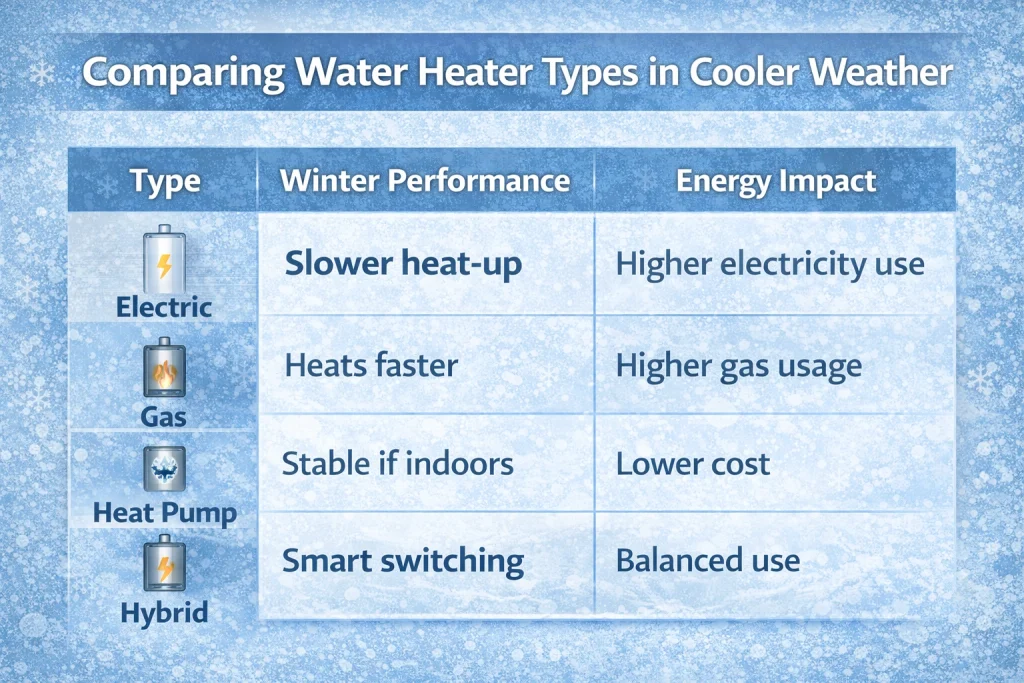
Comparing Water Heater Types in Cooler Weather
| Water Heater Type | Winter Performance Characteristics | Efficiency Impact in Cooler Weather |
| Electric Water Heater | Relies on heating elements that must run longer as incoming water temperatures drop, resulting in slower recovery after hot water use. | Electric water heater efficiency often decreases in winter due to extended heating cycles and higher electricity consumption. |
| Gas Water Heater | Gas burners heat water faster but must operate more frequently to compensate for colder groundwater and increased demand. | Gas water heater performance remains strong, but fuel usage typically rises as the system works harder during colder months. |
| Heat Pump Water Heater | Draws heat from surrounding air, making it well-suited for Santa Cruz’s moderate winter climate compared to colder regions. | Heat pump water heater efficiency stays relatively high, especially when installed in areas with stable air temperatures. |
| Hybrid Water Heater | Automatically switches between heat pump and standard heating modes based on demand and temperature conditions. | Hybrid water heater performance balances efficiency and output, helping manage winter demand without excessive energy use. |
Heat Loss Beyond the Water Heater Tank
Maintaining hot water system efficiency involves more than just the performance of the heater itself. During winter, hot water traveling through cold pipes can lose a noticeable amount of heat before reaching faucets or showers, especially in homes with longer pipe runs or uninsulated lines. In colder conditions, water temperature can drop by up to 10°F between the heater and the fixture, forcing the system to run longer to compensate. This additional runtime reduces plumbing efficiency in cooler weather and increases energy usage—even when the water heater itself is functioning properly.
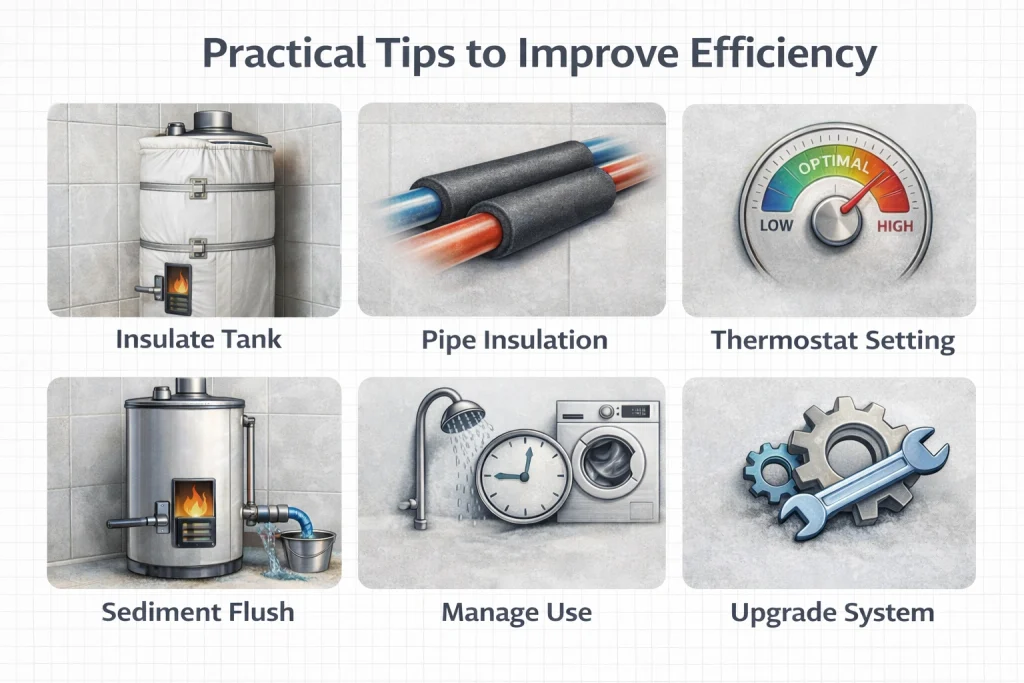
Practical Tips to Improve Efficiency in Cooler Weather
A few preventative steps can help homeowners prevent winter water heater problems and keep systems running smoothly as temperatures drop.
- Improve insulation
- Insulate the water heater tank to reduce heat loss.
- Wrap exposed hot water pipes to maintain temperature as water travels through the system.
- Fine-tune thermostat settings
- Set the thermostat for balanced comfort rather than maximum heat.
- Avoid frequent adjustments that increase water heater energy usage in winter.
- Maintain the system
- Remove sediment buildup that interferes with heating efficiency.
- Check components for early signs of wear or reduced performance.
- Manage hot water demand
- Limit back-to-back usage such as showers, laundry, and dishwashing.
- Allow recovery time between high-demand activities.
- Plan upgrades proactively
- Address efficiency improvements before performance declines.
- Consider system updates during maintenance rather than after failures occur.
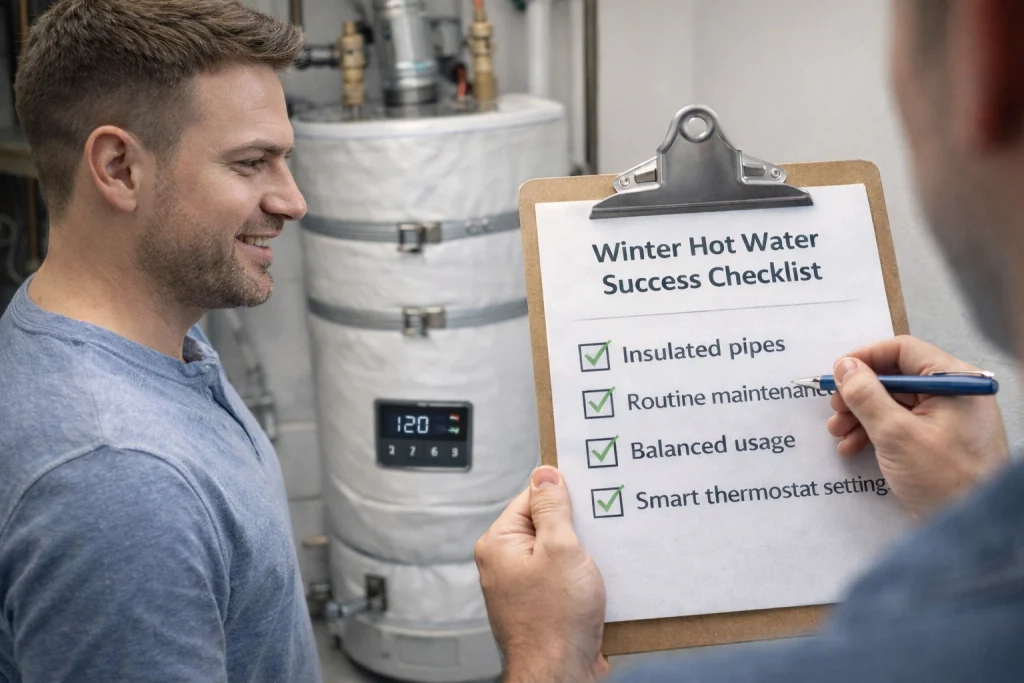
Final Thoughts: Keeping Your Hot Water Reliable All Winter
Cooler weather doesn’t have to lead to unreliable hot water or unexpected disruptions. By understanding how winter conditions contribute to seasonal plumbing efficiency issues, homeowners can take proactive steps to protect both comfort and performance. Small adjustments, regular maintenance, and early attention to warning signs all play a role in maintaining long-term hot water system efficiency throughout the colder months. When questions or concerns arise, the team at Anytime Plumbing helps Santa Cruz homeowners navigate winter plumbing challenges with practical guidance and dependable service, keeping hot water systems running smoothly all season long.
Frequently Asked Questions
During winter, the water entering your home is much colder than in warmer months, so your system must work harder to raise it to the desired temperature. This increased workload explains why many homeowners notice slower heating times and higher water heater energy usage in winter.
Yes, cold weather can strain water heaters, especially if the system is aging or undersized. As demand increases and efficiency drops, you may experience inconsistent hot water during winter or, in severe cases, no hot water in the house at all.
Tankless water heater efficiency can decrease in winter because these systems heat water on demand and are highly sensitive to incoming water temperature. When groundwater is colder, the unit may reduce flow rate or struggle to maintain consistent output unless properly sized and maintained.
Cold weather lowers the temperature of incoming water, which means the heater must work harder to warm it. When several fixtures use hot water close together, the tank empties faster. Adjusting temperature settings or scheduling heavy water use at different times can help maintain a steadier supply.