

U.S. Water Usage & Plumbing Statistics 2025
Americans use billions of gallons of water every day, but a considerable amount is wasted due to leaks, inefficient fixtures, and aging pipes. This data-packed roundup breaks down how water is used, where it’s lost, and what’s being done to save it. All figures are based on the latest 2024–2025 data from trusted sources like the EPA, USGS, and ASCE.
How Much Water Do Americans Use?
Water flows through every part of daily life, from the morning shower to making coffee. But few realize just how much the average home consumes. Even small daily habits add up, creating a staggering total.
- The average American uses 82 gallons of water per day at home.
Indoor vs. Outdoor Water Use
Not all water is used the same way. Some states spend more on lush lawns, others barely use sprinklers at all. Across the country, water use is split between what we drink, cook with, flush, and what gets sprayed on yards.
- Approximately 70% of residential water is used indoors, while 30% is used outdoors.
- In dry regions, outdoor irrigation can account for up to 60% of a home’s water use.

Where Does Indoor Water Go?
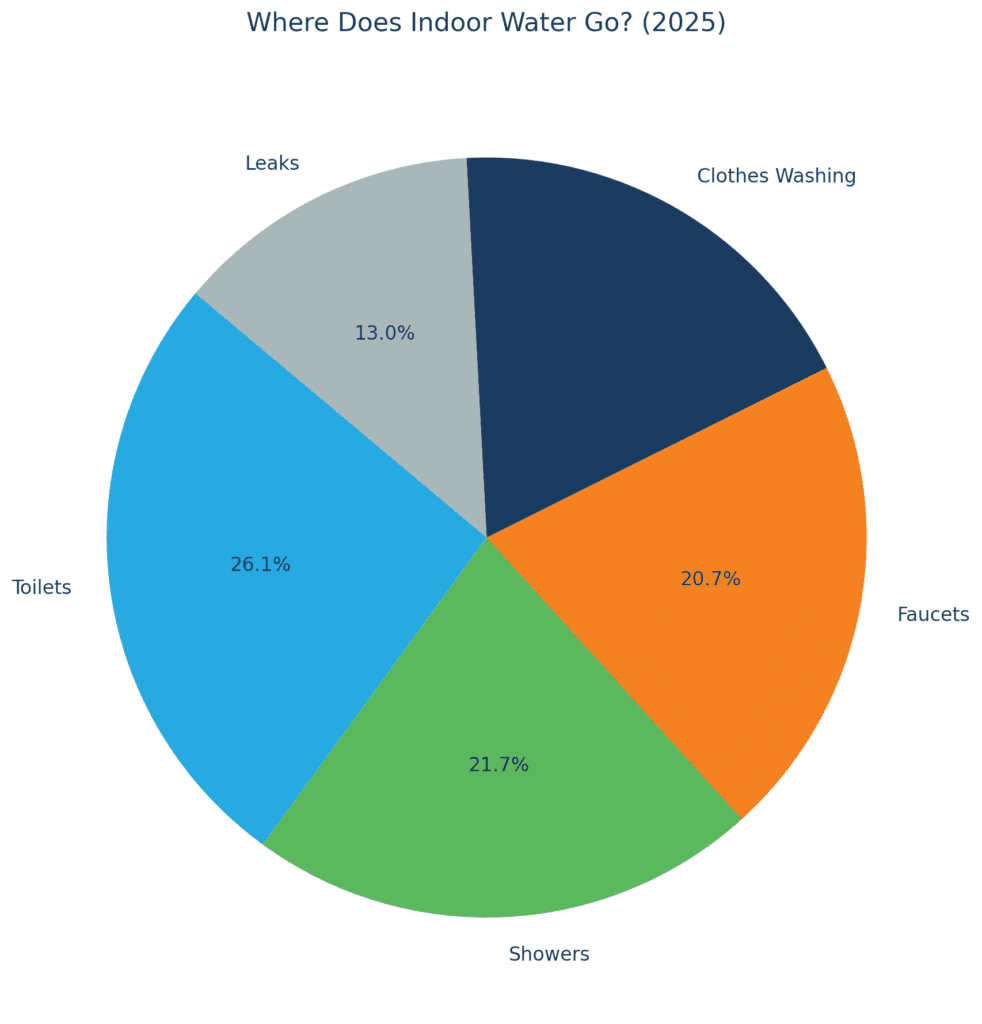
Inside our homes, every flush, shower, and load of laundry makes a difference. Toilets lead the pack, but leaks quietly drip away gallons without anyone noticing.
- Toilets: 24% of indoor water use
- Showers: 20%
- Faucets: 19%
- Clothes washing: 17%
- Leaks: 12%
Water Lost to Household Leaks
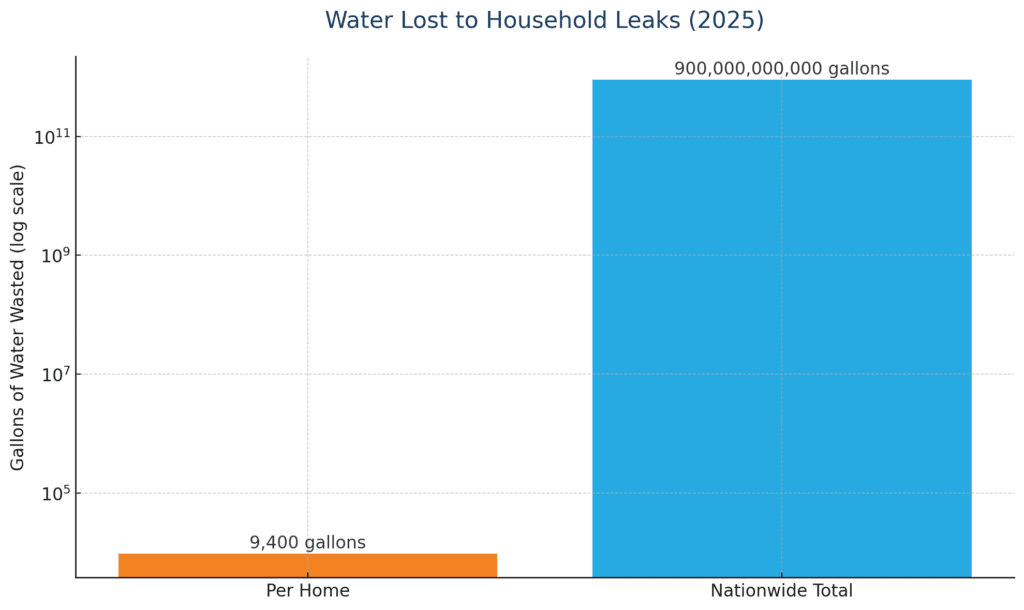
Leaky faucets and running toilets are more than annoying; they’re expensive. What seems like a harmless drip can turn into thousands of wasted gallons each year.
- The average home loses 9,400 gallons/year to leaks.
- Nationwide, that’s 900 billion gallons wasted annually, enough for 11 million homes.
Outdoor Irrigation Waste
Sprinklers are the biggest culprits of outdoor waste. Much of the water they spray evaporates before it even hits the soil.
- Up to 50% of irrigation water is lost to wind, evaporation, or runoff.
- Poorly maintained sprinklers can waste 25,000 gallons/year per home.
The Cost of Water Waste
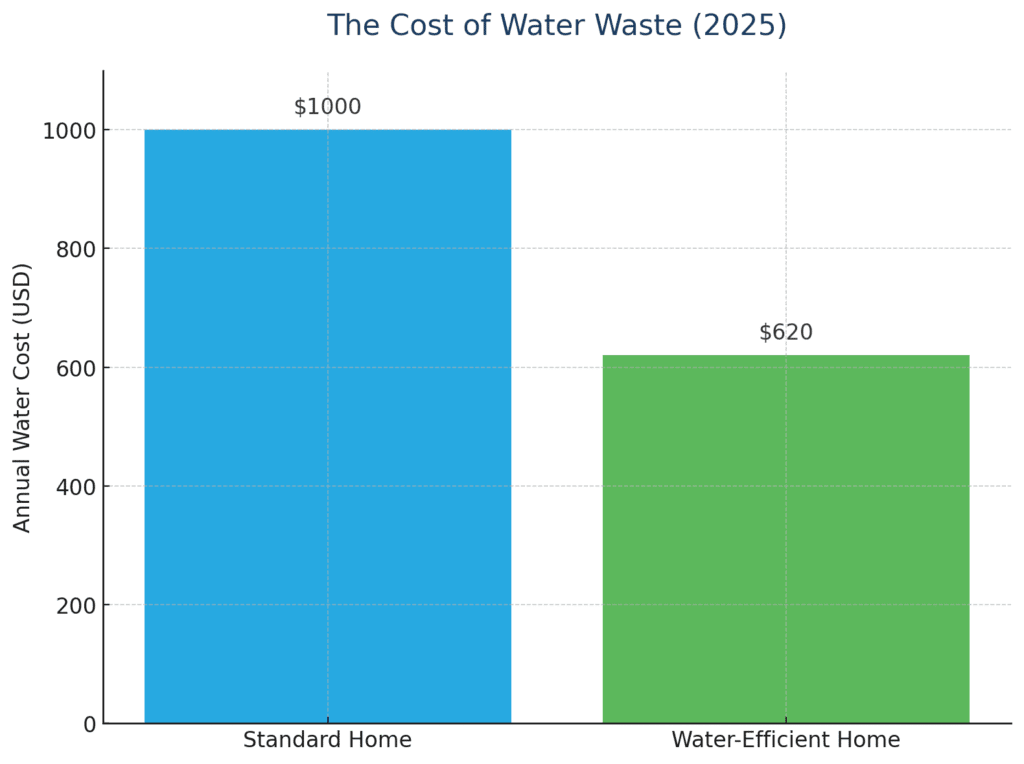
All that wasted water comes with a price. The good news? Bright fixtures and habits can significantly reduce bills.
- The average family spends $1,000/year on water.
- Water-efficient fixtures save about $380 annually.
WaterSense Fixture Savings
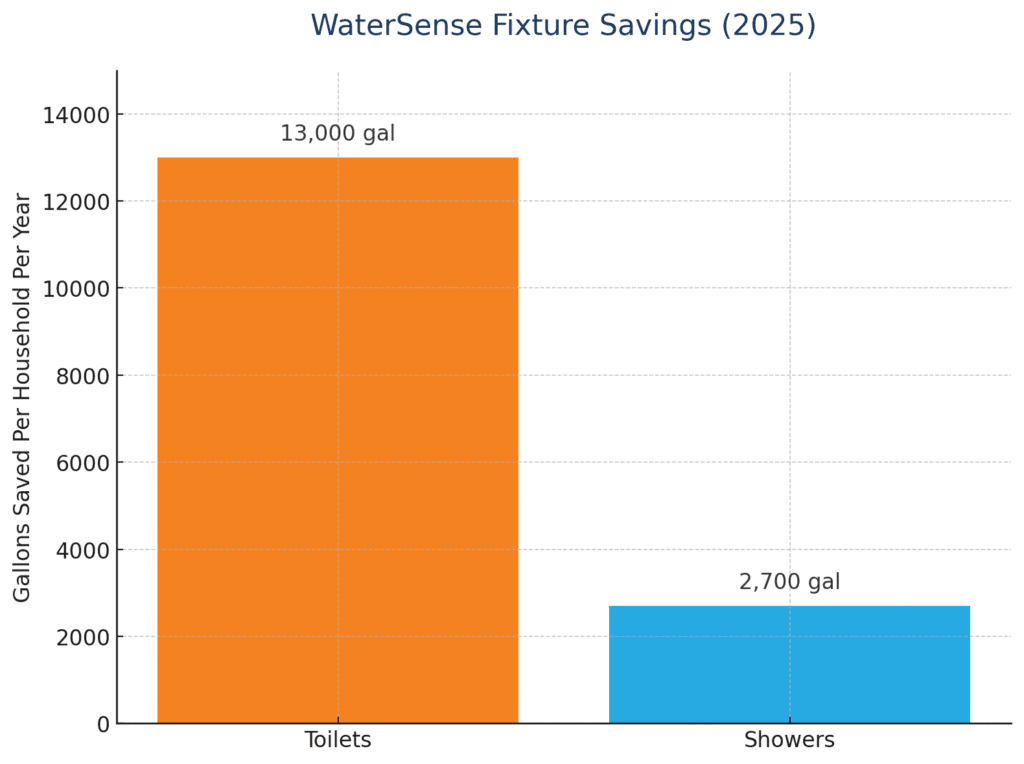
Minor upgrades, such as new toilets and showerheads, deliver significant savings. WaterSense-labeled products maintain the pressure you prefer while reducing consumption.
- Toilets: Save 13,000 gallons/year & $130 per home.
- Showers: Save 2,700 gallons/year & $70 in bills.
Water Scarcity & Drought
America isn’t running out of water tomorrow, but shortages are coming. Many states already warn of future crises if habits and infrastructure don’t change.
- 40 states expect water shortages in the next decade.
- In 2025, 30% of the U.S. was in drought, affecting 92 million people.
WaterSense Program Impact
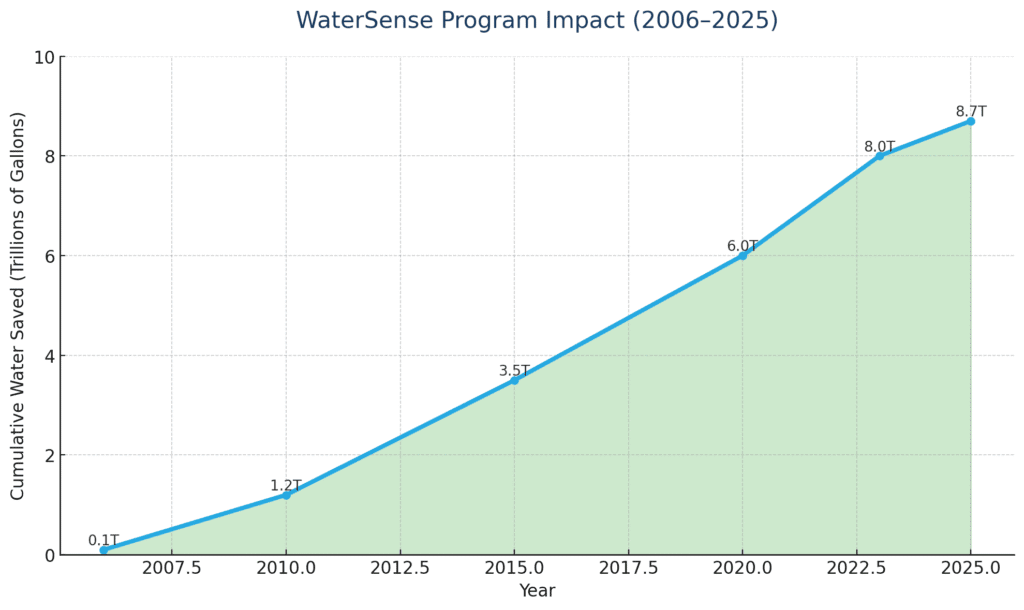
Since 2006, WaterSense has transformed plumbing efficiency. Millions of toilets, faucets, and showerheads have been swapped, and the savings are staggering.
- 8.7 trillion gallons saved since launch.
- $207 billion saved on water and energy bills.
Water Heating’s Energy Load
Every hot shower burns energy as well as water. Heating water is the second-largest energy expense in U.S. homes, accounting for almost a fifth of the total.
- Approximately 18% of a home’s energy is used for heating water.
Aging Infrastructure
Even before water reaches homes, a significant amount is lost. Cracked pipes and old mains leak mind-boggling amounts of treated water straight into the ground.
- Approximately 33 trillion gallons are lost annually due to leaking infrastructure.
- Approximately 240,000 water main breaks occur annually, resulting in $2.6 billion in repair costs.

The Big Picture: Plumbing & Water in 2025
Americans are using and wasting more water resources than they realize. However, there is a clear path forward: investing in water-saving habits, upgrading to low-flow fixtures, and embracing smart plumbing technologies can significantly reduce the amount of water households consume. From smart toilets and tankless water heaters to greywater recycling systems that reuse water from washing machines, the future of the plumbing sector is not just about fixing leaks. It is about water efficiency and lowering the nation’s carbon footprint.
In 2025, plumbing businesses across North America are helping homeowners and business owners rethink their water usage. Driven by climate change, customer demand, and new building codes, the plumbing industry is adapting with innovative plumbing systems that provide real-time data on water pressure, water line leaks, and hot water usage. Government agencies, such as the Environmental Protection Agency and the U.S. Geological Survey, continue to establish best practices for managing public water supplies. Meanwhile, plumbing companies are responding with innovative plumbing products and upgrades, including faucet aerators and water filtration systems, to meet customer expectations and enhance customer satisfaction.
But with labor shortages, aging plumbing materials, and an average age of plumbers nearing retirement, the industry faces challenges. The solution includes workforce development programs, digital outreach like online reviews and email address campaigns, and educating water consumers about water conservation efforts. Whether in New York, North Carolina, or anywhere in the U.S., the message is clear: by embracing bright plumbing fixtures, pipe replacement, and water treatment upgrades, the U.S. can protect its freshwater withdrawals and keep utility bills and water damage under control for decades to come.
What is the plumbing industry outlook for 2025?
The U.S. plumbing industry is on track for steady growth, with a rising compound annual growth rate driven by water efficiency regulations, the housing market recovery, and the introduction of new bright plumbing fixtures. As customer preferences shift toward water-saving devices, such as smart toilets and tankless water heaters, plumbing services are experiencing a growing demand across both residential and commercial sectors.
What is the future outlook for the plumbing industry?
The future of plumbing is about more than just fixing leaks. It is about innovative technology and water conservation efforts. Expect to see smart bathroom innovations, greywater systems, and real-time monitoring of usage patterns become standard. Plumbing companies that adopt digital marketing strategies and deliver exceptional customer service will lead the plumbing market in both market value and customer satisfaction.
Is plumbing in demand in the USA?
Yes. The plumbing sector is experiencing a growing demand for plumbing professionals. With public health concerns surrounding safe water delivery and aging housing stock, the demand for skilled trades is increasing, particularly for plumbing jobs that involve pipe replacement, water line repairs, and the installation of innovative plumbing systems.
Is the demand for plumbers increasing?
Absolutely. The water sector is facing labor shortages, and plumbing businesses are actively recruiting new talent. Business owners and government organizations are investing in workforce development to meet customer demand for plumbing services like water filtration systems, waste management upgrades, and innovative plumbing technologies.
Frequently Asked Questions
On average, household leaks can waste over 10,000 gallons of water annually, often without homeowners realizing it. Common culprits include dripping faucets, running toilets, and leaky pipes. Fixing these issues not only conserves water but can also significantly lower your water bills and prevent potential damage to your home. Regularly checking for leaks and maintaining your plumbing can make a big difference.
Around 30 to 40 percent of water used in U.S. households goes toward outdoor purposes, including watering lawns, gardens, and landscaping. This percentage can vary depending on the region and climate, with drier areas typically using a higher share of water outdoors during warm months.
Understanding which activities consume the most water can help people manage their usage. In most homes, showers and baths are the top contributors, followed by toilets, laundry, and dishwashing. Surprisingly, outdoor watering can also account for a large portion of water use, especially in dry months. Even small changes like taking shorter showers, using a high-efficiency washing machine, or watering plants early in the morning can reduce water consumption significantly over time. Tracking daily water habits can reveal where the biggest savings are possible.
Indoor activities such as flushing toilets, taking showers, using faucets, and washing laundry account for most household water use. Toilets alone can represent nearly 30 percent of indoor water consumption, making them one of the largest sources of daily water use in homes.