

Plumbing for Permits: Navigating ADU Plumbing Requirements in Santa Cruz County
Planning an accessory dwelling unit involves more than finalizing a floor plan or choosing where the kitchen and bathroom will go. For homeowners in Santa Cruz County, plumbing should be part of the conversation early in the process. Water supply lines, drain lines, sewer connections, fixture locations, and water heater planning can all affect how smoothly an ADU project moves through permits and inspections.
Whether the project involves a detached backyard unit, a garage conversion, or an attached ADU, plumbing choices can influence the timeline, budget, and overall approval process. Understanding these details early helps reduce delays, prevent costly changes, and support a smoother path to approval. Homeowners planning an ADU in Santa Cruz County often benefit from working with an experienced local team such as Anytime Plumbing when the plumbing scope needs to align with permit and inspection requirements.
What Plumbing Work Does an ADU Usually Include?
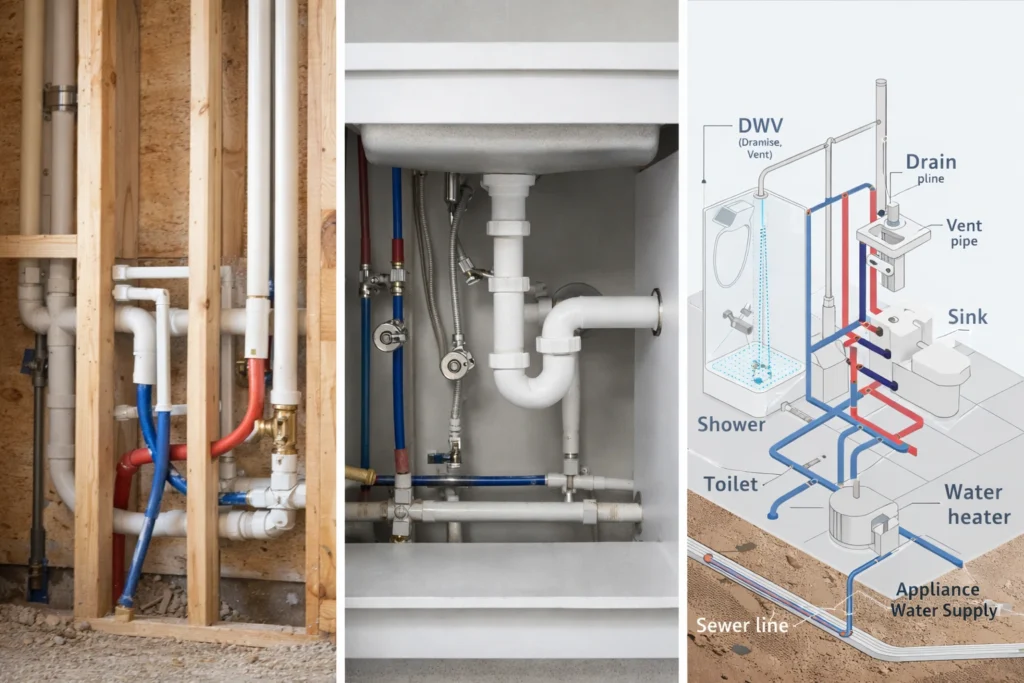
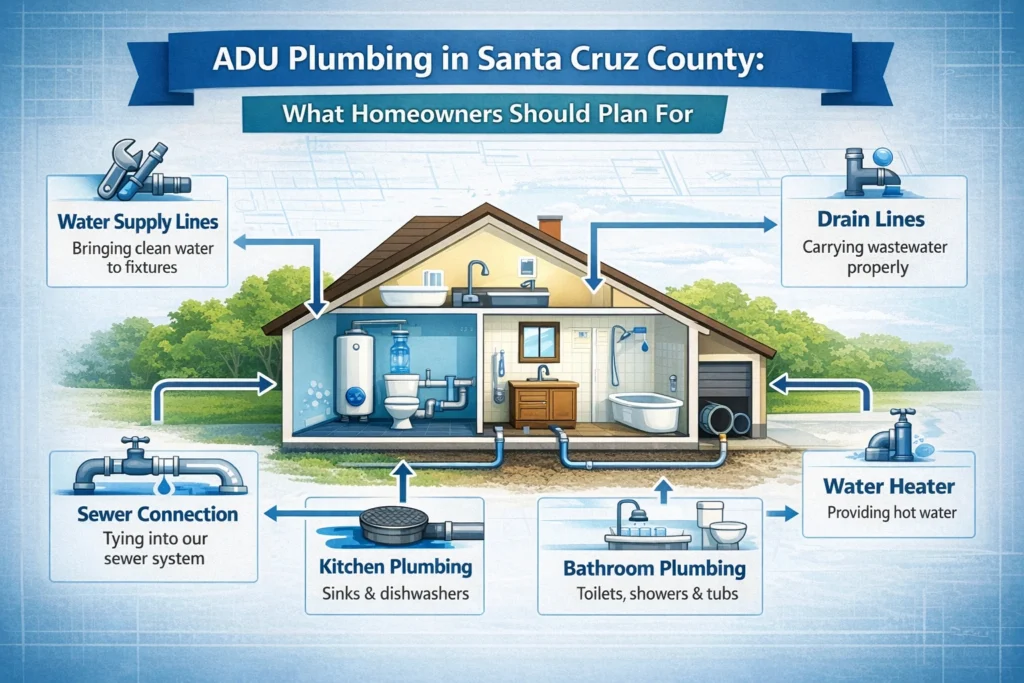
A well-planned ADU plumbing system covers much more than just adding a sink or toilet. Whether the project is a detached unit, garage conversion, or attached addition, the plumbing layout needs to support daily living while meeting permit and inspection requirements. For many homeowners, that means planning both the visible fixtures and the behind-the-wall systems that make the unit functional. From the water line for ADU service to drainage, venting, and fixture placement, each part of the plumbing system plays a role in keeping the space safe, efficient, and ready for approval.
Typical plumbing work in an ADU may include:
- Water supply lines to bring clean water to sinks, showers, toilets, and appliances
- Drain and waste lines to carry wastewater away properly
- Sewer connection for ADU use, including tie-in planning to the existing system
- Kitchen plumbing for ADU spaces, such as sinks, dishwashers, and related connections
- Bathroom plumbing for ADU setups, including toilets, showers, tubs, and vanities
- Water heater installation to provide reliable hot water
- Venting and fixture placement to support code-compliant drainage and everyday use
When Is a Plumbing Permit Needed for an ADU?
In most cases, ADU projects involve plumbing work that requires approval as part of the overall ADU building permit process. The exact permit needs depend on the scope of the project, but whenever plumbing systems are added, extended, altered, or connected to existing utilities, homeowners should expect permit review and inspection requirements. This is especially important for detached units, garage conversions, and any ADU with a new kitchen, bathroom, or water heater. Understanding these ADU permit requirements early can help prevent delays, failed inspections, and costly changes later in the project. Because plumbing is a core part of habitability and code compliance, many permits for ADU projects include plumbing review even when homeowners think the work is minor.
A plumbing permit is commonly needed when an ADU project includes:
- Installing new water lines to serve fixtures or appliances
- Adding or relocating drains for sinks, showers, toilets, or laundry areas
- Connecting to sewer or modifying existing waste lines
- Adding fixtures like sinks, toilets, tubs, or showers
- Installing or replacing water heaters for the new unit
- Gas line work, where applicable, for water heaters, ranges, or other equipment
This type of work is often reviewed as part of the broader ADU permit process, even if homeowners refer to it as an ADU plumbing permit issue.
Common ADU Plumbing Requirements Homeowners Should Plan For
When planning an ADU, homeowners need to think beyond fixtures and finishes. A successful plumbing layout depends on how the unit connects to water, drainage, and waste systems, as well as how each component is installed for inspection and long-term use. These ADU plumbing requirements often affect the project early, especially when the layout includes a kitchen, bathroom, laundry area, or separate water heating system. Understanding these basics helps homeowners prepare for permitting, avoid design conflicts, and keep the work aligned with ADU building codes and local approval standards.
| Plumbing Area | What Homeowners Should Plan For | Why It Matters |
| Water supply | Proper line sizing, routing, and connection planning for each fixture | Supports reliable fixture performance and helps ensure the water line for ADU use is adequate |
| Drainage | Correct pipe slope, fixture placement, and venting layout | Helps avoid backups, poor drainage, and inspection issues |
| Sewer tie-in | Approved connection method to the existing waste system | A safe and properly planned sewer connection for ADU use is essential for code compliance |
| Fixtures | Kitchen and bathroom fixture layout based on the final floor plan | Affects rough-in work, spacing, and utility coordination |
| Water heater | Correct type, placement, venting, and code-compliant installation | Impacts safety, efficiency, and daily hot water use |
| Access and clearances | Enough installation space and service access around plumbing components | Important for approval, maintenance, and long-term usability |
Each of these areas can influence both the design and inspection process, so homeowners should treat them as core parts of the overall ADU plumbing code planning stage.
How ADU Plumbing Fits Into the Permit Process
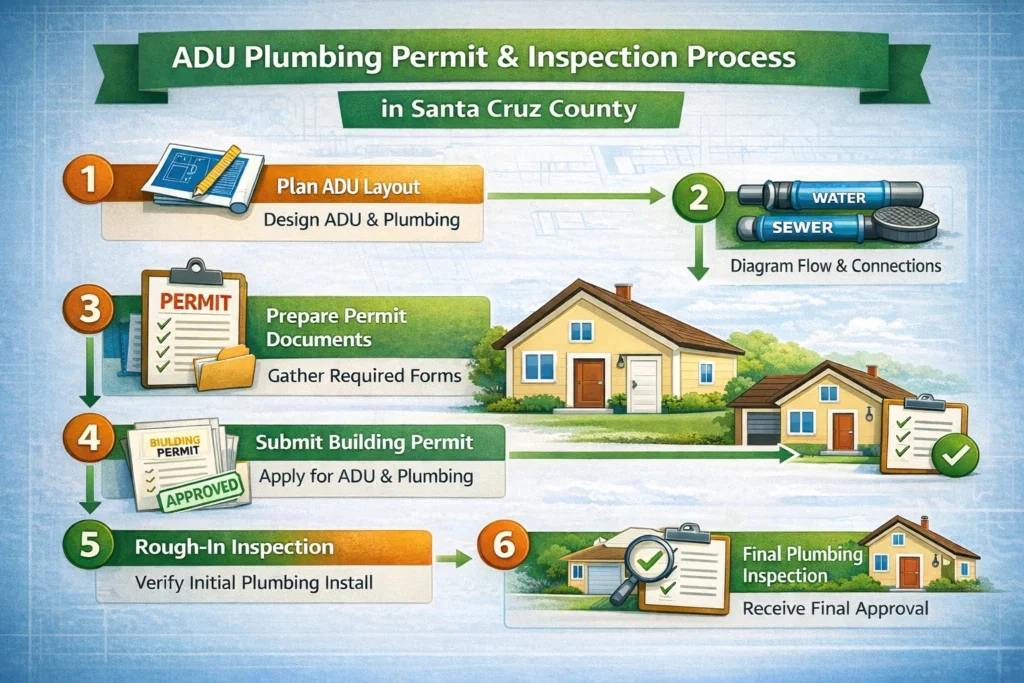
Understanding the ADU permit process is easier when plumbing is viewed as part of a clear sequence instead of a separate technical issue. For most homeowners, ADU permitting involves planning the layout, preparing the plumbing scope, submitting the project for review, and completing inspections at the right stages. Here is how ADU plumbing typically fits into the process:
- Define the ADU layout and plumbing fixtures
Start by identifying where the kitchen, bathroom, laundry area, and water heater will go. Fixture locations shape the rest of the plumbing plan. - Plan water, drain, and sewer routing
Map out the water line, drainage paths, venting, and sewer tie-in points so the system works efficiently and aligns with the design. - Prepare permit documents
Plumbing details are usually included in the plans and specifications submitted for review as part of the project package. - Submit through the ADU building permit process
The plumbing scope is generally reviewed along with the full ADU building permit application, not treated as an afterthought. - Schedule the rough-in inspection
Before walls are closed, a plumbing inspection for ADU work is typically needed to check pipe layout, connections, and venting. - Complete the final plumbing inspection
Once fixtures and equipment are installed, the final inspection helps confirm the system is ready for safe use.
Rough-In and Final Inspections: What Happens?
Inspections are an important part of the ADU plumbing process because they help confirm that the system is installed correctly before the unit is finished and occupied. For most projects, there are two key stages homeowners should understand: the rough-in inspection and the final inspection. Knowing what happens at each step can make the process feel more manageable and help avoid delays tied to missed details or incomplete work. These ADU inspection requirements are meant to verify that plumbing systems are safe, functional, and ready for long-term use.
| Inspection Stage | What Is Typically Checked |
| Rough-in inspection | Pipe routing, drain layout, venting, water line connections, and overall plumbing configuration before walls, floors, or ceilings are closed |
| Final inspection | Fixture installation, water flow, drainage performance, water heater setup, visible plumbing components, and overall system readiness for use |
A proper ADU plumbing inspection helps catch issues before they become expensive to fix. By understanding each plumbing inspection for ADU work stage, homeowners can prepare more confidently and keep the project moving toward final approval.
Common Plumbing Mistakes That Can Delay ADU Approval
Even a well-designed ADU can run into delays when plumbing details are not planned carefully from the start. Many approval issues come from preventable mistakes that affect permits, inspections, and overall code compliance.
Common problems include:
- Waiting too long to involve a plumber, which can lead to layout changes after plans are already moving forward
- Underestimating sewer connection complexity, especially when the tie-in location or routing is more difficult than expected
- Poor fixture layout planning, which can create inefficient plumbing runs or conflicts with the final floor plan
- Missing permit details, causing issues during review or slowing down the ADU permit requirements process
- Incorrect water heater planning, including poor placement or an undersized system
- Assuming garage conversion plumbing is simple, even though retrofitting existing spaces can bring hidden challenges
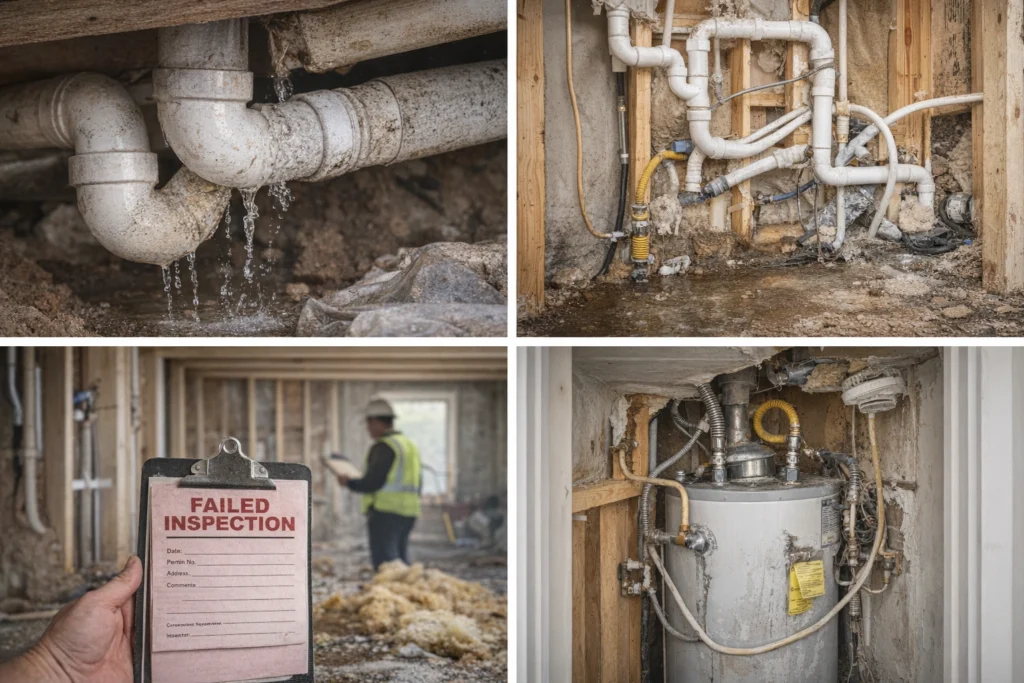
- Failing a plumbing inspection for ADU work because parts of the system are unfinished, inaccessible, or not aligned with ADU building codes
Careful ADU plumbing planning helps reduce these setbacks and supports a smoother approval process.
ADU Plumbing Cost Factors to Keep in Mind
The total ADU plumbing cost can vary widely depending on the design of the unit, the location of existing utility connections, and the amount of new work required. Instead of thinking about cost as one fixed number, it is more helpful to look at the factors that influence the scope of plumbing installation. For homeowners planning an ADU, understanding these variables early can make budgeting more realistic and help avoid surprises later in the project.
Common cost factors include:
- Distance from the existing sewer line, which can affect the overall cost to connect ADU to sewer systems
- Trenching requirements, especially for detached units that need longer underground runs
- Fixture count, including the number of sinks, toilets, showers, and appliances
- Water heater selection, based on system type, size, and installation needs
- Accessibility of the installation area, which can affect labor complexity
- Whether the ADU is detached, attached, or a garage conversion, since each layout creates different plumbing demands
- Permit and inspection scope, which can add to the full plumbing process and timeline
A well-planned sewer connection for ADU work can make a major difference in both cost and project efficiency.
Why Local Experience Matters in Santa Cruz County
Every ADU project comes with its own set of planning details, and in Santa Cruz County, the permit path can vary based on the property, utility layout, and scope of work. That is why local experience can make a real difference. When homeowners are planning ADU plumbing, it helps to work with professionals who understand how layout decisions, inspections, and approval steps connect throughout the project.
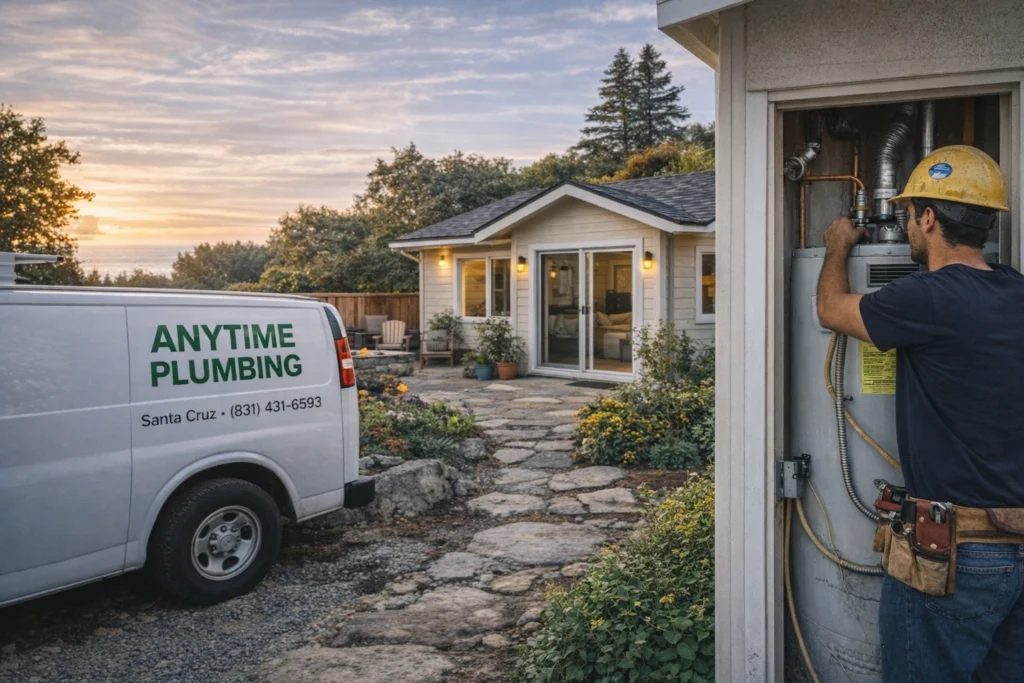
A licensed plumber for ADU work can help identify issues early, from fixture placement and water line planning to drainage and sewer tie-in coordination. Support from an experienced local company like Anytime Plumbing can also give homeowners more confidence that the plumbing plan is being approached with code compliance, inspection readiness, and local project expectations in mind. For Santa Cruz County homeowners, that kind of guidance can help make the process smoother from early planning through final approval.
Quick Homeowner Checklist Before Starting an ADU Plumbing Project
Before starting ADU plumbing work, homeowners can avoid many common delays by reviewing a few key planning items early. Use this simple checklist to stay better prepared:
- Confirm the final ADU layout before plumbing plans move forward
- Identify all kitchen and bathroom fixtures needed in the unit
- Review existing water and sewer connection points on the property
- Understand the basic ADU permit requirements tied to the plumbing scope
- Prepare for both rough-in and final inspection stages
- Ask about the best water heater setup for the size and use of the ADU
- Work with a licensed plumber early so plumbing details align with the full ADU building permit process
This kind of early planning helps keep the project organized, compliant, and easier to move through approval.
Planning early can make a major difference in how smoothly an ADU project moves forward. When ADU plumbing is considered from the beginning, homeowners are better prepared for utility connections, permit reviews, and each stage of the ADU permit process. Proper planning also helps support smoother inspections, including the required plumbing inspection for ADU work before final approval.
For Santa Cruz County homeowners, experienced guidance can help reduce delays, avoid costly changes, and keep the project aligned with local expectations. Homeowners who need help with plumbing layout, sewer and water connections, or permit-ready installation planning can turn to Anytime Plumbing for support with ADU projects from the planning stage onward.
Frequently Asked Questions
In many cases, yes. If the project includes new water lines, drain lines, sewer connections, fixtures, or water heater installation, plumbing work is often reviewed as part of the overall ADU permit process. The exact requirements can depend on the scope of the project, so it is important to plan early and confirm what is needed before construction begins.
Most ADU plumbing projects include water supply lines, drain and waste lines, venting, sewer tie-ins, kitchen plumbing, bathroom plumbing, and water heater setup. The exact scope depends on whether the ADU is detached, attached, or a garage conversion, as well as how the new unit connects to the existing utility systems on the property.
Bringing in a plumber early can help homeowners avoid layout issues, permit delays, and costly changes later in the process. Early planning makes it easier to coordinate fixture placement, water and sewer connections, and inspection requirements. For homeowners in Santa Cruz County, support from a local company like Anytime Plumbing can help make ADU plumbing planning more efficient and better aligned with the project’s approval steps.