

Commercial Plumbing Alert: Backflow Testing & Prevention Before the Heavy Rains Hit
Santa Cruz’s rainy season brings steady storms, coastal runoff, and saturated soil that can place additional strain on commercial plumbing systems. As heavy rainfall moves through storm drains and surrounding groundwater levels rise, pressure changes can occur within municipal water lines. These fluctuations sometimes create conditions where backflow can happen, allowing contaminated water to reverse direction and enter a building’s clean water supply. While the issue may not always be immediately visible, it can pose serious risks for businesses that rely on safe and consistent water access every day.
For commercial properties such as restaurants, offices, retail stores, and medical facilities, maintaining water safety is essential for both daily operations and public health. Any disruption to water quality can impact employees, customers, and regulatory compliance. During periods of heavy rain, plumbing systems that have not been inspected may become more vulnerable to cross-connection problems and pressure imbalances. Proactive plumbing inspections before the rainy season help identify potential risks early. Scheduling backflow testing in Santa Cruz before the rainy season allows businesses to verify that prevention devices are functioning properly and that their commercial plumbing systems remain protected.
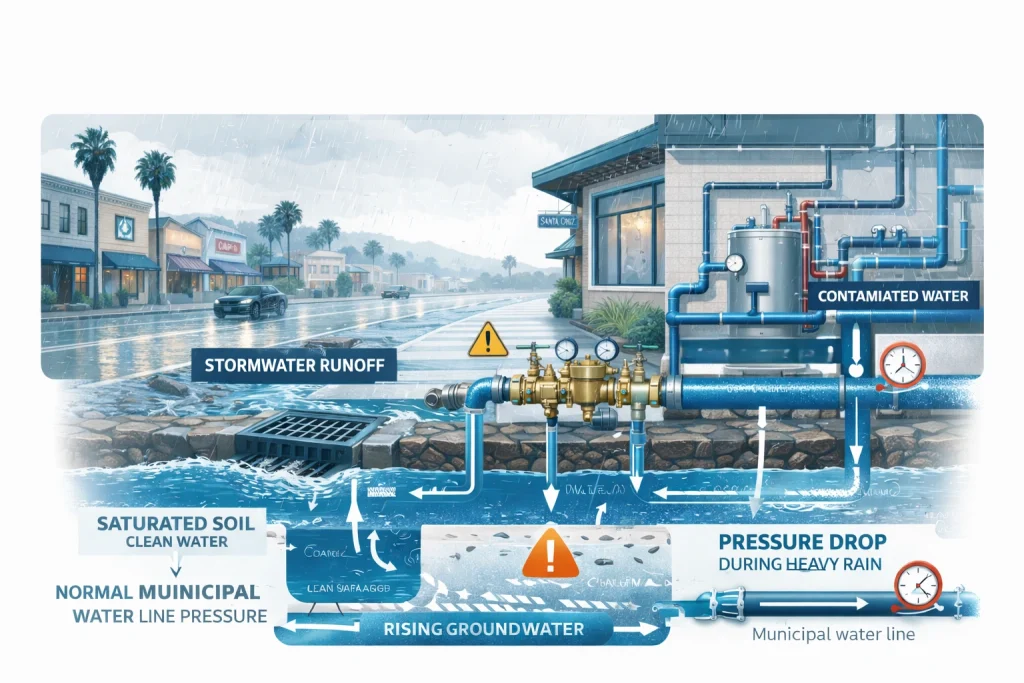
Why Heavy Rains Increase Backflow Risks in Commercial Plumbing
Heavy rainfall can significantly affect how municipal water and drainage systems operate, especially in coastal cities like Santa Cruz. During the rainy season, large volumes of stormwater move rapidly through drainage infrastructure and underground channels. As runoff increases, pressure conditions within municipal water systems can fluctuate, sometimes creating imbalances between supply lines and building plumbing systems. When pressure drops suddenly, water inside pipes may attempt to reverse direction, increasing the risk of backflow.
Santa Cruz’s coastal environment can further intensify these conditions. Saturated soil and rising groundwater levels place additional stress on underground pipes and plumbing connections. Businesses that rely on commercial plumbing in Santa Cruz often have multiple cross-connections linking irrigation systems, fire suppression equipment, or maintenance water lines to the main water supply. When storms place extra strain on these systems, contaminated water may be pulled back into clean water lines if proper backflow prevention devices are not functioning correctly. In areas near the San Lorenzo River, downtown Santa Cruz, and coastal neighborhoods, heavy rainfall can increase stormwater pressure and place additional strain on underground plumbing infrastructure. Understanding how rainfall impacts plumbing pressure is the first step toward protecting commercial water systems during the wet winter months.
Pressure Fluctuations in Municipal Water Lines
Heavy rainfall can place sudden demand on municipal water infrastructure, leading to pressure imbalances within supply lines. When stormwater infiltration or system demand changes rapidly, water pressure may drop unexpectedly. These negative pressure events create conditions where back-siphonage can occur, allowing contaminated water from connected plumbing systems to be drawn into potable water lines. Without properly functioning commercial backflow prevention devices, contaminants from these systems can enter potable water lines and spread throughout the building.
Flooded Drain Systems
During intense storms, drainage systems can become overwhelmed as stormwater flows into municipal infrastructure faster than it can be redirected. When drains and sewer lines experience excessive pressure, changes within the system may influence nearby plumbing networks. In some cases, these pressure shifts can contribute to reverse flow conditions that increase the likelihood of backflow incidents, particularly in buildings with complex plumbing connections or aging infrastructure.
Cross-Connections in Commercial Buildings
Many commercial properties rely on plumbing connections that link the main water supply to other systems such as irrigation networks, fire sprinkler systems, cooling towers, and maintenance equipment. These cross-connections are necessary for daily operations but can become potential contamination points if water flow reverses during pressure fluctuations. Without properly maintained backflow prevention devices, these systems could allow fertilizers, chemicals, or stagnant water to enter the building’s clean water supply.
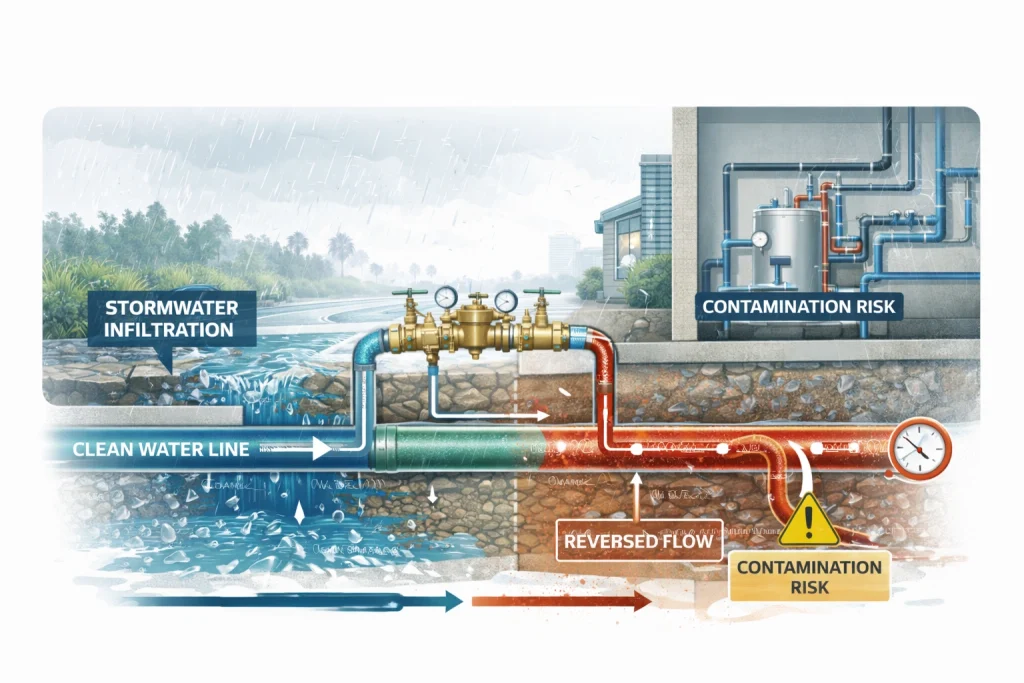
What Is Backflow and Why It’s Dangerous for Businesses
Backflow occurs when water flows in the opposite direction inside a plumbing system, allowing contaminated water to enter the clean potable water supply. Under normal conditions, water moves in one direction—from the municipal supply into a building’s plumbing system. However, when pressure changes occur, such as during heavy rainfall or sudden drops in municipal water pressure, water can reverse direction. When this happens, substances from connected systems may be pulled back into the drinking water supply.
For commercial properties, this can create serious health and safety concerns. Cross-connected systems such as irrigation lines, maintenance equipment, and cooling systems may contain substances that are not safe for human consumption. Fertilizers from landscaping systems, chemicals used for maintenance, bacteria from stagnant water, or industrial cleaning solutions can potentially enter potable water lines if backflow occurs.
Certain industries face higher risks because of the complexity of their plumbing systems. Restaurants, hotels, medical clinics, schools, apartment complexes, and manufacturing facilities often have multiple water connections that increase the chance of contamination if backflow prevention devices fail. When backflow incidents occur, businesses may face health code violations, temporary operational shutdowns, or compliance penalties, making prevention and regular testing essential.
Backflow Prevention Devices Every Commercial Property Should Have
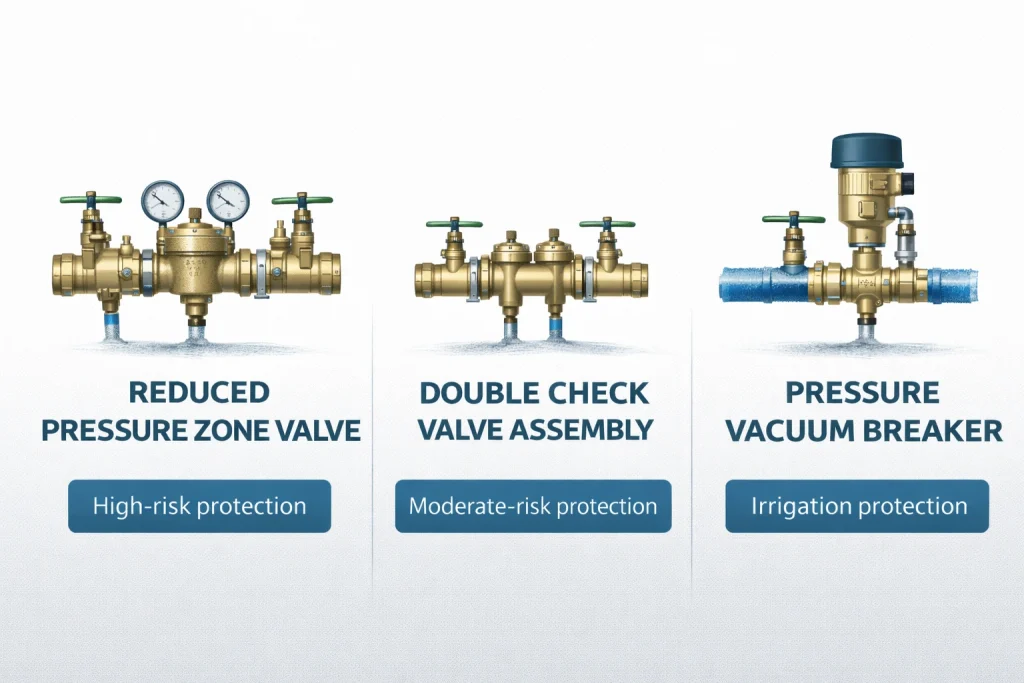
Backflow prevention devices used in commercial plumbing systems play a critical role in protecting potable water supplies within business properties.These devices are designed to stop contaminated water from reversing direction and entering clean drinking water lines during pressure changes. Because commercial plumbing systems often include irrigation networks, fire protection systems, and maintenance connections, installing proper backflow prevention equipment is essential for maintaining water safety. To ensure reliable protection, these devices must be professionally installed and regularly maintained by qualified plumbing professionals.
Reduced Pressure Zone (RPZ) Valve
- Commonly used in high-risk commercial environments such as hospitals, industrial facilities, and large commercial buildings
- Designed with multiple check valves and a pressure relief valve to prevent contamination
- Releases excess pressure if a backflow condition occurs, protecting the potable water supply
- Provides one of the highest levels of backflow protection for commercial plumbing systems
Double Check Valve Assembly
- Commonly installed in irrigation systems and fire sprinkler lines
- Uses two independent check valves to prevent reverse water flow
- Protects the water supply from moderate contamination risks
- Suitable for commercial plumbing systems where the contamination risk is lower but still present
Pressure Vacuum Breaker
- Often installed in outdoor plumbing systems or landscape irrigation lines
- Prevents back-siphonage when water pressure drops suddenly
- Uses air pressure to stop contaminated water from flowing backward
- Frequently used in commercial properties with large irrigation systems
Regular inspection, testing, and maintenance are essential to ensure these devices function properly, especially before heavy rains or seasonal pressure changes affect municipal water systems.
Santa Cruz Backflow Testing Requirements for Businesses
Commercial properties in Santa Cruz are required to follow specific regulations designed to protect the municipal drinking water supply from contamination. Because many commercial buildings have irrigation systems, fire sprinkler connections, or other cross-connected plumbing systems, local authorities require routine backflow testing to ensure prevention devices are working properly. Most municipalities require annual backflow testing, and these inspections must be conducted by certified backflow testers who use specialized equipment to verify that the device is functioning correctly. After testing, businesses must maintain proper inspection records as part of regulatory compliance. If a device fails during inspection, it must be repaired or replaced promptly to restore protection and meet local requirements.
These regulations support Santa Cruz County water safety standards, which are designed to prevent contamination from entering the public water system. Ignoring required testing or failing to maintain backflow prevention devices can lead to several consequences, including fines or regulatory penalties, possible water service interruption, and liability risks for business owners if contaminated water affects employees, customers, or nearby properties.
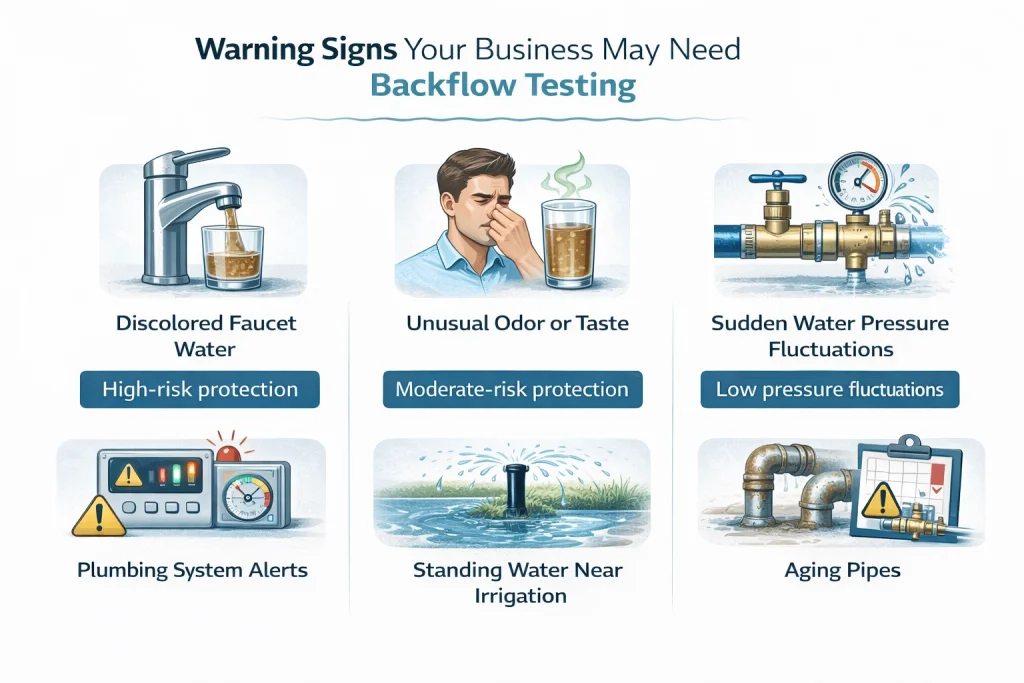
Signs Your Commercial Plumbing May Need Backflow Testing
Backflow issues are not always immediately visible, but certain warning signs can indicate that a commercial plumbing system may need inspection or testing. Businesses should monitor their water systems closely, especially during the rainy season when pressure fluctuations and stormwater runoff can affect plumbing performance.
Common indicators that backflow testing may be needed include discolored water coming from faucets or sinks, which can suggest contamination entering the supply line, as well as unusual odor or taste in tap water that may point to cross-connection issues or stagnant water in the system. Businesses may also notice sudden water pressure fluctuations even when normal building water usage has not changed, along with frequent plumbing alarms or alerts from maintenance or monitoring equipment. Standing water around irrigation systems can be another warning sign, often indicating drainage problems or pressure imbalance. In older commercial properties, aging pipes and valves may be more vulnerable to pressure-related issues, and backflow prevention devices that have not been tested in over a year may carry a higher risk of unnoticed malfunction.
Recognizing these signs early and scheduling preventive inspections can help businesses address potential issues before they develop into larger plumbing or water safety problems.
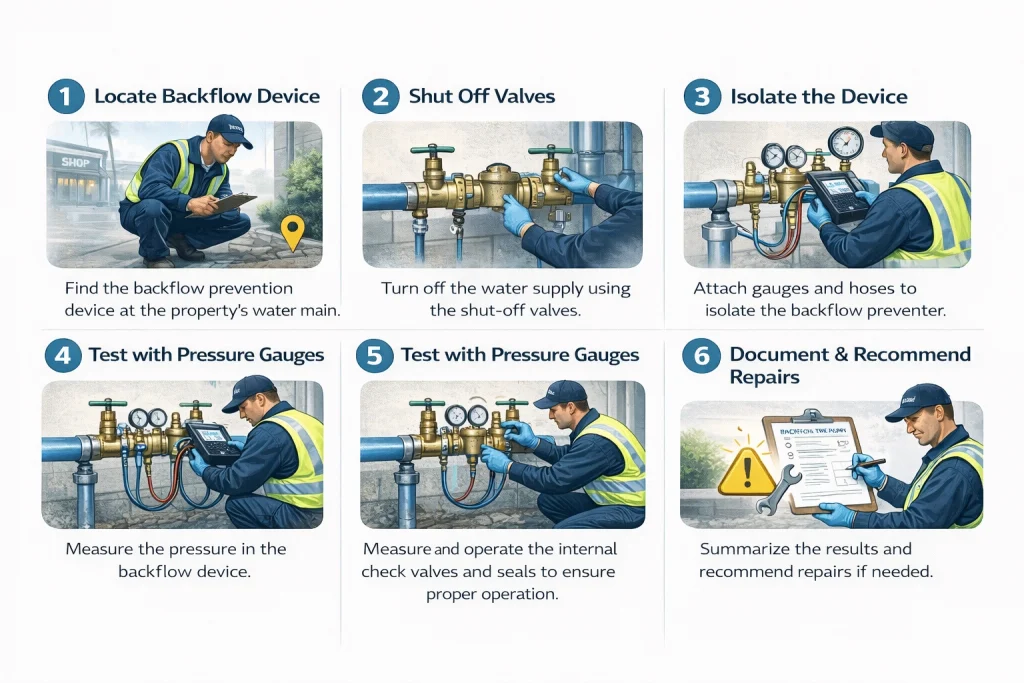
How Professional Backflow Testing Works
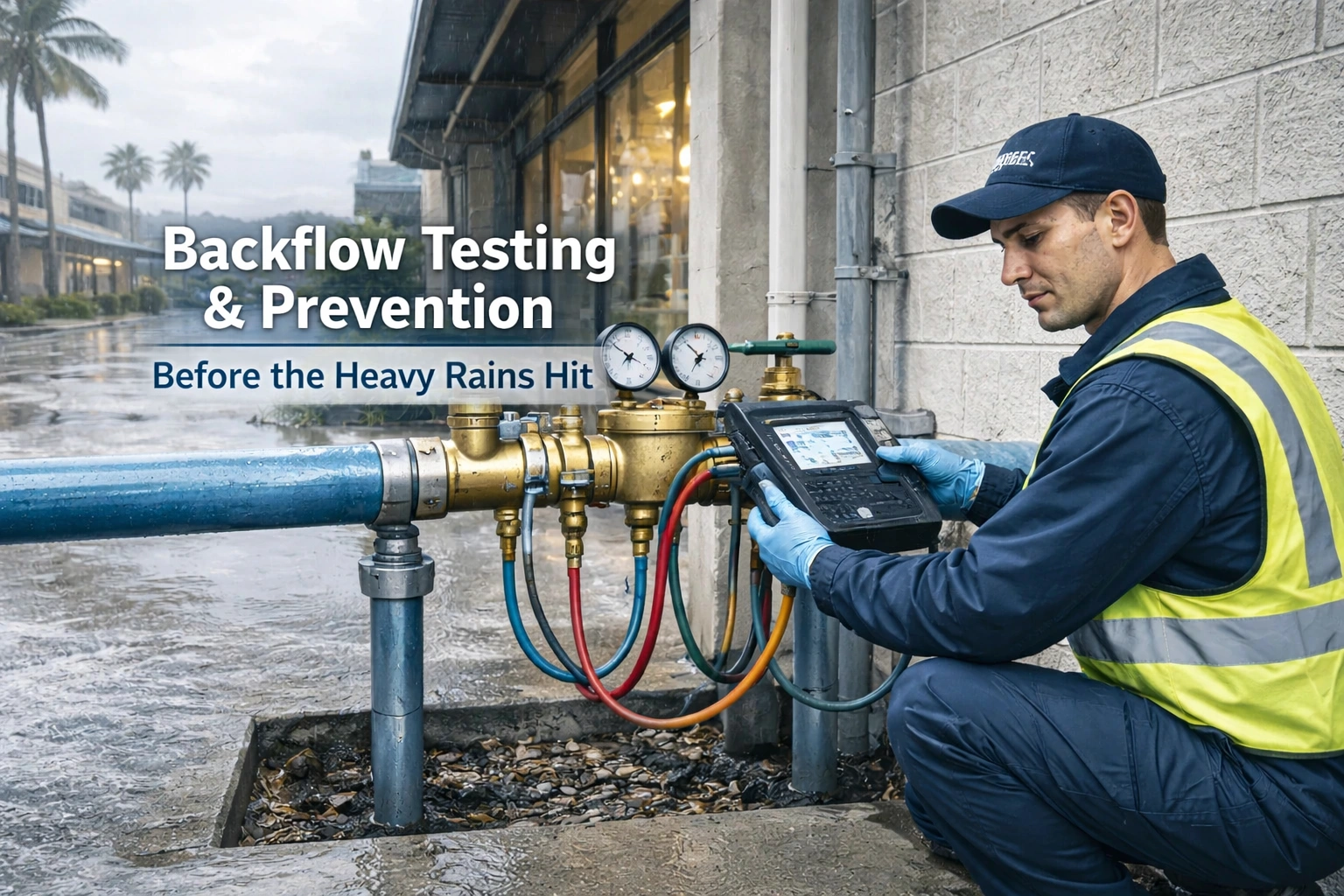
Professional backflow testing helps verify that prevention devices are functioning correctly and protecting the building’s potable water supply. The inspection process is carried out by certified technicians who use specialized testing equipment to evaluate the performance of the device and confirm that it meets safety and compliance standards.
The testing process typically includes the following steps:
- Locate and identify the backflow prevention device installed in the plumbing system
- Shut off valves and isolate the device to safely perform the inspection
- Conduct pressure testing using specialized gauges and equipment to check device performance
- Inspect valves, seals, and internal components for leaks, wear, or malfunction
- Document the testing results and provide certification for regulatory compliance
- Recommend repair or replacement if the device fails to meet safety standards
Certified technicians ensure that testing is performed accurately and that proper documentation is completed to meet local compliance requirements.
Preventive Steps Santa Cruz Businesses Should Take Before Heavy Rains
Preparing commercial plumbing systems before the rainy season can significantly reduce the risk of backflow incidents and water contamination. Heavy storms can place extra pressure on municipal water systems and drainage infrastructure, making it important for businesses to ensure their plumbing systems are properly maintained and compliant. Taking preventive measures early helps protect water quality, avoid operational disruptions, and reduce the chances of costly plumbing emergencies during Santa Cruz’s wet winter months.
Businesses can take the following steps to reduce backflow risks:
- Schedule annual backflow testing to verify that prevention devices are functioning properly
- Inspect irrigation systems for cross-connections that may increase contamination risk
- Ensure backflow prevention devices are properly installed and maintained
- Check property drainage systems to reduce flooding and excess water buildup
- Keep compliance and inspection records updated for regulatory requirements
- Work with licensed commercial plumbers who understand local plumbing regulations
Preparing plumbing systems before heavy rains arrive helps businesses avoid unexpected water system failures and maintain safe, reliable operations throughout the season.
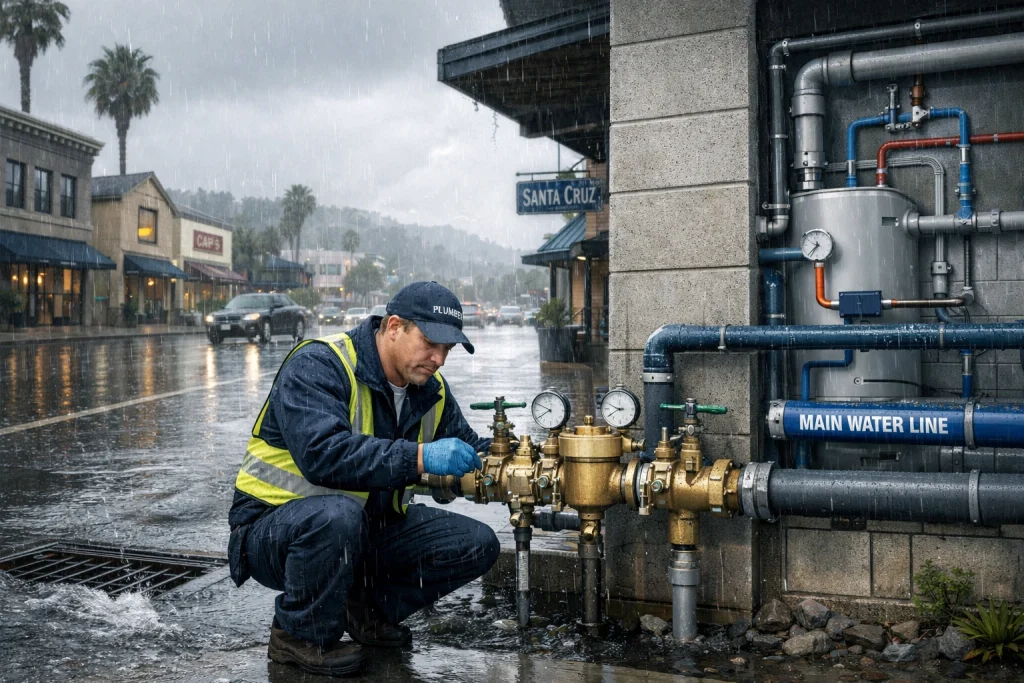
Schedule Commercial Backflow Testing Before the Rainy Season
As the rainy season approaches in Santa Cruz, businesses should take proactive steps to ensure their commercial plumbing systems are prepared for changing weather conditions. Heavy rainfall can place additional pressure on municipal water lines and drainage systems, increasing the possibility of backflow incidents that may contaminate a building’s potable water supply. Scheduling a professional backflow inspection before the rainy season allows businesses to verify that prevention devices are functioning properly and that plumbing systems remain compliant with local water safety standards.
Proactive testing helps protect drinking water, reduce contamination risks, and prevent unexpected plumbing disruptions during storms. It also helps businesses avoid potential compliance violations, costly repairs, or service interruptions caused by malfunctioning backflow prevention devices. By addressing these risks early, commercial property owners can maintain safe water systems and ensure smooth operations throughout the wet winter months. Businesses can contact Anytime Plumbing to schedule certified backflow testing in Santa Cruz and ensure their commercial plumbing systems are prepared for the rainy season.
Frequently Asked Questions
Backflow testing is a professional inspection that verifies whether a backflow prevention device is working properly. In Santa Cruz, these devices help protect the municipal drinking water system from contamination caused by reverse water flow. Many commercial properties are required to perform annual testing to ensure their plumbing systems remain compliant with local water safety regulations.
Most commercial buildings must schedule backflow testing once per year. Annual testing ensures that prevention devices are functioning correctly and helps businesses meet regulatory requirements designed to protect public water supplies.
Many commercial properties require backflow testing, especially those with irrigation systems, fire sprinkler connections, or complex plumbing networks. Businesses that commonly need testing include restaurants, hotels, medical clinics, schools, apartment complexes, and manufacturing facilities.
The cost of backflow testing can vary depending on the type of device, the accessibility of the equipment, and the number of devices on the property. In most cases, professional testing is a relatively quick inspection performed by a certified technician who verifies device performance and provides compliance documentation.