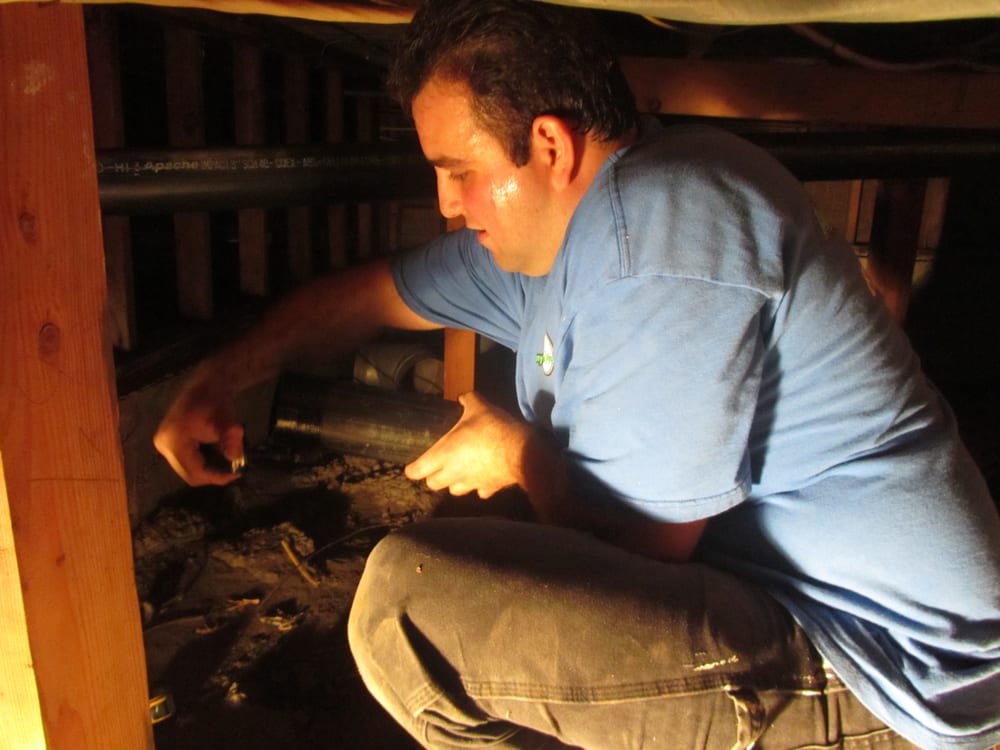



Beyond the City Line: Winter Septic System Maintenance Tips for Santa Cruz County Homes
Winter in Santa Cruz County brings more than cooler temperatures—it delivers prolonged rainfall that can put serious stress on residential septic systems. Many homes in the area are built on coastal soils, hillside terrain, or naturally compacted ground that drains slowly once saturated. During the rainy season, this combination of heavy precipitation, sloped landscapes, and water-retaining soil makes it harder for septic systems to function the way they do during drier months.
When the ground becomes oversaturated, wastewater from a septic system has nowhere to disperse. Drain fields struggle to absorb effluent, increasing the risk of pooling, slow drains, and backups inside the home. Properties located in the Santa Cruz Mountains or low-lying coastal areas are especially vulnerable, as runoff and groundwater levels rise quickly after sustained rain.
This is why seasonal septic system maintenance is critical during winter. Proactive care helps protect the septic tank and drain field from excess moisture, prevents system overload, and reduces the likelihood of costly repairs when conditions are at their worst. Understanding how winter weather affects septic performance is the first step toward keeping systems operating efficiently throughout Santa Cruz County’s rainy months.
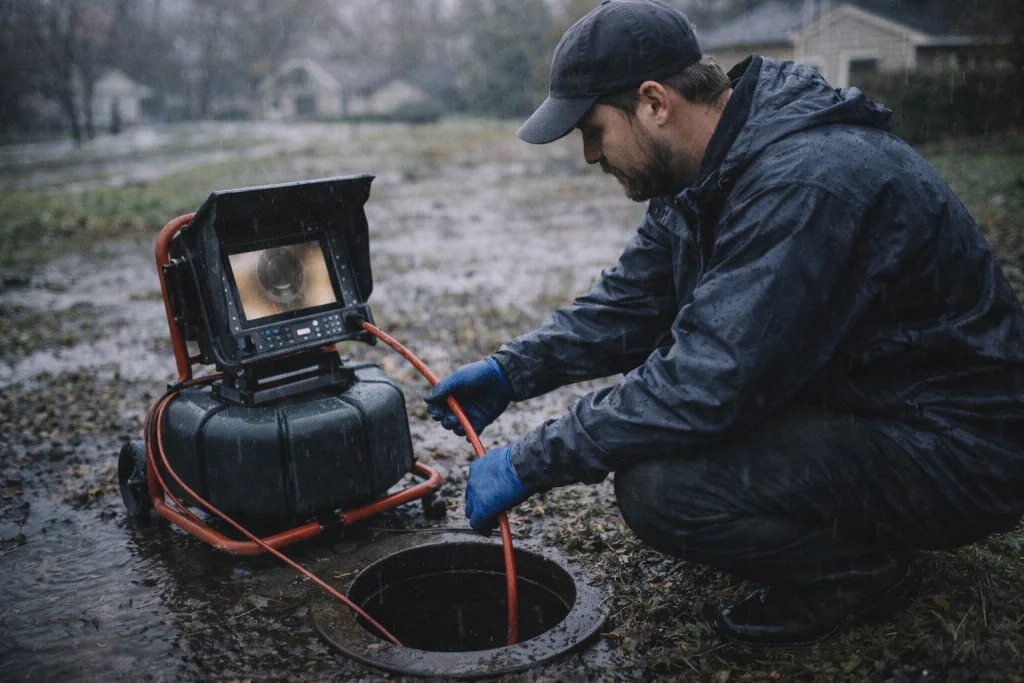
Why Santa Cruz County Winters Are Tough on Septic Systems
Santa Cruz County winters are especially hard on septic systems because heavy, consistent rainfall quickly leads to saturated soil. When the ground is already full of water, septic drain fields cannot absorb and filter wastewater effectively. This reduced absorption increases the risk of septic system flooding, particularly in coastal and hillside areas where runoff accumulates faster.
As rain continues, groundwater levels rise and place additional pressure on septic tanks and pipes. Wastewater that would normally flow into the drain field can back up instead, leading to slow drains, standing water outdoors, or even sewage backup after heavy rain inside the home. These issues are more common in winter because septic systems are forced to operate in conditions they were not designed to handle year-round without seasonal care.
Winter Septic Tank Maintenance Basics Every Homeowner Should Know
Proper septic tank maintenance becomes especially important during winter, when heavy rain puts added strain on the system. One of the simplest ways homeowners can help is by limiting water usage during storms. Spreading out laundry, showers, and dishwashing reduces the volume of wastewater entering the tank when the soil is already saturated.
Equally important when maintaining a septic tank is avoiding grease, food scraps, and other solids. In colder, wetter months, these materials break down more slowly and can clog pipes or overload the tank. Practicing good septic tank care year-round—and especially in winter—helps prevent backups and system stress. Preventive habits, combined with regular inspections, do far more to protect a septic system than pumping alone, which addresses symptoms rather than the underlying causes of winter failures.
How Heavy Rain Impacts Your Septic Drain Field
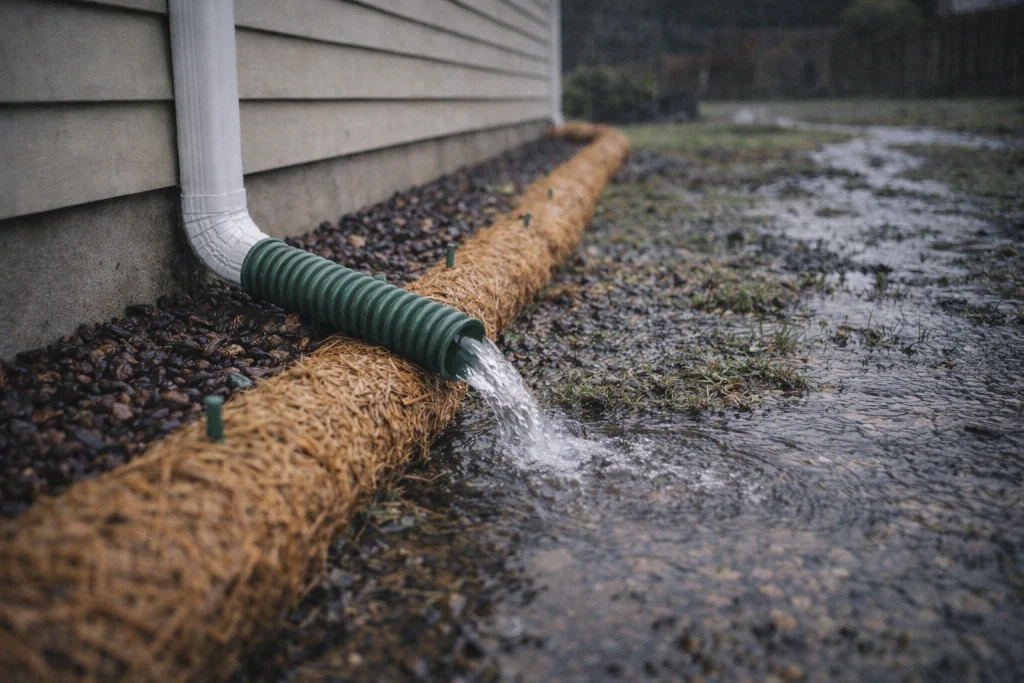
Heavy rainfall has a direct effect on the septic drain field, especially in areas like Santa Cruz County where soil saturation is common during winter. Proper leach field maintenance becomes critical when excess water interferes with normal wastewater absorption.
| Winter Condition | What Happens in the Drain Field | Why It’s a Problem |
| Waterlogged soil | Soil pores fill with rainwater instead of filtering wastewater | Effluent cannot disperse properly, increasing backup risk |
| Heavy surface runoff | Rainwater flows over or into the drain field area | Adds extra moisture and pressure to an already saturated system |
| Driving or parking over the drain field | Soil becomes compacted | Compaction reduces absorption and can damage drain lines |
| Prolonged rainfall | Groundwater levels rise around the drain field | Wastewater may resurface or flow back toward the tank |
When the drain field cannot release wastewater efficiently, the entire septic system is affected. Avoiding added weight, managing runoff, and staying consistent with seasonal care all help protect drain field performance during the rainy months.
Simple Ways to Protect Your Drain Field During the Rainy Season
Consistent leach field maintenance during winter helps prevent long-term septic problems. One of the most effective steps homeowners can take is redirecting roof downspouts and surface runoff away from the drain field, reducing excess water saturation. During the rainy season, it’s also best to avoid landscaping changes such as digging, grading, or adding hardscapes near the field, as disturbed soil drains poorly.
Healthy vegetation supports septic system maintenance, but it should be carefully managed. Shallow-rooted grass is ideal, while deep-rooted trees and shrubs can damage drain lines. Keeping plant growth controlled helps maintain proper soil structure and protects the drain field from unnecessary stress throughout Santa Cruz County’s wet winter months.
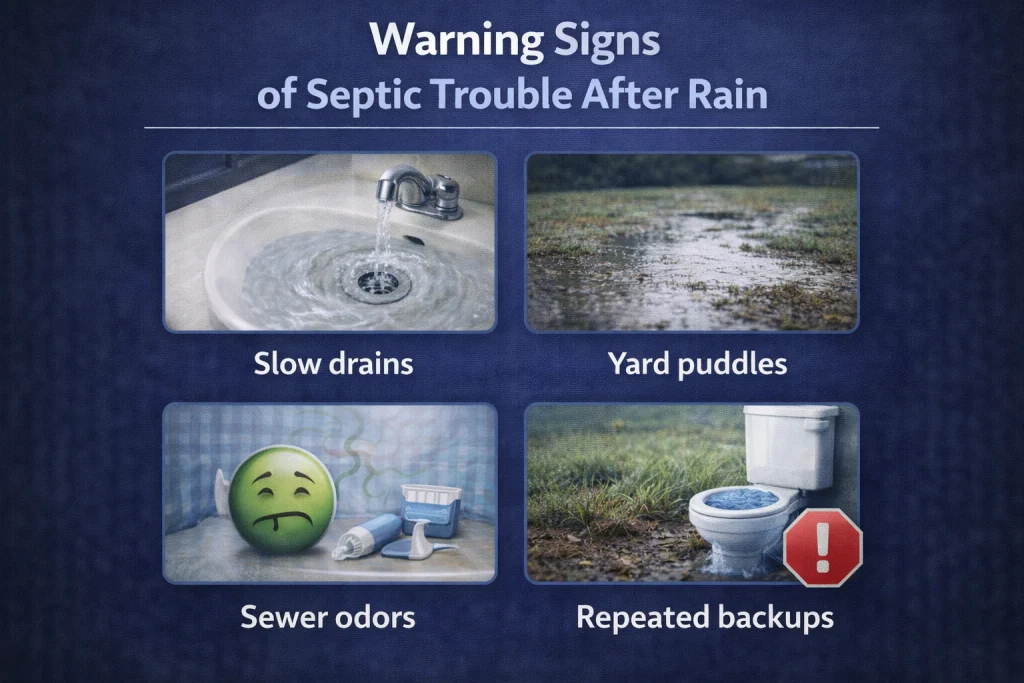
Warning Signs of Winter Septic Problems You Shouldn’t Ignore
During the rainy season, changes in system performance often signal the need for immediate septic system care. Watch for these common warning signs, especially after heavy rainfall:
- Slow drains after rain – Sinks, showers, or toilets draining more slowly than usual may indicate that saturated soil is preventing proper wastewater absorption.
- Pooling water near the drain field – Standing water or soggy patches in the yard can be an early sign of septic system flooding or drain field overload.
- Sewage odors indoors or outdoors – Foul smells coming from drains, bathrooms, or the yard suggest wastewater is not flowing away from the system as it should.
Ignoring these signs can allow small winter issues to turn into major septic failures, so early attention is key to protecting your system.
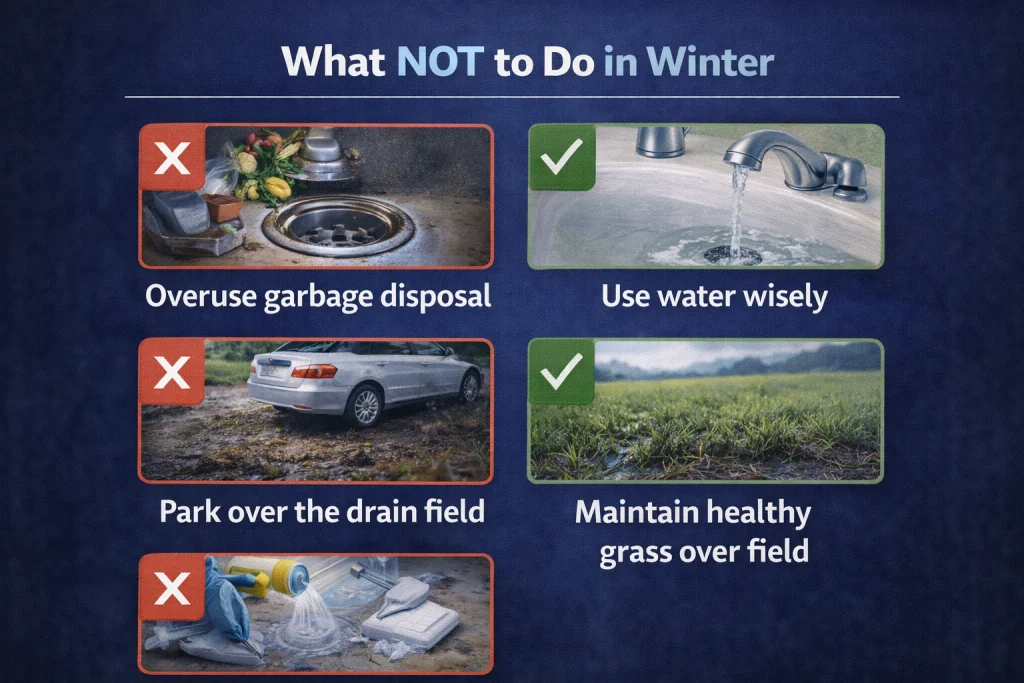
What NOT to Do With Your Septic System During Winter
Winter conditions make septic tank care more sensitive than usual. Avoid these common mistakes to support proper septic system maintenance during the rainy season:
- Overusing garbage disposals – Food waste adds extra solids to the tank, slowing breakdown and increasing the risk of clogs in winter.
- Flushing wipes or harsh chemicals – Even “flushable” wipes and strong cleaners can disrupt bacterial balance and block pipes.
- Parking vehicles over the drain field – The added weight compacts saturated soil and can damage drain lines, reducing absorption.
Steering clear of these habits helps keep your septic system functioning smoothly when wet winter conditions put it under the most strain.
When Winter Maintenance Isn’t Enough and Professional Help Is Needed
Even with careful seasonal habits, some winter issues go beyond routine care. If backups keep recurring after heavy rain, or if soggy areas and odors persist near the drain field, these can be signs of deeper system stress or early drain field failure. In such cases, searching for reliable septic maintenance near me or septic repair near me becomes a practical next step.
An early inspection can identify problems before they escalate into major repairs, often saving homeowners time and money. Having an experienced professional like Anytime Plumbing evaluate the system during winter helps ensure small issues are addressed before Santa Cruz County’s wet conditions cause more serious damage.
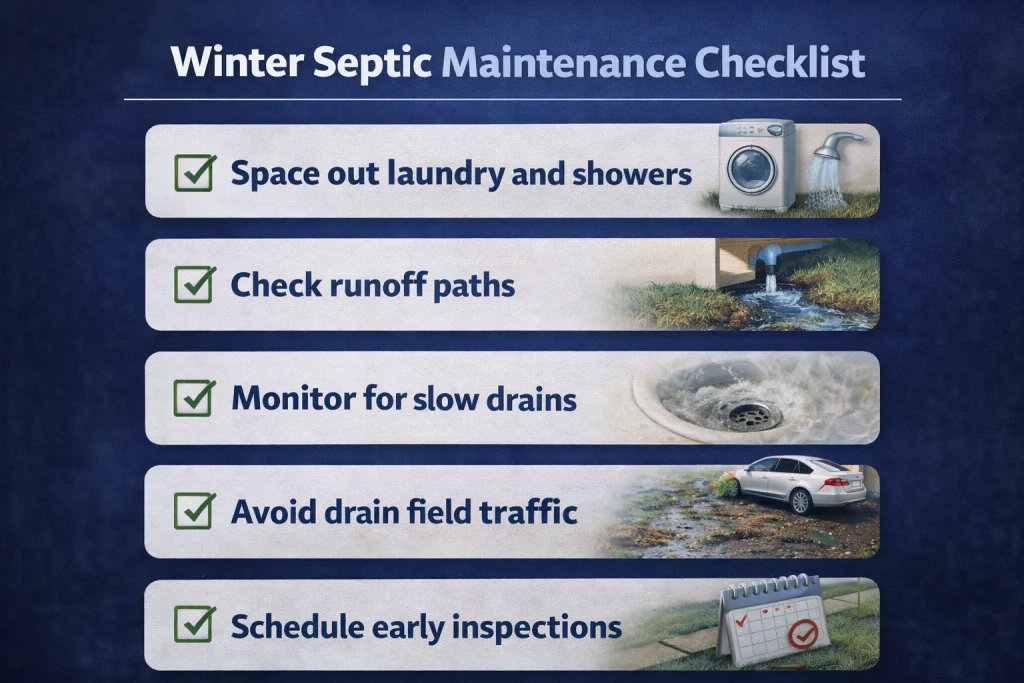
Seasonal Septic Maintenance Checklist for Santa Cruz County Homes
Staying proactive with septic system maintenance during winter helps reduce the risk of backups and long-term damage. Use the checklist below as a simple guide for seasonal septic tank maintenance, especially during Santa Cruz County’s rainy months.
| Maintenance Task | What to Do | Why It Matters in Winter |
| Monitor water usage | Space out laundry, showers, and dishwashing | Reduces strain on the system when soil is saturated |
| Watch drain performance | Pay attention to slow or gurgling drains | Early warning sign of developing septic issues |
| Inspect runoff paths | Check where roof and surface water flows | Prevents excess water from reaching the drain field |
| Schedule inspections early | Plan inspections before peak winter rain | Helps catch problems before they become emergencies |
Following this checklist throughout the rainy season can help keep septic systems functioning efficiently, even during periods of heavy rainfall.
Preventing Winter Septic Emergencies in Coastal California
Winter septic problems in coastal California are often preventable with the right approach. Consistent septic system care, combined with an understanding of how heavy rain and saturated soil affect performance, goes a long way toward avoiding unexpected failures. Simple habits such as managing water usage, protecting the drain field, and responding early to warning signs can significantly reduce stress on the system during the rainy season.
Staying proactive with septic tank upkeep and planning inspections before peak winter storms helps catch small issues before they become costly emergencies. When homeowners need guidance or professional insight, Anytime Plumbing is available to help assess winter risks and keep septic systems operating reliably throughout Santa Cruz County’s wet months.
Frequently Asked Questions
Yes, prolonged rain can saturate the soil around a septic system, preventing wastewater from draining properly. This can lead to slow drains or sewage backups inside the home.
Pumping schedules usually don’t change in winter, but regular inspections are important during the rainy season. Preventive care and water-use management often matter more than pumping alone.
Reducing water usage, redirecting runoff, and keeping the drain field clear are key steps in winter septic system care. Addressing early warning signs helps prevent costly emergency repairs.
Slow drains, damp soil near the drain field, and unpleasant odors around the yard often indicate a septic system needs winter maintenance. Addressing these warning signs early helps prevent backups and keeps the system functioning properly.