

The Santa Cruz Salt Air Threat: How to Protect Outdoor Fixtures and Hose Bibs from Corrosion
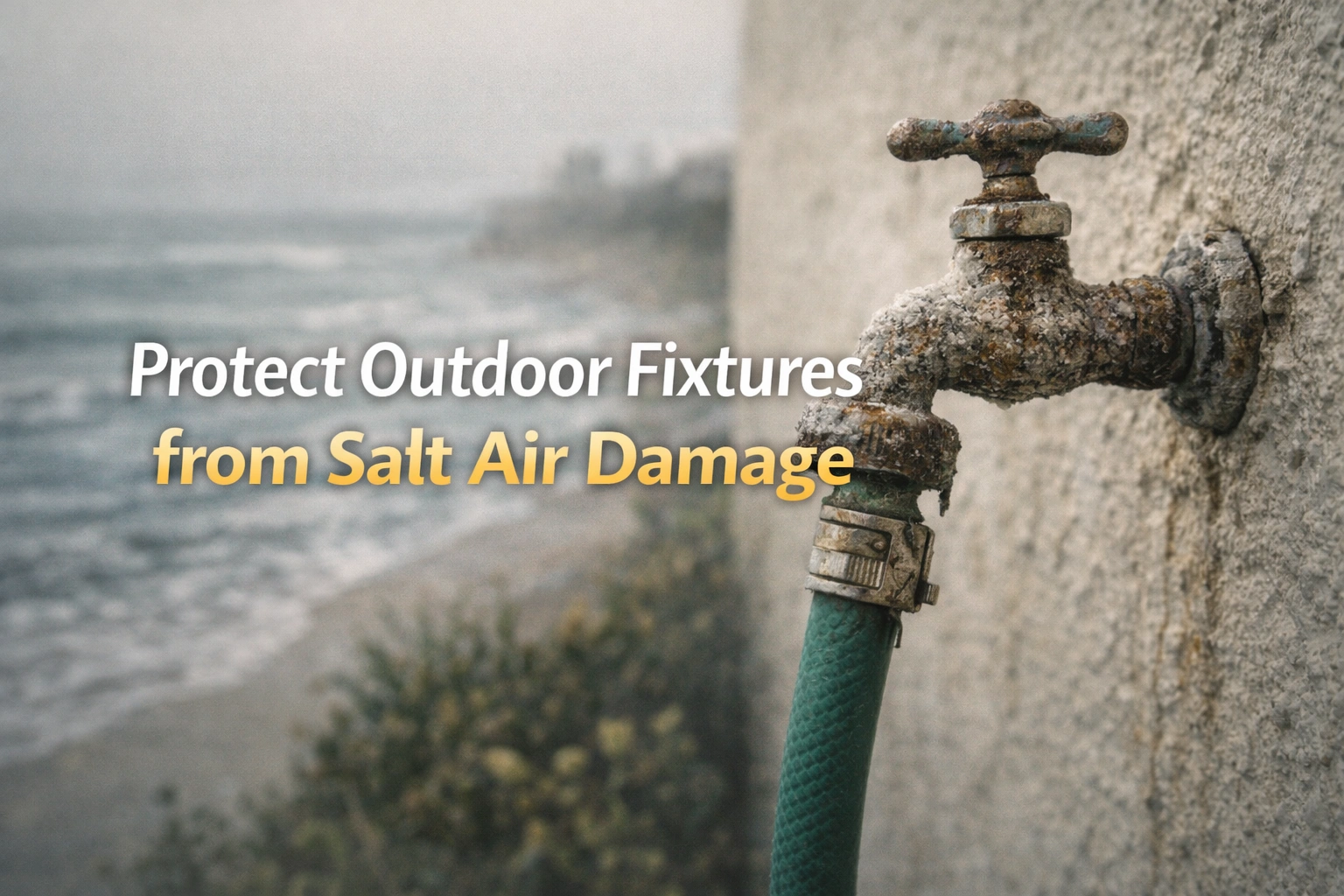
Living near the coast has its perks, but Santa Cruz’s oceanfront environment also brings challenges many homeowners don’t notice until problems appear. The salty marine air that drifts in from the Pacific settles on exterior surfaces every day, quietly accelerating wear on outdoor plumbing components. Over time, this constant exposure can speed up corrosion on metal fixtures, fittings, and valves, especially those installed outside the home.
This is a common issue in coastal corrosion plumbing, where salt particles combine with moisture to break down metals faster than they would in inland areas. Outdoor faucets, hose bibs, and exposed piping are often the first to show damage. In this guide, we’ll cover the early warning signs of corrosion, the risks of ignoring it, and practical ways Santa Cruz homeowners can protect outdoor fixtures and extend the lifespan of their plumbing before costly repairs become necessary.
Why Coastal Homes Are Prone to Plumbing Corrosion
Homes near the ocean are constantly exposed to fine salt particles carried by coastal winds. In Santa Cruz, this salt doesn’t just affect cars or outdoor furniture—it also settles on plumbing components, especially those installed outside or near exterior walls. This ongoing exposure is a major factor behind coastal corrosion plumbing issues in seaside communities.
Salt on its own isn’t always damaging, but when it combines with moisture from fog, marine air, and humidity, it creates an environment that speeds up metal deterioration. This reaction accelerates oxidation, weakening pipes, fittings, and valves over time. As a result, salt air corrosion plumbing problems tend to appear much sooner in coastal homes than in inland properties. Outdoor plumbing components, in particular, face constant exposure, which explains why corrosion-related failures are more common and progress faster along the coast.

How Salt Air Damages Outdoor Plumbing Over Time
Outdoor plumbing in coastal areas is exposed to the elements year-round, making it especially vulnerable to salt air damage outdoor plumbing issues. Fine salt particles carried by ocean breezes settle on exterior pipes, hose bibs, and fittings, forming a thin residue that often goes unnoticed. Unlike indoor plumbing, these components have no protection from constant air exposure.
When salty residue mixes with moisture from coastal fog, morning dew, or the marine layer common in Santa Cruz, it creates ideal conditions for corrosion. Over time, metal surfaces begin to break down, leading to pitting, rust, and weakened connections. Outdoor components corrode first because they remain exposed day and night, particularly during cooler months when fog and humidity linger longer. Seasonal conditions can speed up this process, causing gradual damage that may only become obvious once leaks or performance issues appear.
Common Signs of Hose Bib and Outdoor Faucet Corrosion
Corrosion often starts slowly, but early warning signs can usually be seen or felt long before a major failure occurs. The table below highlights common symptoms of hose bib corrosion and outdoor faucet corrosion, along with what they typically indicate.
| Visible Sign | What It Usually Means | Why It Matters |
| Green or white buildup around the faucet | Mineral deposits and early metal oxidation | Indicates active corrosion that can worsen quickly |
| Rust stains on the fixture or wall | Advanced corrosion affecting metal surfaces | Weakens the faucet body and nearby connections |
| Stiff or hard-to-turn handle | Internal corrosion or mineral buildup | Can lead to handle breakage or valve failure |
| Dripping or leaking at the spout | Corroded seals or valve components | Wastes water and signals internal damage |
| Reduced water pressure | Partial blockage from corrosion buildup | Suggests internal deterioration inside the faucet |
Ignoring these signs can allow corrosion to spread deeper into connected piping, increasing the risk of leaks, water damage, and costly repairs. Addressing outdoor fixture corrosion early helps protect both the faucet and the plumbing system behind it.
Copper Pipe Corrosion Prevention for Coastal Homes
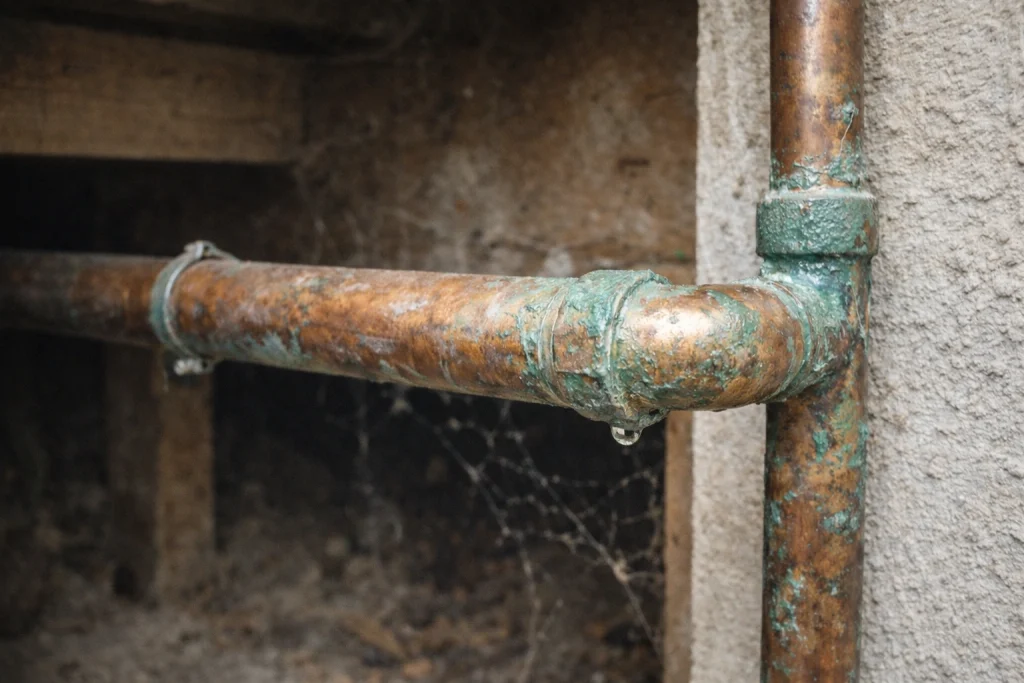
Copper piping is widely used in residential plumbing because it’s durable, long-lasting, and resistant to many common plumbing issues. However, coastal environments introduce conditions that make copper pipe corrosion prevention especially important for homes near the ocean.
- Why copper is common but vulnerable: Copper performs well indoors, but when exposed to salty air and moisture—especially in exterior walls or crawl spaces—it can corrode faster than expected.
- Salt exposure vs. aging pipes: Over time, salt particles settle on exposed copper, while older pipes may already have thinning walls. Together, these factors accelerate corrosion and increase the risk of pinhole leaks.
- Early prevention vs. full replacement: Addressing corrosion early through protective measures and inspections can extend pipe life, while ignored corrosion often leads to partial or full pipe replacement.
- When corrosion becomes structural: Once pitting weakens the pipe wall or causes recurring leaks, the damage is no longer cosmetic and requires professional intervention.
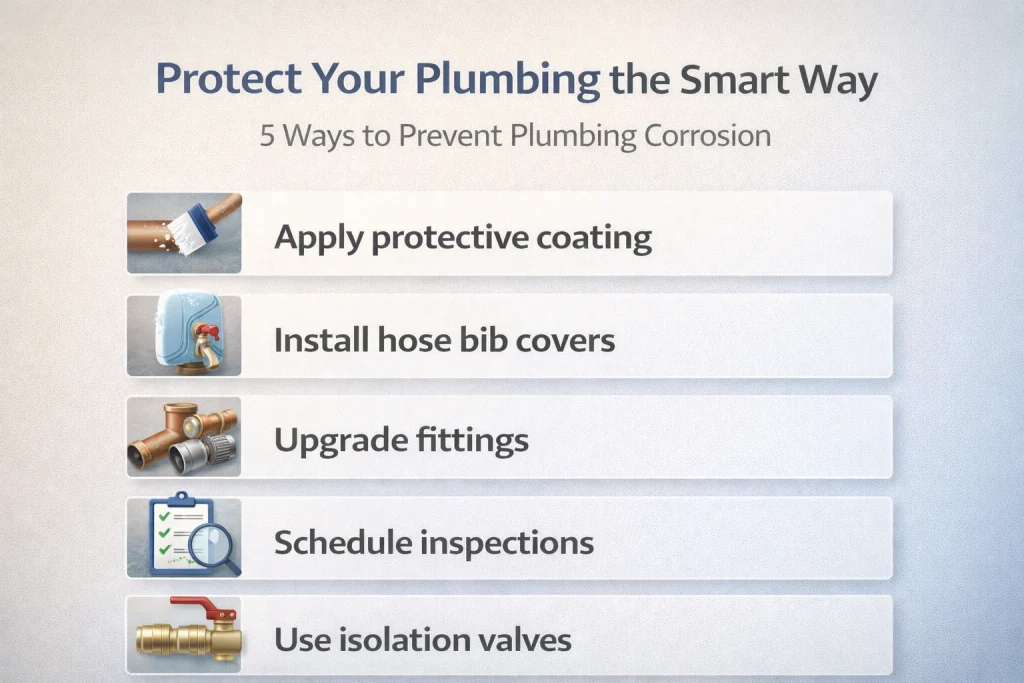
Practical Plumbing Corrosion Prevention Tips
- Apply protective coatings to exposed outdoor pipes and fixtures to reduce direct contact with salty coastal air.
- Schedule regular plumbing inspections to catch early signs of corrosion before leaks or pipe damage occur.
- Upgrade older or exposed fittings with corrosion-resistant options designed for coastal environments.
- Use hose bib covers and isolation valves to limit moisture buildup when outdoor faucets are not in use.
- Choose materials suited for anti corrosion plumbing to improve durability and reduce long-term maintenance needs.
Why Outdoor Fixtures Fail Faster Near the Coast
Outdoor plumbing fixtures face constant exposure to coastal air, unlike interior pipes that are protected inside walls. In Santa Cruz, the combination of salt in the air, frequent moisture, and changing temperatures creates harsh conditions that speed up wear on exterior components. Over time, this repeated exposure weakens metals and seals, which is why proactive maintenance is especially important for coastal homes to prevent premature fixture failure.
When Corrosion Means It’s Time to Call a Professional
While basic prevention can slow corrosion, there comes a point where DIY measures are no longer enough. Corrosion often spreads beyond visible fixtures, causing hidden damage behind walls or inside piping that isn’t easy to detect. Left unaddressed, this can lead to leaks, wasted water, and costly repairs. Coastal plumbing systems require a trained eye to assess how salt air and moisture are affecting the entire setup—not just what’s visible. Working with a local expert like Anytime Plumbing ensures corrosion issues are properly identified and handled using solutions suited for Santa Cruz’s coastal conditions, helping protect your home and plumbing system for the long term.
Frequently Asked Questions
Hose bib corrosion is caused by constant exposure to salty air and moisture, which speeds up metal oxidation on outdoor fixtures. In coastal areas, this exposure happens daily, making hose bibs corrode faster than fixtures in inland homes.
Yes, salt air can damage copper pipes over time, especially when they are exposed in exterior walls or unprotected areas. Proper copper pipe corrosion prevention helps slow this process and reduces the risk of leaks and pipe failure.
Effective plumbing corrosion prevention includes using protective coatings, covering outdoor faucets, and upgrading to corrosion-resistant fixtures. Regular inspections also help catch early signs of damage before corrosion spreads.
Salt carried in coastal air settles on exposed pipes and fixtures, combining with moisture to accelerate metal corrosion. Over time this weakens fittings, causes discoloration, and may lead to leaks if outdoor plumbing is not maintained.