

How Salt Air and Winter Moisture Accelerate Pipe Wear in Santa Cruz
Living along the Santa Cruz coast comes with ocean views and fresh sea air—but it also brings hidden challenges for home plumbing. Salt carried in the coastal air settles on exposed metal year-round, slowly wearing down pipes and fittings over time. During February and other winter months, increased rainfall and lingering moisture create damp crawl spaces, basements, and wall cavities that accelerate moisture pipe corrosion even further.
What makes this especially problematic is how quietly corrosion develops. Many winter plumbing problems start beneath floors or behind walls, showing little warning until a leak, drop in water pressure, or water damage suddenly appears. By the time visible signs show up, repairs are often more costly and disruptive. Understanding how Santa Cruz’s coastal environment and winter moisture affect plumbing—and knowing what early warning signs to watch for—can help homeowners take action sooner, protect their pipes, and avoid expensive emergency repairs.
Why Coastal Salt Air Is Tough on Plumbing Systems
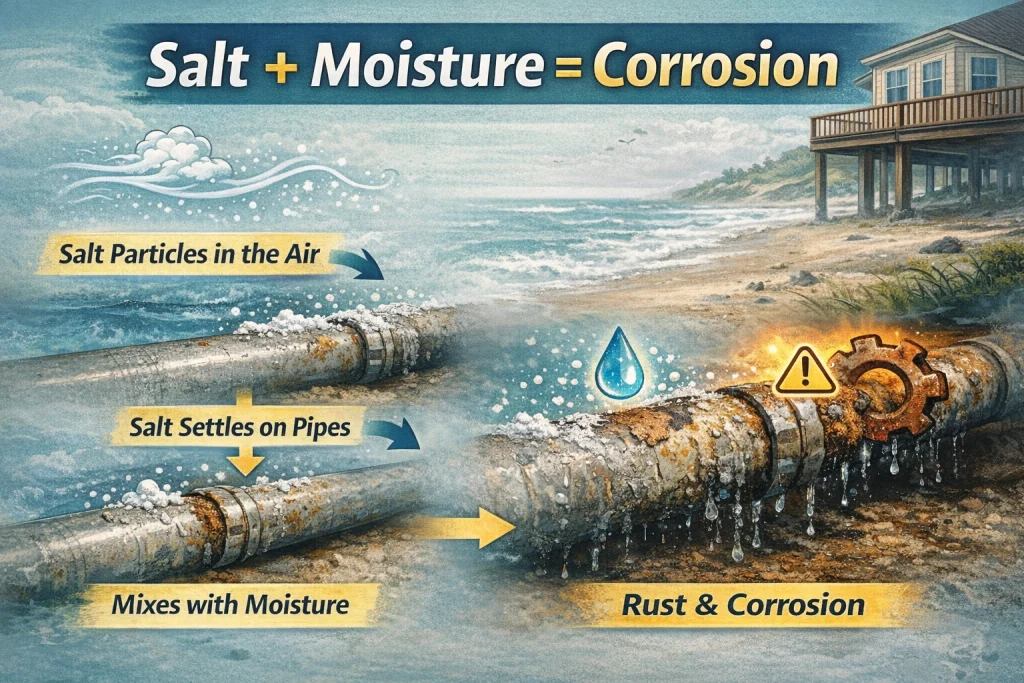
In coastal cities like Santa Cruz, salt particles from the ocean are constantly present in the air—even on clear days. These microscopic salt deposits settle on exposed plumbing materials and metal pipe surfaces, especially in outdoor areas, garages, and crawl spaces. When salt mixes with moisture from fog, rain, or humidity, it creates the perfect environment for coastal plumbing corrosion to begin.
Salt accelerates oxidation, which is the chemical reaction that causes metals like copper and galvanized steel to slowly break down. Pipe joints, fittings, and older connections are particularly vulnerable because they often trap moisture for long periods. Over time, this combination of salt and damp conditions leads to thinning pipe walls, pitting, and weakened connections. This is why moisture pipe corrosion tends to progress faster in coastal homes than in inland areas, even when plumbing systems are the same age.
How Winter Moisture Makes Pipe Corrosion Worse
February is typically one of the wetter months in Santa Cruz, bringing frequent rain, coastal fog, and higher overall humidity. While temperatures remain mild, the constant presence of moisture creates conditions that allow plumbing materials to stay damp for extended periods. This prolonged exposure significantly increases the risk of moisture pipe corrosion, especially in areas where pipes are already exposed or poorly protected.
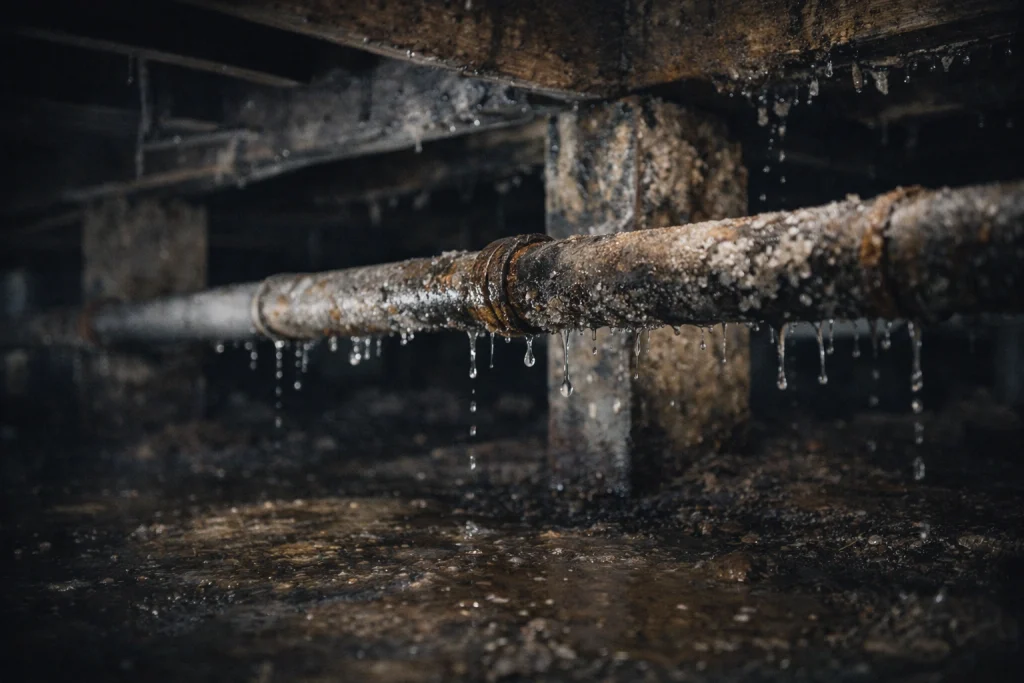
In many older Santa Cruz homes, limited ventilation in crawl spaces, basements, and wall cavities allows moisture to linger even longer. When damp air cannot circulate properly, metal pipes remain wet, speeding up surface breakdown and internal wear. Combined with salt particles from the coastal air, winter moisture intensifies winter plumbing problems by accelerating pipe degradation. Over time, this cycle leads to weakened joints, small leaks, and other winter plumbing issues that often surface long after the rainy season ends.
Common Winter Plumbing Problems in Santa Cruz Homes
During the wetter winter months, Santa Cruz homeowners often notice subtle plumbing changes that point to underlying moisture and corrosion issues. Some of the most common winter plumbing problems include:
- Small leaks appearing after heavy rain, especially under sinks, in crawl spaces, or near exterior walls where moisture builds up
- Reduced water pressure, caused by internal pipe corrosion or mineral buildup that worsens during damp conditions
- Rust-colored or discolored water, often an early sign of aging or corroded metal pipes
- Increased pipe noise during use, such as rattling, tapping, or humming, which can indicate weakened or deteriorating pipe walls
- Musty or sewer odors indoors, particularly in bathrooms or laundry areas, signaling moisture-related plumbing issues
These winter plumbing issues may seem minor at first but often point to deeper pipe wear that worsens if left unaddressed.
Early Warning Signs of Pipe Corrosion Homeowners Shouldn’t Ignore
Pipe corrosion often develops slowly, but there are several early signs that can alert Santa Cruz homeowners to a growing problem before major damage occurs:
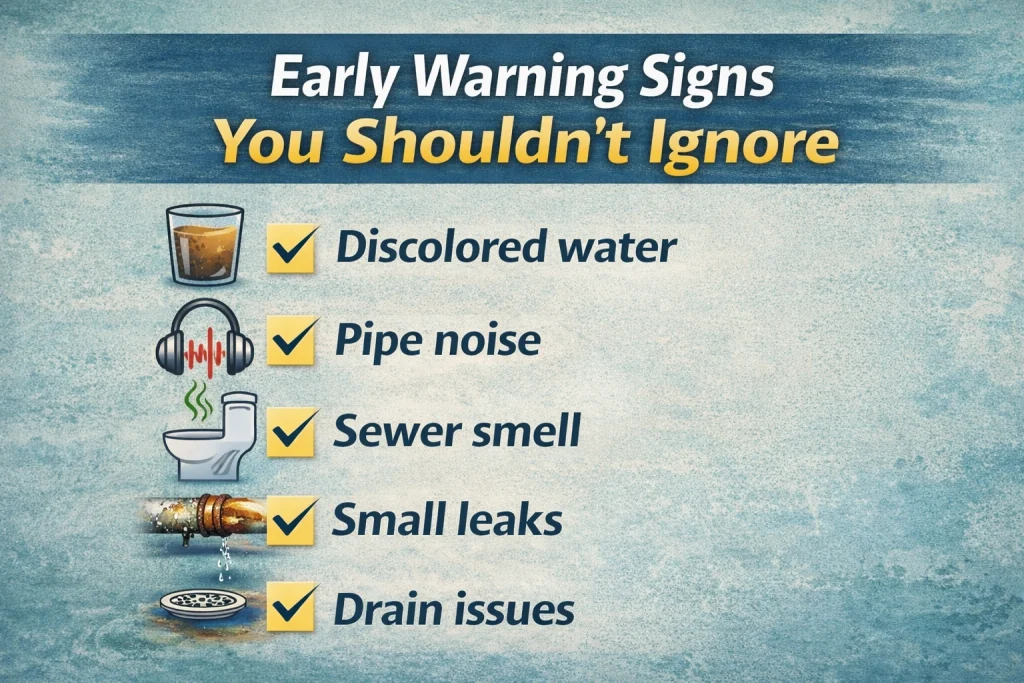
- Pipes making noise in winter, such as banging, rattling, or humming when water is running, which may indicate thinning pipe walls or weakened joints
- Sewer smell in the bathroom in winter, often caused by corrosion-related leaks or compromised pipe connections allowing gases to escape
- Pipes leaking in cold weather, especially during prolonged rainy or damp periods when moisture accelerates existing weaknesses
- Discolored water or stained fixtures, including yellow, brown, or rusty tinting, which can signal internal pipe deterioration
- Frequent drain issues despite no visible clogs, suggesting rough or corroded pipe interiors restricting proper water flow
Recognizing these warning signs early allows homeowners to address corrosion before it leads to burst pipes, hidden leaks, or costly structural repairs.
Areas of the Home Most at Risk in Coastal Winters
In Santa Cruz homes, certain areas are more vulnerable to moisture buildup and corrosion during the winter months due to limited airflow and ongoing exposure to damp conditions:
- Crawl spaces and basements, where rainwater, coastal humidity, and poor ventilation allow moisture to linger around exposed pipes
- Outdoor supply lines and hose bibs, which are directly exposed to salty air, rain, and fluctuating moisture levels year-round
- Under-sink plumbing, especially in kitchens and bathrooms where small leaks or condensation often go unnoticed
- Water heater connections, including inlet and outlet pipes that experience frequent temperature changes and moisture exposure
- Older galvanized or mixed-metal systems, which are more prone to corrosion when different metals interact in damp environments
Paying attention to these high-risk areas can help homeowners catch early pipe wear before it turns into widespread plumbing damage.
Why Early Pipe Inspections Matter in Coastal Areas
Regular pipe inspections are especially important for coastal homes, where corrosion often develops out of sight long before visible damage appears:
- Corrosion starts inside pipes, where salt exposure and moisture gradually weaken metal walls without obvious surface clues
- Basic visual checks often miss early damage, as thinning and pitting usually occur beneath insulation, behind walls, or underground
- Professional inspections can detect internal pipe wear, including corrosion, joint deterioration, and small failures before leaks form
- Early detection helps prevent sudden leaks and water damage, which are common outcomes of untreated winter plumbing problems
- For homes in Santa Cruz, routine inspections play a key role in identifying pipe corrosion Santa Cruz homeowners may otherwise overlook
Catching corrosion early allows for targeted repairs and long-term planning instead of emergency plumbing situations.
What Santa Cruz Homeowners Can Do to Reduce Pipe Wear
While Santa Cruz’s coastal environment can be tough on plumbing, a few proactive steps can significantly slow pipe wear and extend the life of your system:
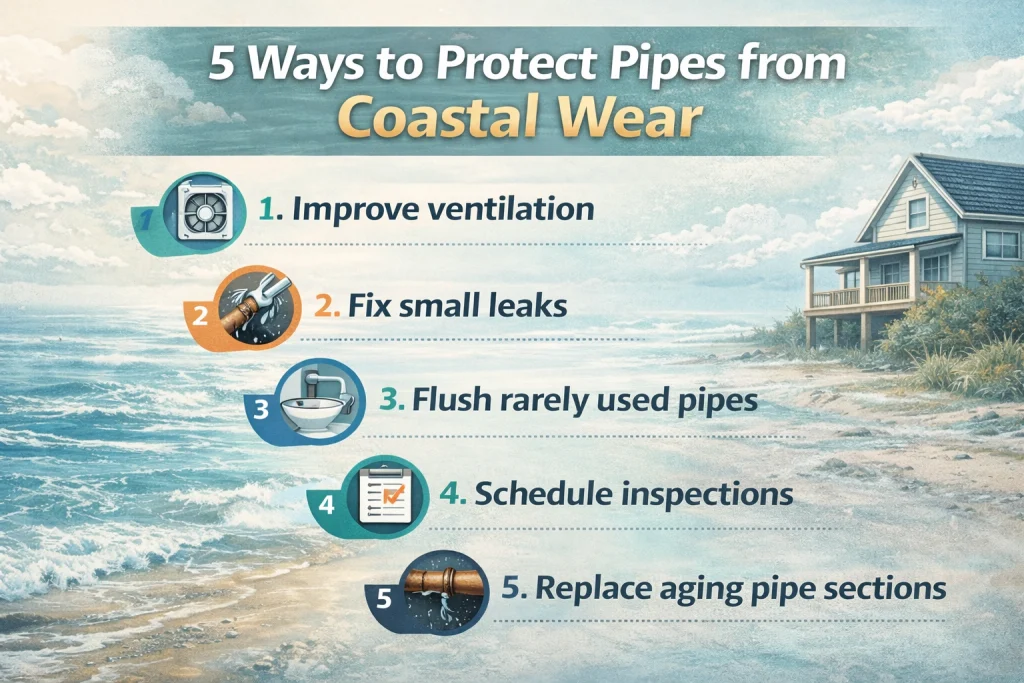
- Improve ventilation in damp areas like crawl spaces, basements, and under-sink cabinets to reduce lingering moisture
- Address minor leaks immediately, even slow drips, to prevent moisture buildup and further corrosion
- Flush rarely used fixtures regularly to prevent stagnant water from sitting inside pipes
- Schedule seasonal plumbing checks, especially after the rainy months, to catch early signs of wear
- Replace aging or visibly corroded pipe sections early to avoid unexpected leaks or larger plumbing failures
These small preventative actions can help homeowners stay ahead of plumbing issues and avoid costly repairs down the road.
Santa Cruz’s coastal location and winter moisture create plumbing challenges that homes in inland areas rarely face. Salt air and persistent damp conditions cause corrosion to develop slowly, often out of sight, until leaks or damage suddenly appear. Left unchecked, this gradual wear can lead to costly repairs and unexpected emergencies. Taking early action—such as monitoring warning signs and scheduling timely inspections—can make a significant difference. If you suspect hidden pipe wear or want peace of mind after the rainy season, a professional inspection or leak detection service from Anytime Plumbing can help identify issues early and protect your home.
Frequently Asked Questions
Yes. Salt particles in coastal air can enter crawl spaces, garages, and wall cavities, where they settle on metal pipes and accelerate corrosion when combined with moisture.
Winter brings increased rain and humidity, which keeps pipes damp for longer periods and speeds up corrosion. Many issues only become noticeable after moisture has weakened pipes over time.
It’s best to schedule an inspection if your home is older, has exposed pipes, or shows warning signs like leaks, pipe noise, or discolored water. A seasonal inspection after the rainy months can help catch problems early before they turn into costly repairs.
Coastal environments expose plumbing materials to constant moisture and salt in the air. Over time this can speed up corrosion, especially in metal pipes and outdoor plumbing components. Regular inspections and protective coatings help extend the lifespan of plumbing systems in coastal homes.