

Why Water Heating Accounts for 18% of Your Energy Bill—and How to Reduce It
Hot water typically eats ~18% of a home’s energy. Drivers: long showers, standby loss, and tired, low-efficiency tanks. Cut bills fast with a 120°F setpoint, pipe insulation, WaterSense fixtures, and the right upgrade—heat pump or high-efficiency tankless. Anytime Plumbing serves Santa Cruz, Watsonville, Aptos, Scotts Valley, Capitola, and Soquel.
Why 18%? Where the Energy Goes
Most homes see hot water touch nearly every routine—showers, laundry, dishwashing, and hand-washing—so the gallons add up quickly. But a big slice of the 18% comes from what you don’t see: standby loss as storage tanks reheat water that cools between uses, heat lost through long, uninsulated pipe runs, and recirculation loops that run too often. In Santa Cruz, relatively cool inlet water means your heater must lift temperatures farther, especially on foggy mornings, so each minute of hot-water use costs more. Habits matter, too: long showers, half-loads, and high setpoints amplify demand. Equipment efficiency finishes the picture. Look for UEF (Uniform Energy Factor)—today’s standard measure of how much hot water a unit delivers per unit of energy; higher UEF = lower operating cost. Older EF ratings are similar but less precise. Inefficient tanks and poor distribution waste energy even when no one’s in the shower—quietly inflating your bill.
Santa Cruz Context: Climate, Water, Homes
Santa Cruz’s coastal climate keeps inlet water cool year-round, so your heater must lift temperatures farther—especially on foggy mornings—making each minute of hot-water use more energy-intensive. Add the region’s drought-minded habits and rising utility costs, and inefficiencies show up fast. Many homes still run older, atmospheric-vented tanks with thin insulation, long pipe runs, and always-on recirculation loops that bleed heat even when taps are off. That’s a retrofit opportunity: right-size capacity, insulate hot lines, add demand-controlled recirc, and upgrade to a heat pump water heater or high-efficiency condensing tankless. The result is lower energy use without sacrificing comfort.
Quick Self-Audit
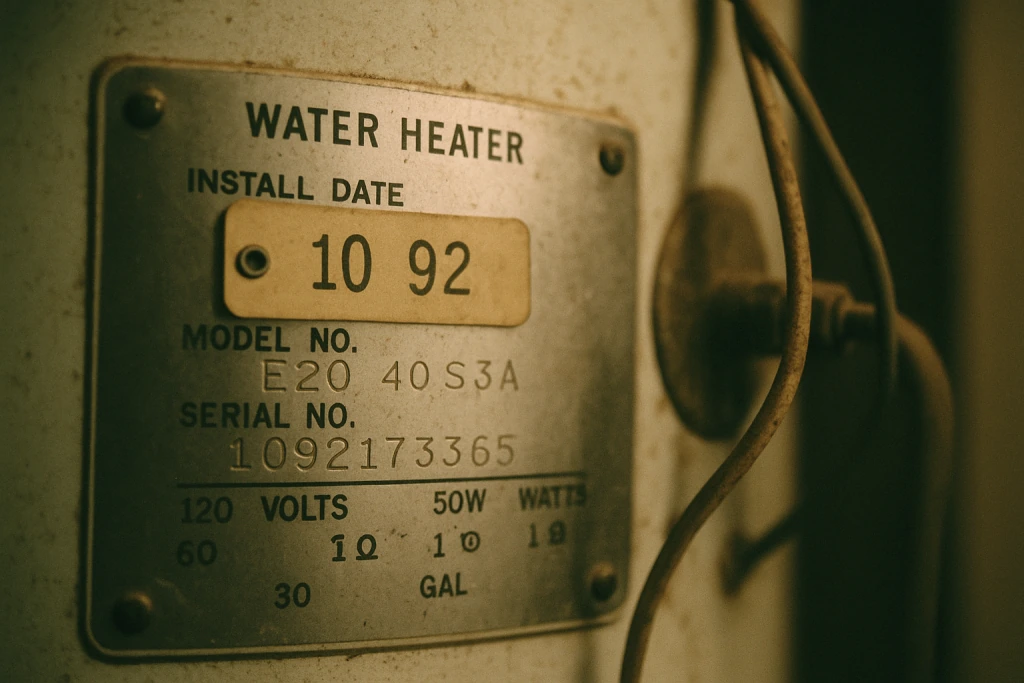
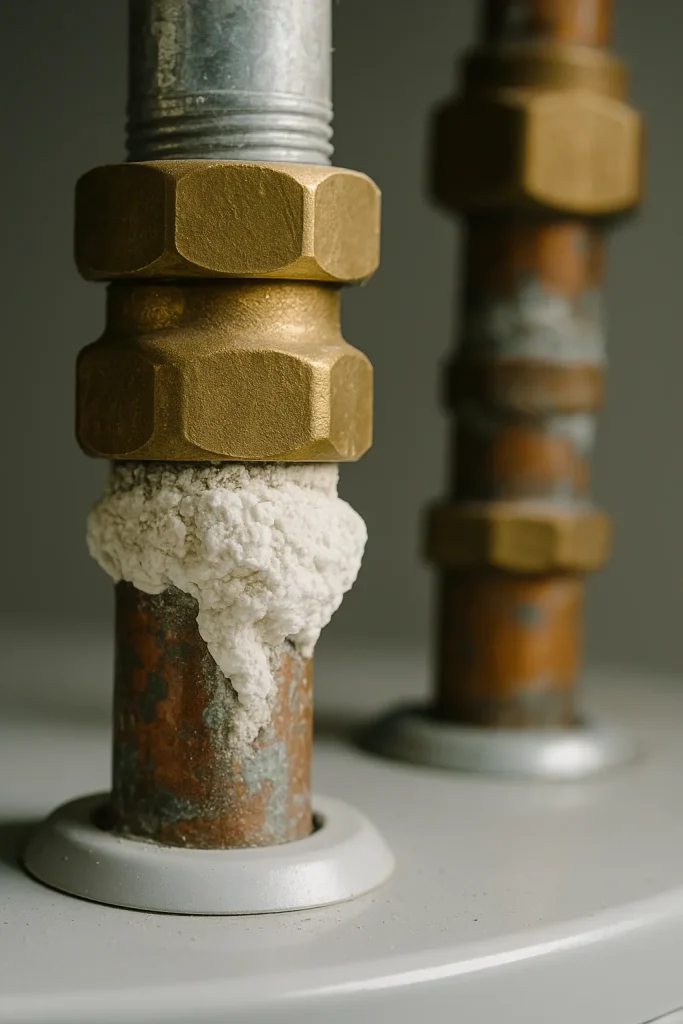
Start at the data plate: note install year (or decode the serial), tank size or tankless GPM, and fuel type (gas/electric). Check the efficiency rating—UEF on newer units (higher is better), EF on older—and compare with today’s high-UEF models. Set the thermostat near 120°F; if you need hotter delivery, add a thermostatic mixing valve for safety. Observe performance: long waits at taps, temperature swings, rumbling/kettling, rusty water, or white scale at fittings all signal waste and wear. Finally, check for a recirculation loop—is it on a timer or demand control, or running 24/7? Log these findings to prioritize fixes and upgrades.
Option A — Heat Pump Water Heaters (HPWH)
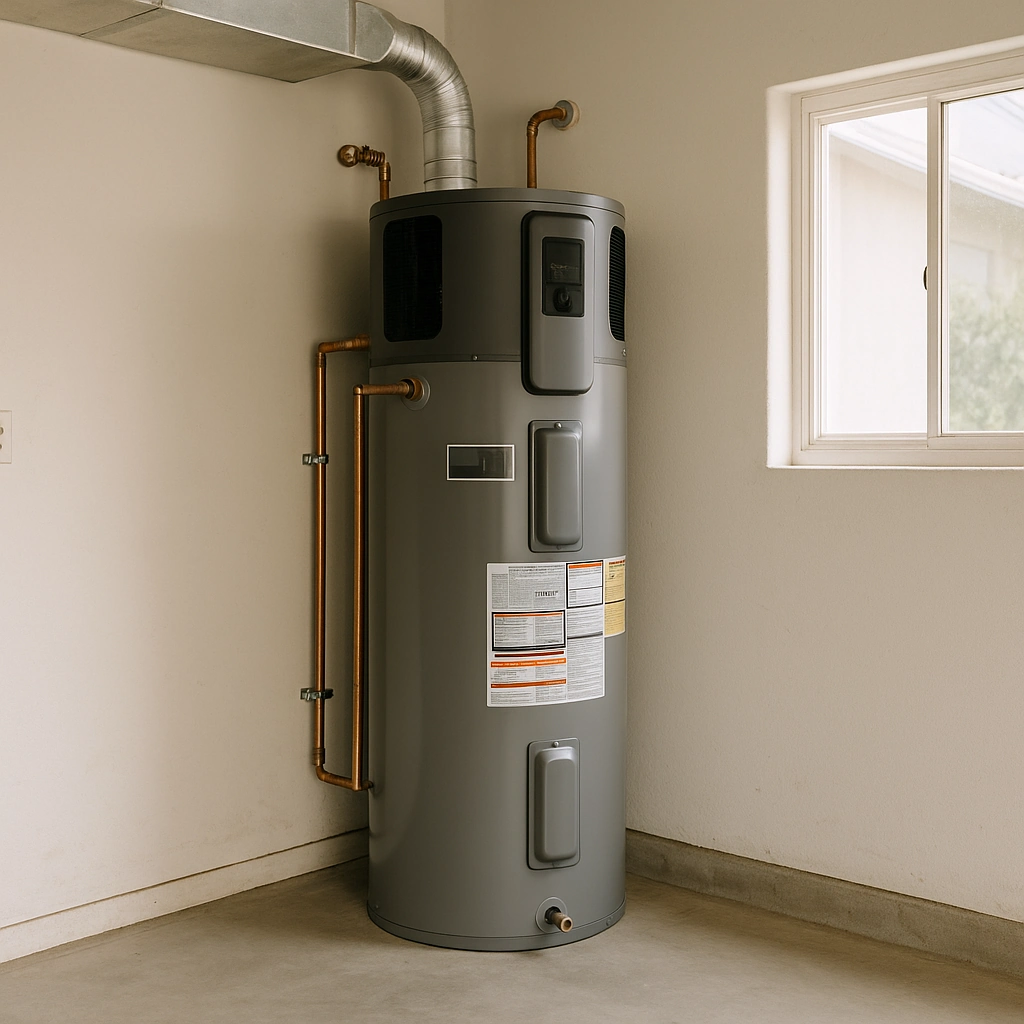
HPWHs move heat from the surrounding air into the tank using a small compressor—an air-to-water heat pump with a typical COP > 2, so they deliver two or more units of hot-water heat per unit of electricity. Compared with standard electric tanks, that usually means big bill cuts and a grid-friendly load that pairs well with solar. Plan the install: you’ll need adequate room volume and airflow, a condensate drain (or pump), and sometimes ducting to route cool exhaust air. Units make a gentle fan/compressor sound; garages and basements around Santa Cruz are ideal because the mild climate helps performance. Newer 120V “plug-in” models ease electrical upgrades; 240V units reheat faster. Add a thermostatic mixing valve for comfort/safety and keep the intake filter clean. Anytime Plumbing can assess space, electrical, and condensate routing in one visit.
Option B — High-Efficiency Gas Tankless
Modern condensing tankless heaters reach high UEF by extracting extra heat from exhaust, and because there’s no standby tank, you avoid idle losses. The key is right-sizing: match GPM output to your simultaneous fixtures and your temperature rise (incoming water → 120°F delivery). In Santa Cruz homes, pairing tankless with on-demand recirculation gives fast hot water without the 24/7 heat bleed of always-on loops. Expect stainless venting, condensate neutralization, and gas line checks during install. Hard-water areas benefit from a descale every 6–18 months (and a simple pre-filter) to protect the heat exchanger. Result: compact equipment, effectively endless hot water, and lower fuel use when sized and maintained correctly.
Option C — Efficient Storage Tanks
If you prefer a familiar format and lower upfront cost, today’s high-insulation storage tanks with better UEF are a solid upgrade over aging models. Combine with a thermostatic mixing valve for stable, safe delivery and consider slightly hotter storage only if code and scald protection are addressed. Boost performance with insulated hot lines, a smart control or timer on any recirculation loop, and a 120°F setpoint for everyday use. This path keeps install complexity down while trimming energy waste—ideal for quick, code-compliant replacements by Anytime Plumbing.
Water-Saving Fixtures & Habits
Swap to 2.0 GPM showerheads and add efficient faucet aerators to cut flow without hurting comfort. Fix drips promptly—every constant leak wastes hot water and energy. Hot-water efficiency upgrades are especially valuable in high-occupancy areas like UCSC Area and High Street, where older water heaters and heavy daily use can drive energy costs up quickly. Run laundry on cold when possible, and use dishwasher eco cycles with full loads instead of hand-washing under a running tap. Trim shower length, and stagger hot-water tasks (showers, laundry, dishes) so your heater isn’t chasing peaks. Set the water heater near 120°F and log a month of usage changes to see the savings.
Distribution & Controls: Faster Hot, Less Waste
Insulate all exposed hot lines (including any recirculation return) to keep heat in the water, not the walls. Where feasible, shorten long runs during remodels to speed delivery. Replace always-on loops with demand-controlled recirculation (push-button, motion sensor, or smart control) so the pump runs only when you need hot water. Add a thermostatic mixing valve for steady, safe outlet temps and anti-scald protection. If you keep a timer, align it to real usage windows. Combine these with a 120°F setpoint and you’ll get faster hot water, lower standby losses, and better comfort.
Sizing Cheat-Sheet for Local Homes
- 1–2 bath: 40–50 gal tank or 6–7+ GPM tankless (typical layouts).
- 3–4 bath: 65–80 gal tank, larger UEF option, or higher-GPM tankless / dual HPWH.
- High-flow fixtures (rain showers, body sprays) may require larger capacity or staged systems.
Santa Cruz’s cooler inlet water means a higher temperature rise; always right-size by simultaneous fixtures + GPM and verify gas/electrical capacity. Anytime Plumbing can size on site and propose the most efficient path.
Costs, Payback & When to Switch
Judge upgrades by total cost of ownership—energy use, maintenance, lifespan, and avoided water waste—not sticker price alone. Rising bills, rust-colored water, leaks, frequent pilot/outage issues, or a tank 10+ years old are clear switch signals. Payback depends on your usage, fuel rates, and run-time patterns; high-efficiency storage, HPWH, or condensing tankless often win over time. Verify any current rebates/incentives and utility program rules before you buy. Anytime Plumbing can model options side-by-side so you see operating cost, maintenance cadence, and likely savings for your Santa Cruz home.
Code, Safety & Placement Essentials
Ensure seismic strapping, a drain pan with proper drain, and correct TPR discharge. Gas units need compliant combustion air/venting and condensate neutralizers for condensing models. HPWH installs require adequate electrical capacity and condensate routing. Respect clearances, garage/outdoor placement rules, and ignition-source elevation where required. We install to code and pass inspection the first time.
Maintenance Calendar
Annually: flush storage tanks, test TPR, check expansion tank and mixing valve. Every 6–18 months (water-hardness dependent): descale tankless and clean inlet screens. Quarterly to semiannual: clean HPWH air filter and inspect condensate drains. Seasonally: verify recirculation timers/controls, look for leaks, and re-insulate any exposed hot lines.
DIY vs. Pro
DIY wins: insulate hot-water pipes, install 2.0 GPM showerheads/aerators, set the heater to ~120°F, and program/adjust recirculation timers. Call a pro for new installs, venting/electrical or gas sizing, condensate/neutralizer routing, demand-controlled recirc retrofits, mixing valves, seismic strapping, and permits/inspection—code-compliant performance and warranty protection.
Book a Water-Heater Efficiency Upgrade
Cutting hot-water energy doesn’t mean sacrificing comfort—just smarter equipment, better controls, and a few habit tweaks. If your current heater is aging or inefficient, Anytime Plumbing can right-size and install a heat pump, condensing tankless, or high-UEF tank to code for lasting savings. Serving Santa Cruz, Watsonville, Aptos, Scotts Valley, Capitola, and Soquel. Book a quick audit for options and an upfront quote today.
Frequently Asked Questions
Insulating a water heater with a blanket and installing foam pipe insulation is a relatively low-cost DIY upgrade that reduces heat loss. While actual prices vary by tank size and local materials costs, the energy saved from reduced heat loss typically recoups the cost over time and helps lower monthly energy bills.
Many homeowners lower the water heater to about 120 degrees Fahrenheit. This level still provides comfortable hot water while reducing energy use, limiting overheating, and helping slow mineral buildup inside the tank.