

Coastal Plumbing Codes in Santa Cruz: What Property Owners Should Know
Living on the coast is hard on plumbing: salt air, sea spray, high winds, and seismic activity all speed up corrosion and stress venting, gas lines, and fixtures—plus bluff stability and shallow groundwater can complicate drainage. Falling out of step with local codes can mean fines, failed inspections, insurance headaches, hidden leaks, and premature pipe or water-heater failure. This guide distills Santa Cruz coastal plumbing requirements, gives you a simple owner checklist, and flags the moments when calling a licensed pro is the safest move. You’ll learn what matters most for materials, permits, backflow, sewer laterals, stormwater separation, water efficiency, and seismic strapping. Anytime Plumbing serves homeowners across Santa Cruz, Capitola, Soquel, Aptos, Scotts Valley, and Watsonville—so you can keep your system compliant, efficient, and ready for the coast.
Coastal Areas Where These Rules Matter Most
Coastal plumbing codes and best practices apply across Santa Cruz County, but they’re especially important in neighborhoods where salt air, wind exposure, older infrastructure, and high seasonal water use can accelerate wear and trigger inspection issues. If your property is near the shoreline, these areas are common examples where homeowners and landlords benefit from staying proactive about materials, permits, backflow protection, sewer laterals, and stormwater separation.
- Santa Cruz coastal neighborhoods like Natural Bridges area and West Side often face faster corrosion and exterior plumbing wear due to ocean air and constant coastal winds.
- The Seabright coastline, including Seabright and the Harbor/Seabright Harbor area, frequently sees higher demand from rentals and visitor seasons, making code-compliant repairs and maintenance especially important.
- Aptos-area coastlines such as Seacliff and Rio Del Mar combine coastal exposure with a mix of housing types, so choosing approved materials and keeping stormwater and sewer systems properly separated can prevent costly long-term issues.
Who Regulates What in Santa Cruz
Santa Cruz plumbing work is governed at two levels. At the state level, the California Plumbing Code (CPC) sets installation, venting, material, and safety standards, while CalGreen establishes water-efficiency requirements for new construction and remodels. Locally, City or County Building & Safety issues permits and performs inspections; your local water district manages backflow prevention—approved devices, installation criteria, and annual testing; Environmental Health oversees septic systems and wells; and stormwater programs enforce rules that keep roof/foundation drains out of the sanitary sewer. Because addresses in Capitola, Soquel, Aptos, Scotts Valley, Watsonville, and unincorporated areas can fall under different authorities, verify whether your property is inside city limits or in unincorporated County before planning scope, pulling permits, or scheduling inspections. Anytime Plumbing can help confirm jurisdiction and next steps.
Permits & Inspections: When You Need Them
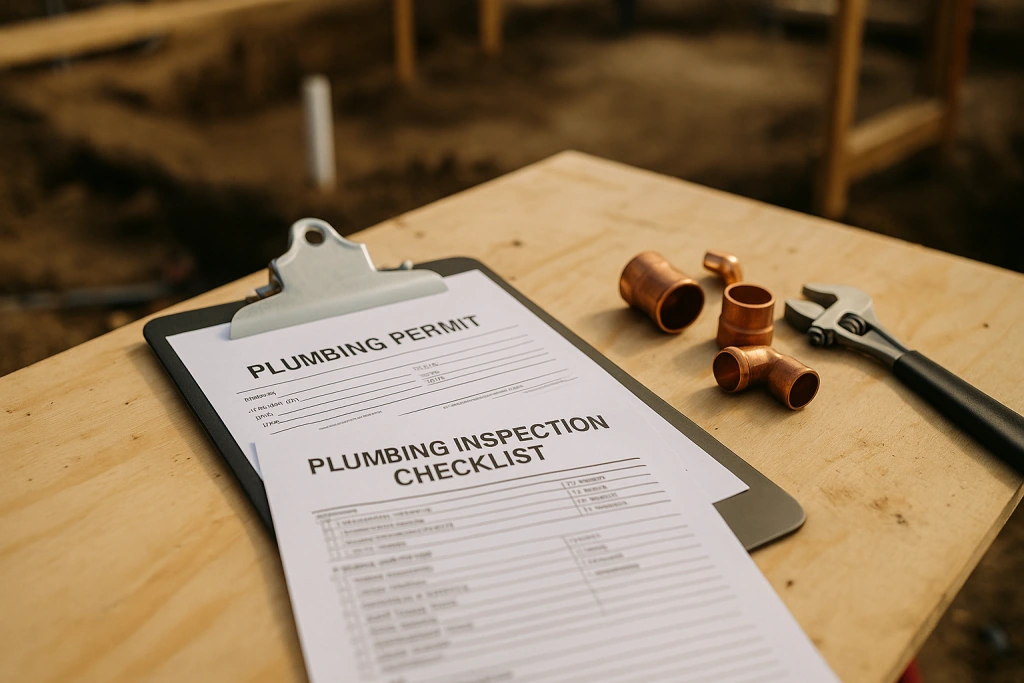
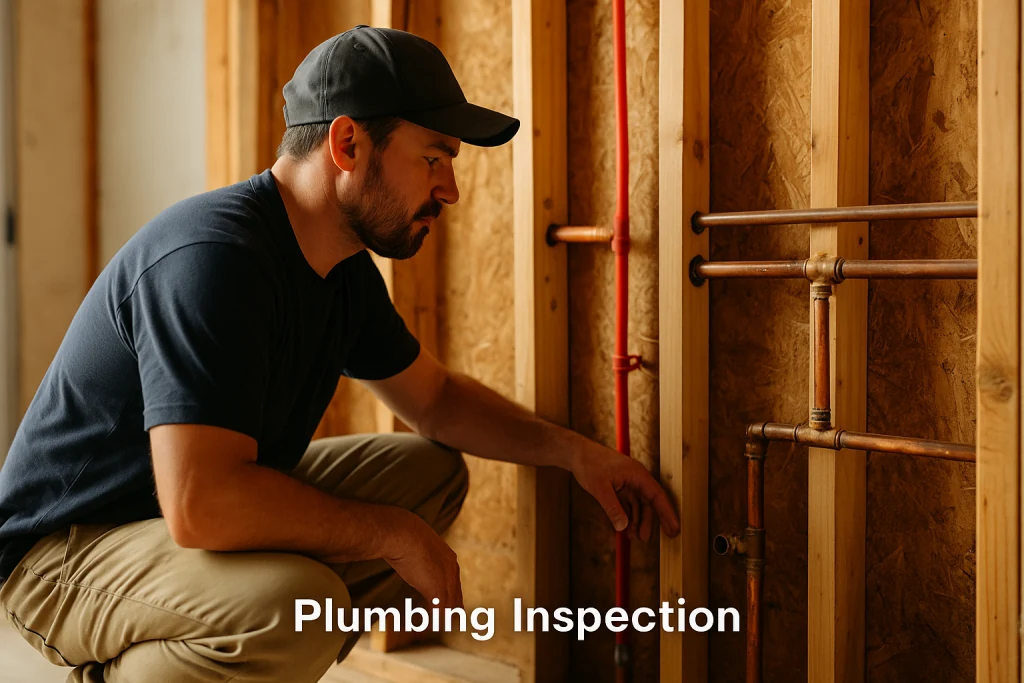
Most coastal plumbing work needs a permit: water heater replacements (gas or electric), full or partial re-pipes, bath/kitchen remodels that move or add fixtures, installing backflow devices, and any sewer lateral repair or replacement. Inspectors typically verify approved, corrosion-resistant materials; correct venting and combustion air; required clearances and seismic strapping; labeled shutoffs; accessible cleanouts; pressure/leak tests; and backflow or CCTV results when applicable. Quick path to compliance:
- Define scope and photograph existing conditions
- Verify jurisdiction (city vs county) and pull the correct permit
- Schedule the rough-in inspection before walls/ceilings are closed
- Complete work and pass the final sign-off
- File permits, test tags, and warranties in an owner binder
Anytime Plumbing can handle permitting and inspection coordination.
Coastal Corrosion: Approved Materials & Best Practices
Coastal air accelerates galvanic corrosion, so material choice matters. For supply lines, use Type L copper (not M) or PEX/CPVC where allowed; for exterior clamps, vents, fasteners, and straps, specify 304/316 stainless. Choose marine-grade brass/bronze fittings rated for coastal exposure. Break dissimilar-metal paths with dielectric unions, and protect threads/unions with anti-corrosion wraps. Insulate exposed piping with UV-resistant foam and jackets, and mount lines on stainless or coated hangers with isolators to avoid metal-to-metal contact. Maintenance near the coast should be proactive: visually inspect exterior piping and hose bibbs quarterly, flush water heaters annually, check/replace anode rods more frequently, and renew tapes/coatings when they chalk or crack. Anytime Plumbing can recommend a material spec tailored to Santa Cruz conditions.
Backflow Prevention & Cross-Connection Control
Backflow protection is typically required for irrigation systems, multi-unit or commercial properties, pools/boilers, and homes with auxiliary sources (wells, rainwater, graywater). Common device types: RP (Reduced Pressure) for higher hazard uses, DC (Double Check) for low hazard, and PVB/SVB for irrigation—each must be installed correctly and tested annually by a certified tester. Keep a test tag, device serial, and district paperwork in your records. Place assemblies near the service connection, above grade with proper clearances; provide drainage for RP relief discharge and protect from flooding, salt spray, and occasional freezes (insulated enclosures help). Use bronze/316 hardware and avoid sprinkler overspray onto devices. Anytime Plumbing installs, tests, and maintains assemblies—and handles the annual certification and reporting.
Sewer Laterals: Inspections, Repairs & Point-of-Sale Checks
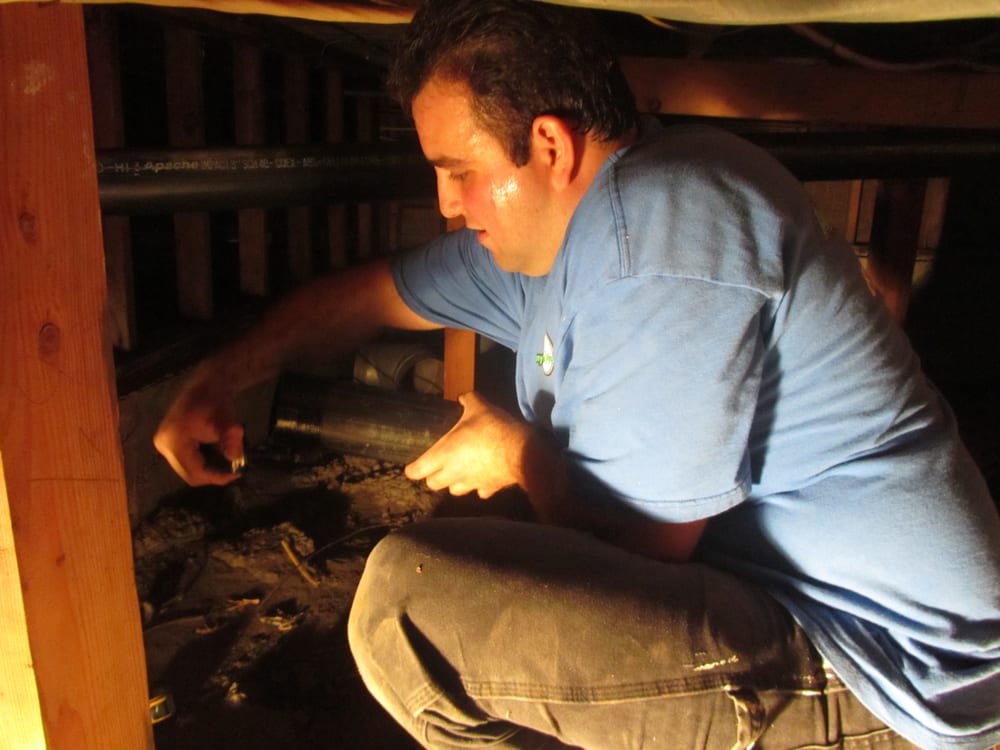
Homeowners own and must maintain the private sewer lateral from the building to the public main. In coastal Santa Cruz, common failures include root intrusion at joints, infiltration/exfiltration through cracked clay or cast-iron, settled pipes, and corrosion near salt air. A typical path to compliance is: start with a CCTV inspection to document condition; then locate defects (offsets, cracks, sags); finally choose targeted spot repair or trenchless rehabilitation (CIPP or pipe bursting) to restore flow and reduce groundwater inflow. Some cities and districts require inspection and/or certification at real-estate sale or during remodels, so confirm your jurisdiction’s rules before listing or pulling permits. Anytime Plumbing can scope, record, and propose the least disruptive fix—and coordinate any needed sign-offs.
Stormwater vs Sanitary: No Illegal Connections
Santa Cruz strictly separates stormwater from the sanitary sewer. Do not tie roof leaders, yard drains, or foundation drains into the sanitary line; sump pumps also may not discharge to sanitary without explicit approval. Pouring grease, paint, slurry, or sediment into sinks or floor drains is a violation that can lead to blockages and fines. Basic coastal BMPs: direct downspouts to approved outlets; keep cleanouts accessible; install and maintain inlet filters where needed; consider a backwater valve for low fixtures; and schedule routine line maintenance, especially after storms. Anytime Plumbing can audit connections and set up a simple maintenance plan.
Water Efficiency (CalGreen) in Santa Cruz Homes
CalGreen sets baseline fixture rates for new work and qualifying remodels: toilets 1.28 gpf, showers 1.8 gpm, and lavatory faucets ≤1.2 gpm. When you upgrade bathrooms or kitchens, expect to document compliant fixtures and, where applicable, thermostatic mixing valves and pressure settings. Quick wins that save water (and meet code): swap to HET/WaterSense toilets and faucets, add aerators, install smart irrigation with weather or rain shutoff, use leak-detection auto-shutoff valves, and set a pressure-regulating valve to about 60–70 psi to reduce fixture wear. Keep receipts and spec sheets for inspections. Anytime Plumbing can recommend compliant products and provide the paperwork your inspector will want.
Graywater & Rainwater Reuse (What’s Allowed)
Laundry-to-landscape systems route washer discharge to mulch basins by gravity; keep required setbacks from structures, property lines, and waterways, and prevent any surface pooling or spray. Simple, no-permit systems are limited in flow and layout; larger, pumped, or branched systems usually need permits, non-potable labeling, and routine maintenance. Use lint filters and cleanouts, refresh mulch, and check for odors or surfacing. For rainwater, add roof-wash pre-filtration before tanks, screen for mosquitoes, and use non-potable lines only for allowed irrigation or toilet flush where permitted. Never interconnect with the potable supply. Anytime Plumbing can size and document compliant systems.
Seismic Safety: Water Heater Strapping & More
California requires water heaters to be seismically strapped with two metal straps—one in the upper third and one in the lower third—anchored to studs or approved blocking. Consider an automatic seismic gas shutoff valve for gas service; some jurisdictions require it with major alterations or at sale. Maintain clearances for combustion air and venting, install a corrosion-resistant drain pan with proper drainage over finished spaces, and route the T&P relief discharge to an approved termination. Verify expansion tank sizing and brace adjacent piping where needed. Anytime Plumbing installs to code and prepares you for inspection.
Septic & Wells in Unincorporated Coastal Areas
Outside city utilities, Environmental Health regulates septic and wells. Observe setbacks from waterways, wells, and coastal bluffs; protect leach fields from traffic and saturation. Pump tanks routinely, clean effluent filters, and watch for slow drains, surfacing effluent, or wet spots downhill—warning signs of failure. Many repairs and all replacements require permits, soils review, and in sensitive areas an engineered design. Well service may include disinfection, casing repair, and bacteriological testing after work. Anytime Plumbing coordinates inspections with licensed partners and helps plan compliant repairs.
ADUs & Coastal Development Considerations
Adding an ADU near the coast can trigger extra reviews. Properties within the Coastal Zone may need coastal review in addition to standard building permits, and utility tie-ins can require separate metering, pressure/flow verification, and backflow assemblies where risk warrants. Plan early: verify jurisdiction and whether a coastal overlay applies; run pressure and flow checks with the water district; confirm sewer lateral capacity/condition (ADUs often prompt upgrades); and map stormwater so drains never enter the sanitary line. Allow time for inspections and choose corrosion-resistant materials suited to salt air. Anytime Plumbing can coordinate pre-application questions and right-size your ADU utility plan.
Compliance Roadmap: Step-by-Step Checklist
- Confirm site & jurisdiction: City vs County, Coastal Zone overlay, flood/bluff constraints
- Define scope: What work triggers permits, CPC/CalGreen, and inspections
- Pre-permit consult: Address corrosion, backflow needs, sewer lateral condition, venting/clearances
- Pull permits & schedule rough-in: Align timeline with drywall/finish work
- Specify materials: Type L copper or PEX/CPVC where allowed; 304/316 hardware; dielectric unions; UV-rated insulation; seismic strapping
- Rough-in inspection: Pressure/leak tests, venting, clearances, cleanouts, backflow placement
- Finish & final: Label shutoffs, set T&P discharge, install drain pan/expansion tank, provide test results
- Maintenance cadence: Annual water-heater flush, annual backflow test, periodic CCTV if slow drains
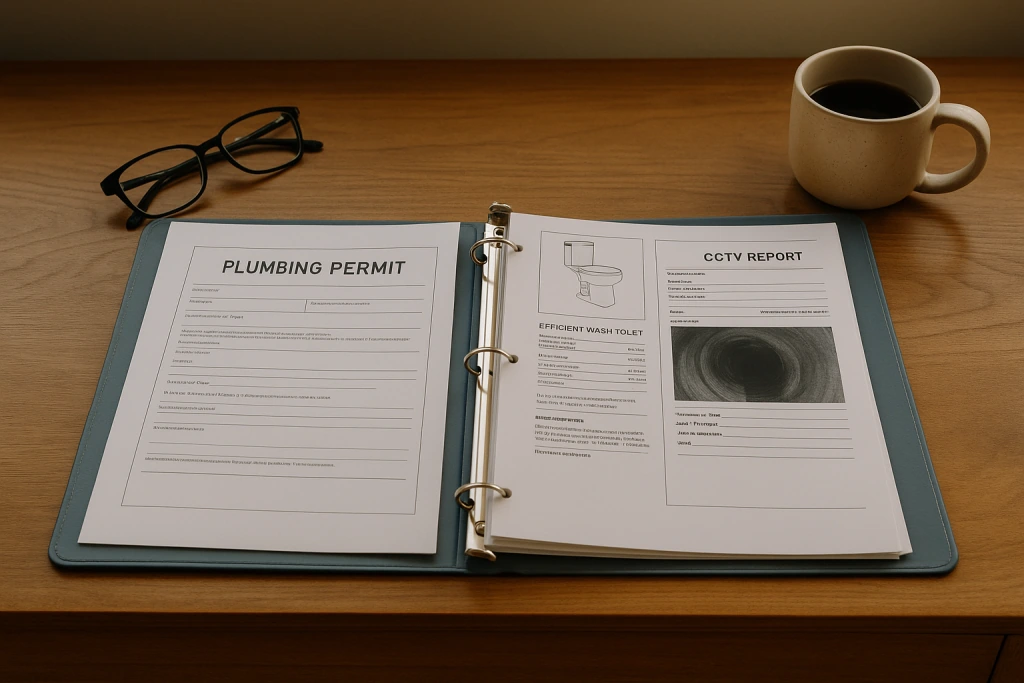
Owner’s binder: permits and inspection cards, backflow test reports/tags, CCTV videos, fixture spec sheets, warranties, maintenance log.
When to Call a Licensed Plumber
Get it right the first time with a quick pre-permit consult, same-day CCTV or backflow testing, and code-compliant installs built for coastal conditions. Anytime Plumbing serves Santa Cruz, Watsonville, Aptos, Scotts Valley, Capitola, and Soquel—and we handle permits, inspections, and paperwork. Call 831-431-6593 or book a visit to review your plan and timeline. Anytime Plumbing, serving Santa Cruz and nearby cities.
Frequently Asked Questions
Coastal plumbing codes in Santa Cruz are designed to ensure water efficiency, proper drainage, and environmental protection. When renovating a bathroom or kitchen, these codes may dictate the type of fixtures you can install, such as low-flow toilets, faucets, and showerheads. They also set requirements for proper venting, backflow prevention, and pipe materials to prevent contamination and damage from the coastal climate. Following these regulations helps avoid fines, ensures inspections pass smoothly, and contributes to long-term savings by reducing water waste and maintenance issues.
Coastal properties often have stricter plumbing requirements due to salt air and erosion risks. Materials and installation methods must resist corrosion and prevent leaks. Builders and homeowners should check local codes to ensure systems remain durable and compliant over time.
In Santa Cruz, plumbing codes require certain water efficiency standards, even in older homes. When replacing fixtures like toilets, faucets, or showerheads, the new installations must meet current water flow and efficiency requirements. This ensures that homeowners benefit from lower water bills and compliance with local regulations. Inspectors may check renovations or major replacements to make sure they follow these standards. Upgrading old plumbing fixtures can also improve overall water pressure and reduce leaks, making your home more efficient while staying within code.
Coastal homes face moisture, salt air, and shifting soil that can affect plumbing systems. Local plumbing codes help ensure materials, pipe placement, and drainage systems are designed to handle these conditions and protect long term reliability.