

Stop Hard-Water Damage in Santa Cruz Homes: Solutions, Costs & Prevention
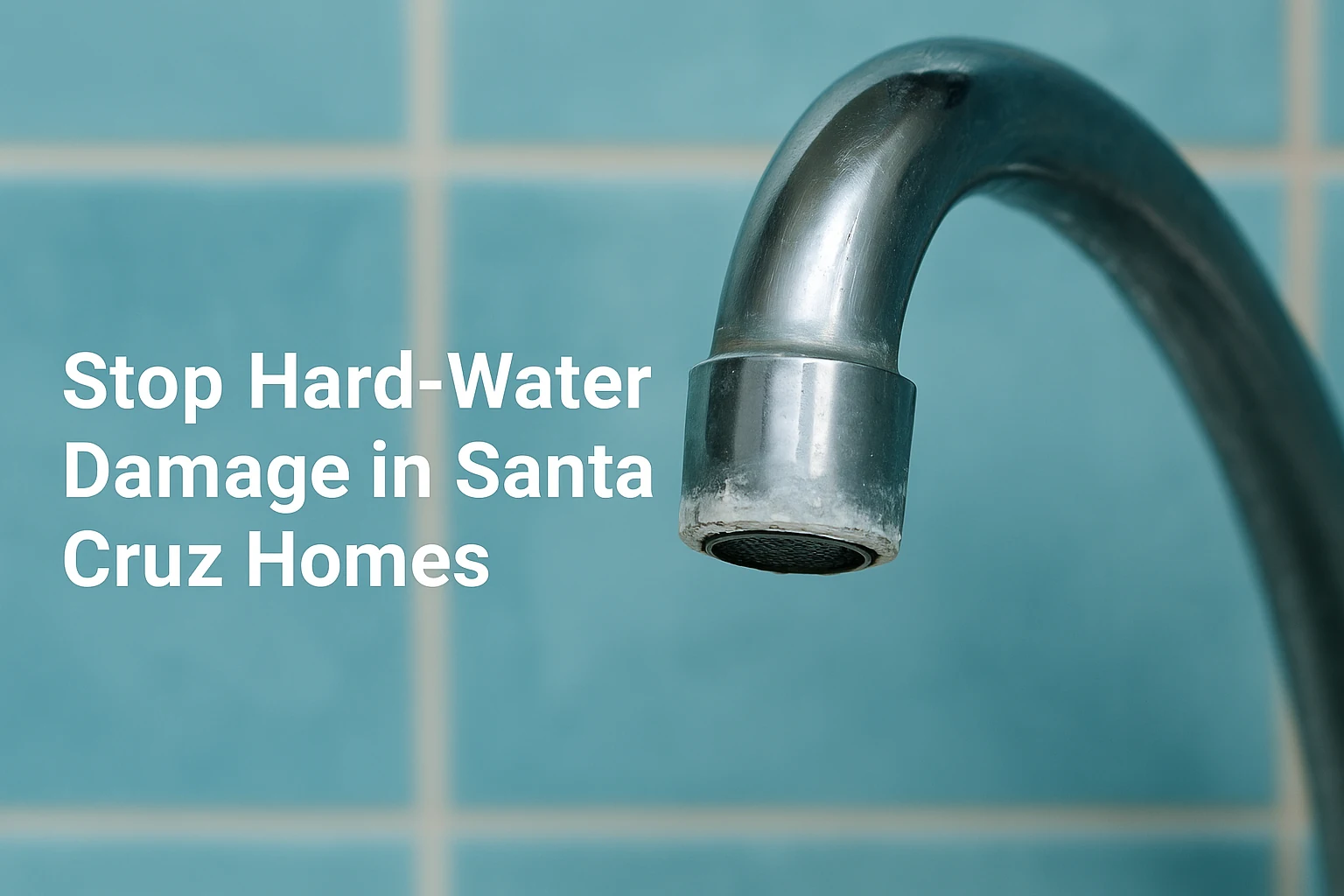
Spotty glassware, chalky soap scum on showers, dry skin and hair, and laundry that never feels quite clean—those everyday annoyances are classic hard-water signs in Santa Cruz homes. Behind the scenes, mineral buildup (calcium and magnesium) doesn’t just look bad; it slowly narrows pipes, clogs faucet aerators, and coats your water heater’s elements or heat exchanger. That scale forces your heater to work longer to deliver the same hot water, which means higher energy bills, noisy operation, and a shorter lifespan for tank and tankless units alike. Fixtures wear out faster, detergents don’t lather well, and appliances like dishwashers and washing machines lose efficiency.
Good news: stopping the damage is straightforward with the right plan. This guide covers quick at-home checks to confirm hardness, the pros and cons of softeners, salt-free conditioners, whole-home filtration, and RO, plus simple maintenance that keeps scale away. You’ll also get clear local next steps—hardness testing, smart system sizing, and fast, code-compliant installation across Santa Cruz County.
What Is Hard Water?
Hard water is simply water with higher levels of dissolved minerals—mostly calcium and magnesium—picked up as groundwater moves through limestone and other rock. These minerals aren’t harmful to drink, but they do cause scale (limescale) that sticks to pipes, heaters, and fixtures. Hardness is measured in grains per gallon (gpg) or milligrams per liter (mg/L, or ppm); 1 gpg = 17.1 ppm. Typical thresholds: soft (0–1 gpg), slightly hard (1–3.5 gpg), moderately hard (3.5–7 gpg), hard (7–10.5 gpg), very hard (>10.5 gpg). Because Santa Cruz draws from different sources, hardness can vary by neighborhood and season.
7 Common Plumbing Problems Caused by Hard Water
Limescale in pipes : reduced flow/pressure
Symptom: Showers and faucets feel weaker over time.
Why: Calcium carbonate precipitates and lines pipe walls, narrowing the passage.
Risk if ignored: Progressive restriction, noisy plumbing, higher pump/valve stress, and uneven hot/cold mixing that eventually demands repiping in severe cases.
Water-heater scale : higher bills, shorter life
Symptom: Longer waits for hot water, “kettling” or popping sounds.
Why: Scale insulates heating surfaces and heat exchangers, choking heat transfer.
Risk if ignored: Spiking energy use, overheating, error codes on tankless units, frequent flushes, and premature heater failure that forces early replacement.
Faucet & showerhead buildup : clogs, ugly fixtures
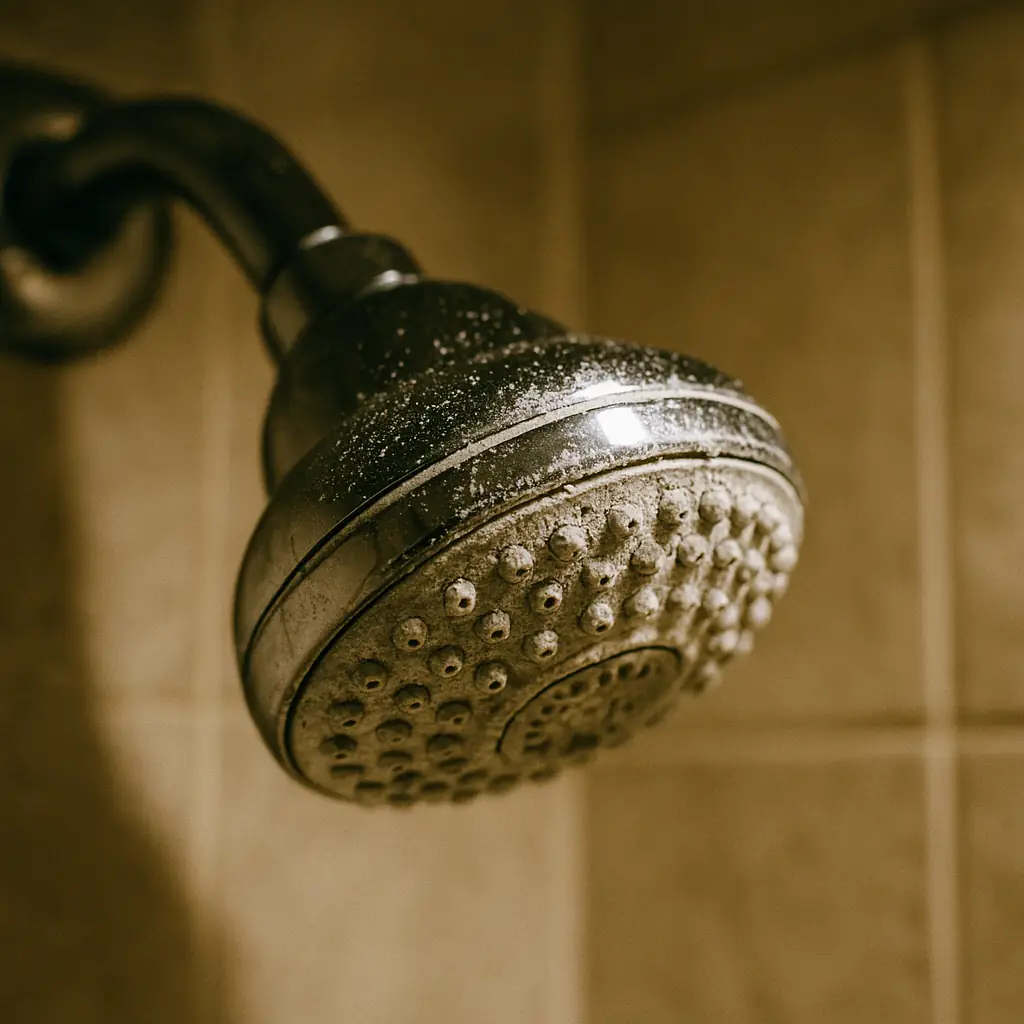
Symptom: Clogged aerators, distorted spray patterns, white crust on trim.
Why: Minerals collect in fine screens and on chrome/finish surfaces.
Risk if ignored: Stripped threads, persistent drips, stained finishes, and repeated part replacements that add up in cost and downtime.
Dishwasher & laundry issues : spotting, detergent waste
Symptom: Filmy glassware, spots, stiff or dingy laundry.
Why: Minerals react with detergents, reducing cleaning power and leaving residue.
Risk if ignored: Heater element scaling inside appliances, worn door seals, shortened appliance life, and higher spend on soap, rinse aid, and re-washes.
Premature wear on valves, cartridges, and seals
Symptom: Stiff handles, inconsistent temperature, and recurring drips.
Why: Abrasive crystals and scale scratch moving parts and prevent tight sealing.
Risk if ignored: Chronic leaks, wasted water, frequent cartridge/washer swaps, and fixture replacement earlier than expected.
Pinholes/leaks risk over time
Symptom: Mystery damp spots, musty odors, or tiny stains on walls/ceilings.
Why: Under-deposit corrosion and turbulence around scale create weak points.
Risk if ignored: Hidden leaks, mold growth, drywall damage, and costly tear-outs to access and replace compromised sections.
Soap inefficiency : more product use, residue on skin/hair
Symptom: Soap that won’t lather, “squeaky” feel, dry skin and dull hair.
Why: Calcium ions bind with soap to form scum that doesn’t rinse clean.
Risk if ignored: Build-up in drains contributing to clogs, ongoing irritation, and higher monthly spend on soaps, shampoos, and conditioners without better results.
Do You Likely Have Hard Water?
Glass-jar soap test (60 seconds): Fill a clear jar halfway with tap water, add a few drops of pure liquid soap (not detergent), and shake. If it makes little suds and the water turns cloudy, you likely have hard water.
Visual signs checklist:
- White crust on faucets/showerheads and around sink drains
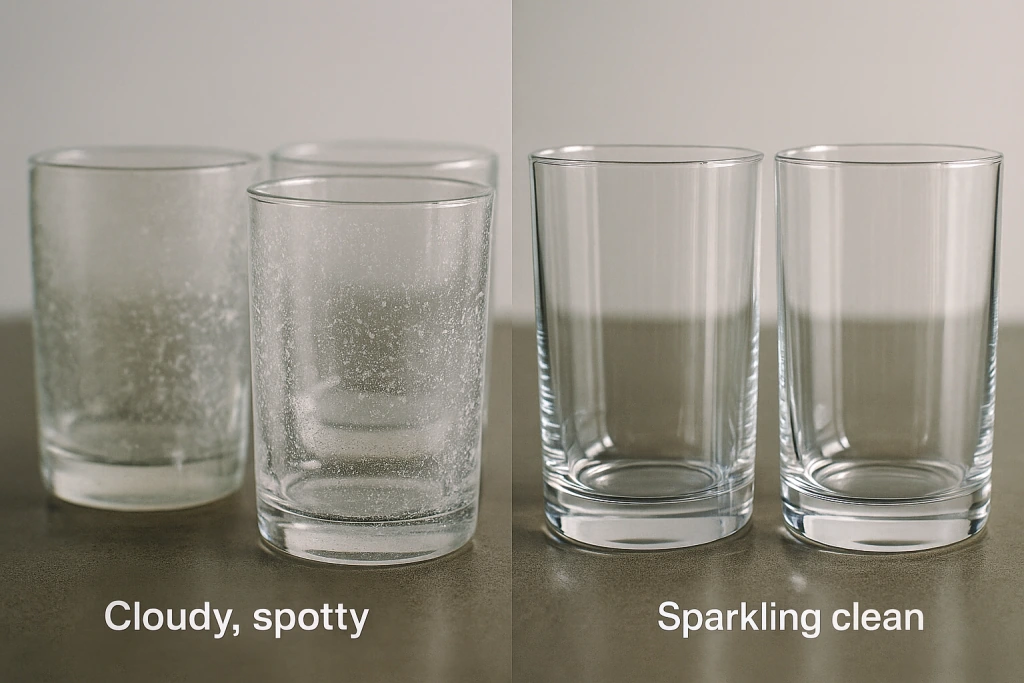
- Cloudy/spotty glassware even after washing
- Stiff, dingy laundry; towels lose fluff
- Dry skin, dull hair, “soap won’t lather” feeling
- Kettling/popping sounds from the water heater
These clues strongly suggest mineral buildup (calcium/magnesium). To be sure, ask for a free/basic hardness test during your estimate—we’ll measure in gpg/ppm, check flow rate, and note heater condition. Confirming the number helps right-size any solution and avoid overspending.
Your Fix Options: Compare Treatments
Salt-Based Water Softener
How it works: Ion exchange swaps hardness minerals (Ca/Mg) for sodium (or potassium), preventing scale from forming on pipes, heaters, and fixtures.
Pros: Best at stopping new scale; protects water heaters/appliances; improves soap lather; lowers energy/detergent use.
Cons: Uses salt, periodic regeneration and brine discharge; needs drain/power and some space; routine salt refills.
Sizing basics: Match capacity to demand: hardness (gpg) × household water use (typ. 60–75 gal/person/day) to set grain capacity and regeneration frequency.
Salt-Free Conditioner
How it works: Chemically conditions minerals so they’re less likely to stick, reducing scale adhesion rather than removing hardness.
Pros: No salt, low maintenance, no regen or power; good for fixtures and light/moderate hardness.
Cons: Not ideal for very hard water or heavy hot-water loads; doesn’t remove existing scale.
Whole-Home Filtration
What it does: Sediment + carbon filters improve taste/odor and reduce chlorine/particulates.
Pros: Better-tasting water, protects valves/aerators from grit; pairs well with softeners/conditioners.
Cons: Not a softener—won’t stop hardness scale by itself; periodic filter changes required.
Point-of-Use Reverse Osmosis (RO)
What it does: Under-sink system that delivers low-TDS drinking/cooking water at a dedicated faucet.
Pros: Excellent for taste and dissolved solids at the tap; optional remineralization.
Cons: Not whole-home; produces some wastewater; cartridges every 6–12 months, membrane ~2–3 years.
Combination Systems
When homeowners want both scale protection and great-tasting water, pair a softener + carbon filter for the whole home, and add RO at the kitchen sink. This covers appliances, fixtures, and drinking water quality end-to-end.
Quick Comparison
| Option | Effect on Scale | Upkeep | Best Use-Case |
|---|---|---|---|
| Salt-Based Softener | Stops new scale (best); may reduce some existing over time | Add salt; periodic service/regeneration | Hard/very hard water; protect heaters & plumbing |
| Salt-Free Conditioner | Reduces adhesion (good); does not soften | Media change 1–2 yrs | Slight–moderate hardness; low-maintenance preference |
| Whole-Home Filtration | None (taste/odor only) | Filter changes 6–12 months | Taste, chlorine, sediment; pair with softener/conditioner |
| Point-of-Use RO | Tap-level purity; not scale control | Cartridges 6–12 mo; membrane 2–3 yrs | Drinking/cooking water at kitchen |
| Combination (Softener + Carbon/RO) | Comprehensive (scale + taste + tap purity) | Combined of above | Full-home protection with premium drinking water |
Protecting Your Water Heater
Water heaters take the brunt of hard water because heat forces minerals out of solution first. In tank units, scale and sediment blanket the burner/element at the bottom, insulating heat transfer—cue popping/kettling sounds, slower recovery, and higher gas/electric use. In tankless units, scale coats the heat exchanger’s narrow passages, triggering temperature swings, throttled flow, or error codes.
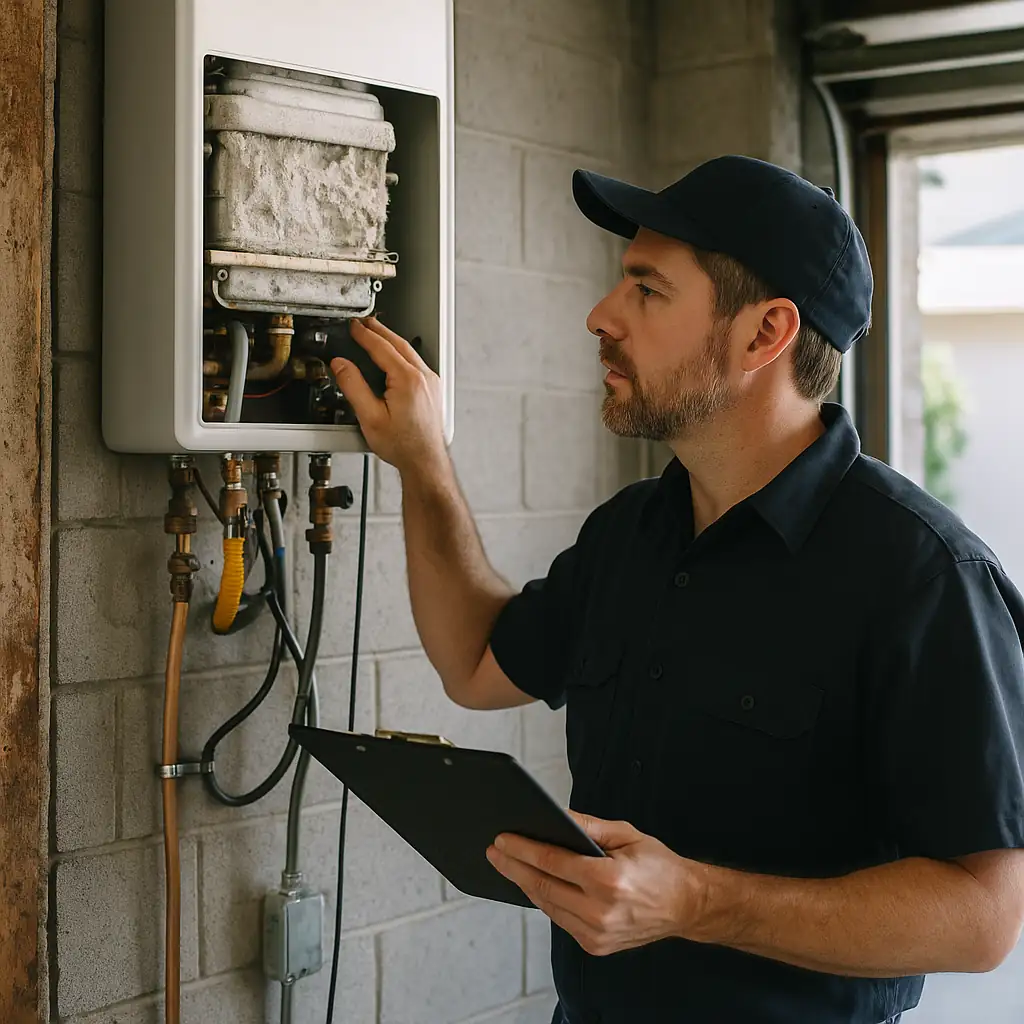
Descaling/flush cadence:
- Tank: Drain and flush at least annually in Santa Cruz; every 6 months if you notice noise/slower hot water. Add a sediment trap if needed.
- Tankless: Circulate a descaling solution (or white vinegar) through the unit every 6–12 months depending on hardness and usage.
Anode rod (tanks): Inspect every 2–3 years (sooner if water runs hot and softened). Replace when >50% depleted, heavily pitted, or if you’re dealing with odor issues (consider an aluminum/zinc or powered anode). A healthy anode protects the steel tank and extends service life.
Softener impact: A correctly sized, well-maintained softener prevents new scale, helping heaters run quieter, heat faster, and last longer while reducing the frequency/intensity of descaling. Net result: steadier hot water, fewer emergency calls, and lower utility spend over the unit’s lifespan.
Plumbing Fixtures & Appliances Care
Faucets/showerheads: Unscrew aerators/showerheads; soak parts in 1:1 white vinegar + warm water for 30–60 minutes (2–4 hours for heavy scale). Brush with a soft toothbrush, rinse, and reinstall. For fixed showerheads, fill a bag with vinegar, secure with a rubber band, soak, then flush.
Dishwasher: Empty and clean the filter monthly; run a hot cycle with a cup of vinegar on the top rack; use rinse aid; clear spray-arm holes; check the inlet screen.
Washing machine: Run a monthly “tub clean” (manufacturer cleaner or hot cycle with vinegar—never mix with bleach); wipe the gasket; clean inlet screens; use HE detergent to reduce residue.
When to replace: If aerators are corroded/stripped, cartridges remain stiff or drip after two cleanings, or a showerhead’s internal passages are blocked and finish is flaking, replacement is cheaper and more reliable than repeated descaling.
Costs, Maintenance & ROI
Typical ranges: In our market, a professionally installed whole-home softener is generally in the low four figures; salt-free conditioners are usually somewhat lower; add-on whole-home carbon filtration ranges from upper three to low four figures depending on flow rate; point-of-use RO at the kitchen sink is typically a few hundred installed. Annual consumables are modest: salt + prefilters usually land in the low to mid three figures per year, depending on hardness and household size.
Salt & regeneration basics: A right-sized softener regenerates every 3–7 days under normal Santa Cruz use. Expect roughly 1–3 bags of salt/month for a family home (hardness and water use drive this up or down). Keep the brine tank at least ⅓ full and break up any salt bridges.
ROI you can feel: Softening curbs scale in heaters and appliances, cutting maintenance calls, helping heaters run quieter and faster, and extending service life. You’ll typically see lower energy use, better soap performance, and fewer replacements of cartridges/aerators.
Rebates & permits: Check local rules before you buy—some areas require a simple plumbing permit and have discharge guidelines; occasional utility/district incentives may apply. We’ll flag requirements and handle paperwork during your estimate.
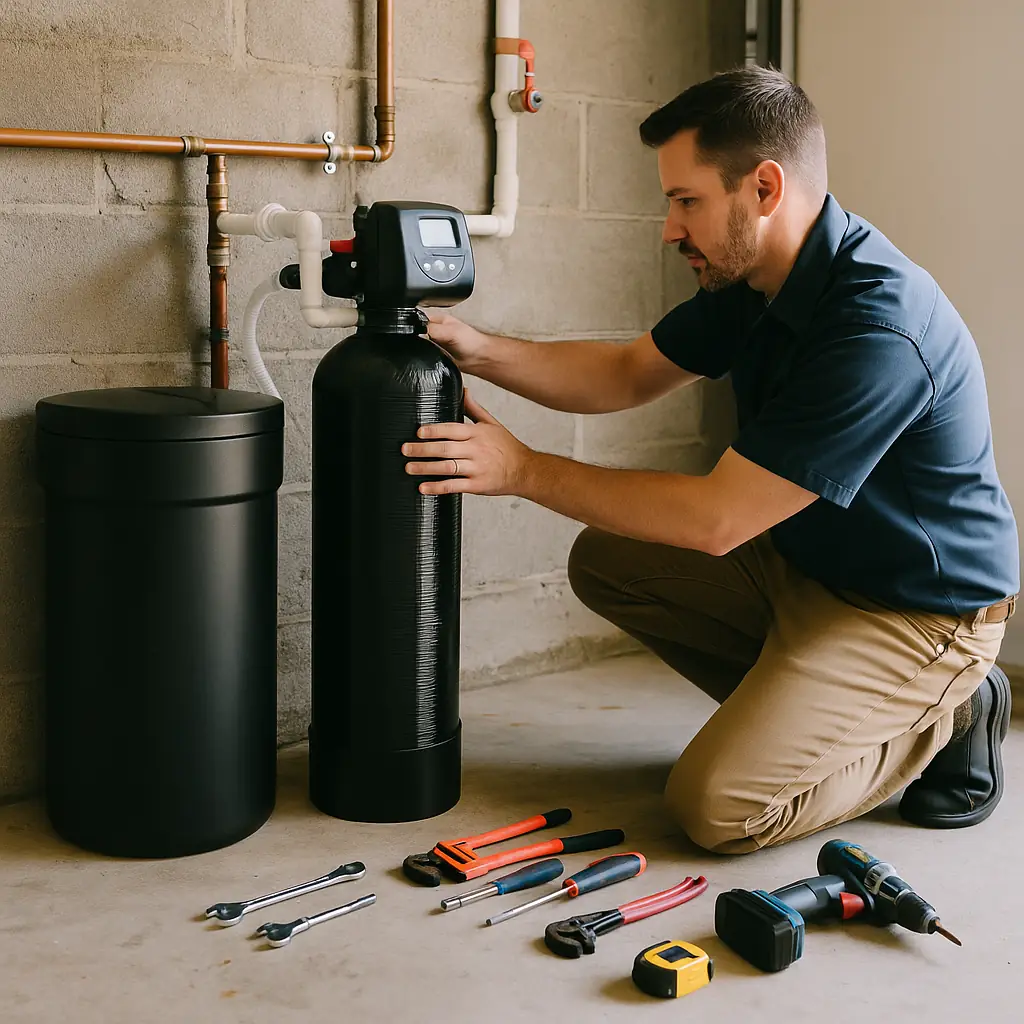
How We Size & Install the Right System in Santa Cruz
Site visit: We test hardness (gpg/ppm), note household occupancy/usage, verify incoming flow rate and pipe material/size, and inspect drain and electrical access.
Right-fit recommendation: Based on the numbers, we size the softener or conditioner and suggest placement (typically garage/utility), confirming drain and 120V availability. For drinking water, we’ll specify RO at the kitchen sink and, if needed, a whole-home carbon filter for taste/chlorine.
Clean install standards: We use code-compliant sweats/press fittings, a full-port bypass, isolation valves, and a proper air-gap to drain. After startup, we run a performance check (hardness before/after, flow, regen), set your controller, and provide homeowner training on salt levels, filter changes, and when to call for service. You get a tidy install, labeled valves, and a maintenance schedule tailored to Santa Cruz water conditions.
Ongoing Care Plan
Check salt levels monthly; keep the brine tank ⅓–⅔ full and break any bridges. Replace prefilters every 6–12 months and refresh carbon media per capacity. If applicable, use a resin cleaner annually (especially where iron is present). Swap RO cartridges every 6–12 months and the membrane about every 2–3 years. Schedule an annual tune-up: hardness test (before/after), controller settings, valve/bypass function, leak/drain air-gap check, and flow verification. For heaters, tankless units should be descaled every 6–12 months; tank models should be drained/flushed yearly with the anode inspected every 2–3 years. This routine keeps scale in check, maintains pressure and temperature stability, and protects your energy budget.
Get a Free Hardness Test & Quote in Santa Cruz
Anytime Plumbing offers a no-pressure, in-home hardness test and clear recommendation for your home. Call 831-431-6593 or request a visit today. We provide same-week installs, are licensed and insured, and serve Santa Cruz, Watsonville, Aptos, Scotts Valley, Capitola, and Soquel. Ask about our set-and-forget maintenance plan with scheduled tune-ups, descaling, and simple salt/filter reminders—so your system stays efficient without the hassle. Protect your plumbing, lower operating costs, and extend appliance life with a right-sized solution from Anytime Plumbing.
Frequently Asked Questions
The best way to prevent hard water buildup is to install a water softening system or a filtration system designed for mineral removal. Regular maintenance, like flushing your pipes and cleaning fixtures, can also slow down scale formation. Addressing hard water early protects your plumbing, extends the life of appliances, and keeps water flowing efficiently.
Hard water causes mineral buildup inside pipes and fixtures over time, which can reduce water flow and increase pressure on plumbing systems. This scaling can lead to clogs, decreased efficiency of appliances, and potential corrosion, ultimately shortening the lifespan of pipes and water-using devices.
Hard water can leave mineral buildup inside pipes, especially in older plumbing. This buildup can reduce water flow and create pressure points that may weaken pipe joints or fittings. Over time, these stress points can lead to small leaks or even pipe damage. Regular maintenance, including pipe inspections and descaling treatments, can help prevent problems before they become serious.
Hard water leaves mineral deposits that slowly collect inside pipes, faucets, and showerheads. Over time this buildup can restrict water flow, reduce appliance efficiency, and cause fixtures to wear out faster if the minerals are not regularly managed.