831-431-6593
Get an estimate
Serving Santa Cruz County:

Looking to upgrade your home with a reliable source of endless hot water? Tankless water heaters are the smart choice for Santa Cruz County households, offering major energy savings, compact space efficiency, and dependable year-round performance. Whether you’re in Santa Cruz, Watsonville, Aptos, Scotts Valley, Capitola, or Soquel, choosing the right brand and model ensures comfort while keeping utility costs under control. Our team has carefully reviewed the top tankless water heater brands, with insights tailored for local homeowners. Reviewed by licensed plumbers,— this guide highlights the best options to keep your family’s hot water flowing without interruption.
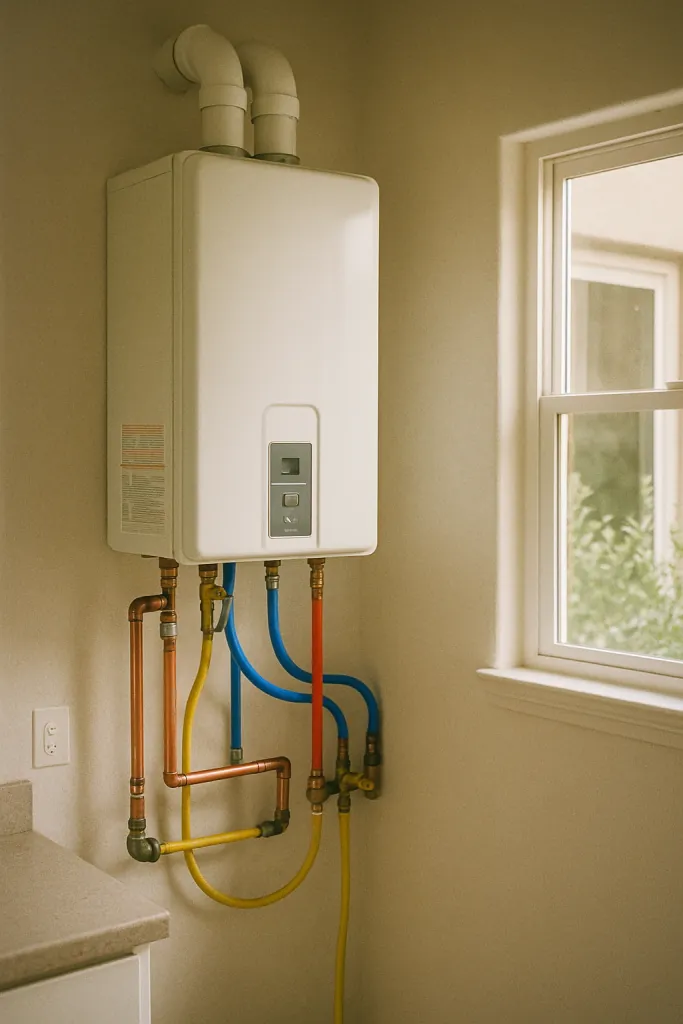
Finding the right tankless water heater depends on your home’s size, energy setup, and budget. To make things easier, we’ve selected the best models for Santa Cruz County households based on performance, efficiency, and long-term value.
Choosing the right tankless water heater often comes down to matching your household’s hot water demand with the right technology. Below we’ve compared six of the top models for 2025, looking at fuel type, flow capacity, energy efficiency, recirculation features, and warranties. This table gives a clear view of which model best fits your needs — from large multi-bath homes to compact electric-only households.
| Model | Fuel | Max GPM @ 35°F Rise | UEF | Recirc | Warranty | Best For |
| Rinnai RU199iN | Natural Gas | 11.0 | 0.93 | Smart-Circ | 15 yrs heat exchanger | Large multi-bath families |
| Navien NPE-240A | Natural Gas | 11.2 | 0.95 | ComfortFlow built-in | 15 yrs heat exchanger | High-end homes needing smart recirc |
| Rheem RTGH-95DVLN | Natural Gas | 9.5 | 0.93 | Optional pump | 12 yrs heat exchanger | Reliable gas performance |
| Stiebel Eltron Tempra 36 | Electric | ~7.0 | 0.99 | No | 7 yrs leakage / 3 yrs parts | All-electric households |
| EcoSmart ECO 36 | Electric | ~6.5 | 0.98 | No | Lifetime (limited) | Budget buyers |
| Takagi T-H3-DV-N | Natural Gas | 10.0 | 0.93 | No | 15 yrs heat exchanger | Compact condensing for small/medium homes |
Each model has trade-offs: high-capacity gas units like Rinnai and Navien suit large families, while all-electric options from Stiebel and EcoSmart offer compact, eco-friendly alternatives. Takagi provides a balanced mid-range solution for smaller homes at a lower cost.
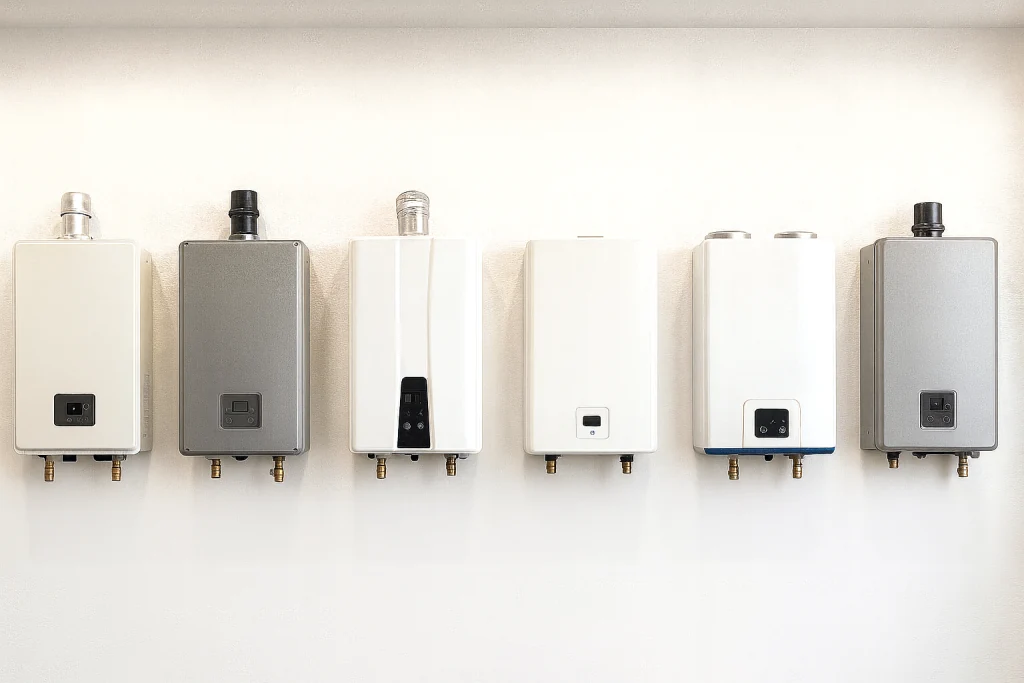
One of the most important steps in choosing a tankless water heater is getting the size right. Undersized units leave you with cold showers, while oversized systems cost more than you need to spend. The good news? You don’t need to do complicated math — just match your home’s hot water demand to the right flow rate.
In most U.S. regions, incoming groundwater temperature is about 55°F. To reach a comfortable 105°F, your tankless heater must handle about a 50°F rise.
Example: Running two showers (≈5.0 GPM) plus a dishwasher (≈1.5 GPM) equals 6.5 GPM at a 50°F rise. That demand points you toward higher-capacity models like the Rinnai RU199iN or Navien NPE-240A, both designed for multi-bath households.
Don’t worry about the details — we’ll size your system precisely during a site visit to ensure your family always has hot water on demand.
Selecting the right tankless water heater isn’t only about picking a brand — it’s about matching your home’s needs and staying compliant with local regulations. Start with the fuel type: natural gas models deliver the highest flow rates, while electric units are ideal for homes without gas service. Factor in your household’s hot water demand — the number of bathrooms and how many fixtures may run at once. Also consider installation requirements: available wall space, venting paths for gas units, and whether you want recirculation (dedicated return line or crossover system).
On the utility side, gas models up to 199,000 BTU often need upgraded gas lines, while larger electric systems (30–36 kW) may require panel or service upgrades. In California and Santa Cruz County, you’ll also need to meet low-NOx emission standards, ensure proper combustion air, and install a condensate neutralizer for high-efficiency models. Title 24 energy codes may apply to certain installations, so professional guidance is essential.
The good news: we handle permits and code compliance from start to finish, ensuring your new tankless system meets all state and county requirements while providing reliable hot water for years to come.
A tankless water heater is a long-term investment, and the installation process sets the foundation for years of dependable performance. Local projects begin with a permit and site assessment to confirm venting and utility connections. Gas models require a vent run — typically PVC or stainless steel depending on efficiency — along with seismic strapping for safety, and a proper condensate drain with neutralizer if the unit is condensing. Once mounted, the system goes through professional commissioning to calibrate flow, temperature rise, and safety features.
Keeping your unit in peak condition comes down to consistent care. Most manufacturers recommend an annual flush and descaling to prevent mineral buildup, especially in hard-water areas. Adding a scale filter protects heat exchangers, while households with recirculation loops should include a pump check to keep hot water flowing quickly. A yearly error code inspection also ensures minor issues are caught before they interrupt service.
Sticking to this routine pays off: you’ll enjoy a longer lifespan, more stable hot water temperatures, and continued warranty protection from the manufacturer.
Whether you’re ready to book a professional installation or want to schedule an annual tune-up, our licensed plumbers make sure your tankless system runs safely and efficiently for years to come.
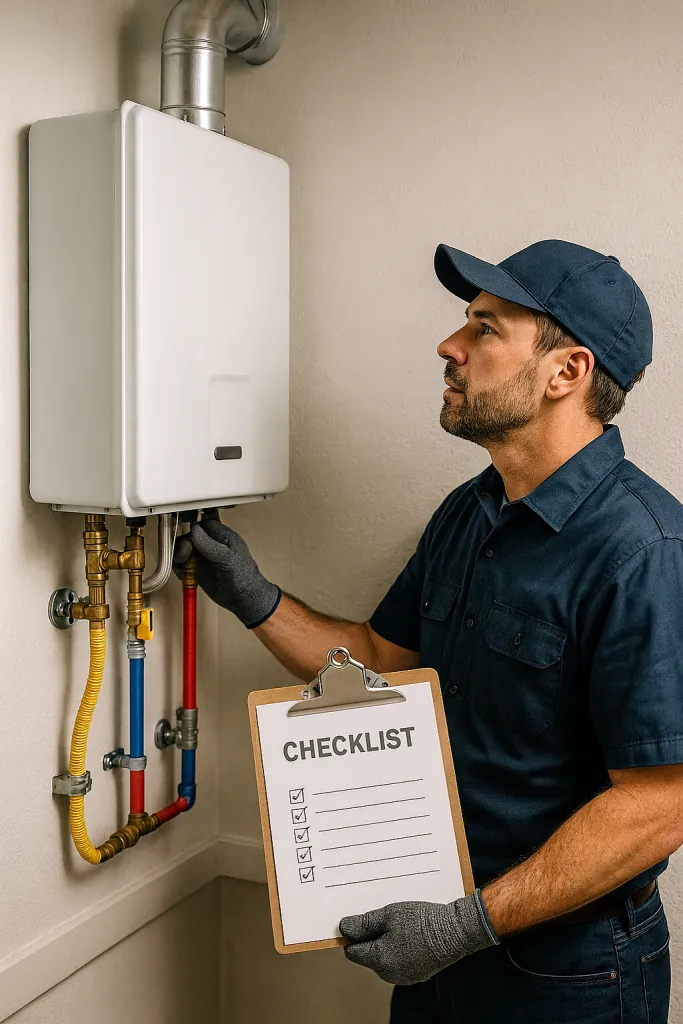
The cost of a tankless water heater project depends on both the equipment and the installation details. Gas units generally run higher because of their larger capacity and venting needs, while electric models are typically more affordable upfront but may require panel upgrades. Final pricing also depends on site-specific factors such as vent routing, seismic requirements, and whether your gas line or electrical service needs an upgrade.
The good news is that many installations may qualify for rebates or credits. PG&E, select manufacturers, and federal programs often provide incentives for high-efficiency or ENERGY STAR® certified systems. These programs change regularly, so we recommend checking our [Rebates & Credits] page for the latest opportunities.
Over time, tankless water heaters help offset their upfront investment with lower operating costs. By heating water only on demand, they avoid the constant energy drain of traditional tanks. That means fewer standby losses, better efficiency, and reduced wear and tear. Combined with proper maintenance, these systems are built to last longer than tank-style heaters, stretching your dollar further across years of reliable service.
When you look at the full picture — purchase, installation, incentives, and long-term savings — tankless systems offer both value and peace of mind for homeowners ready to make the switch.
Ready to enjoy endless hot water? Call 831-431-6593 or use our quick online form to schedule your tankless water heater service with Anytime Plumbing. Our licensed plumbers are available 24/7 for installation, repair, or replacement, and we service all major brands. Whether you’re in Santa Cruz, Watsonville, Aptos, Scotts Valley, Capitola, or Soquel, you can count on fast response, upfront pricing, and workmanship backed by strong warranties. With Anytime Plumbing’s certified expertise, safety compliance, and trusted local reputation, upgrading to tankless is worry-free.
Tankless water heaters usually last 20 to 25 years with proper maintenance. Traditional tank water heaters typically last 10 to 15 years. Tankless units avoid storing large amounts of water, which reduces corrosion and sediment buildup, helping them last longer. Regular flushing and filter checks keep them running efficiently.
Most systems run a few thousand dollars installed, depending on gas vs. electric and site upgrades.
Tankless units typically last 15–20 years, nearly double the lifespan of a standard tank.
Yes, high-capacity models (9–11 GPM) can easily handle two or more showers simultaneously.
Often yes gas units may need larger lines; electric units may require panel upgrades.
If you want near-instant hot water at every tap, recirculation is a smart upgrade.
Skipping annual maintenance, improper installation, or using untreated hard water can void coverage.
Tankless systems don’t store water, so there’s less chance of bacterial growth or stale water. They deliver fresher hot water instantly, which can benefit both taste and hygiene in your household.
Most homes can accommodate a tankless system, but some older plumbing may need upgrades, such as larger pipes or additional electrical/gas capacity. A professional assessment ensures proper installation.
Mineral buildup from hard water is the most common issue. Over time it can reduce efficiency and restrict water flow. Regular flushing and cleaning of the system helps prevent scale buildup and keeps the heater operating at its best.

Get a no obligation, consultation by giving us a call today. Or fill out our form and we'll get back to you in email.
© 2020 ANYTIME PLUMBING, INC. - ALL RIGHTS RESERVED.